


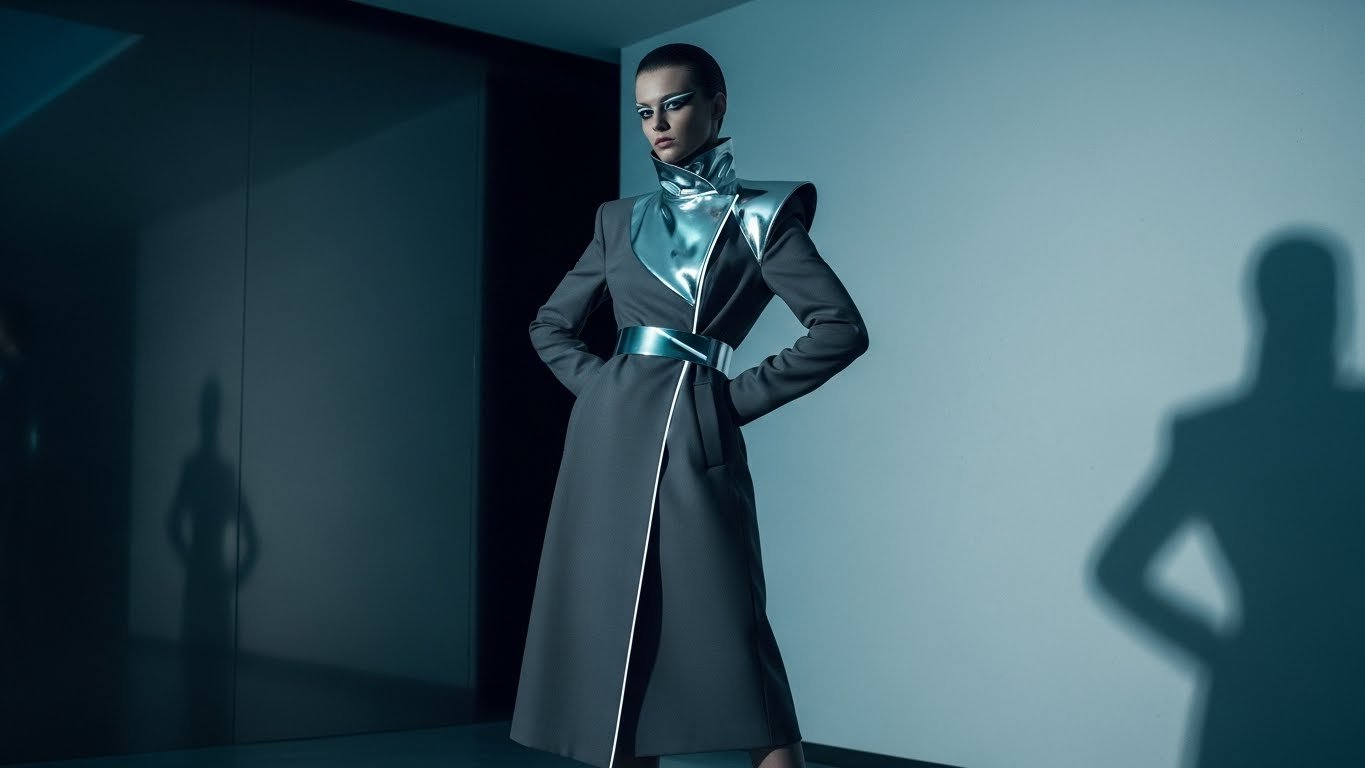
Futuristic Elegance represents a powerful synergy. It brings together forward-thinking innovation and refined aesthetic principles. This movement is not just a passing trend. It is revolutionizing the style of fashion itself.
The concept moves far beyond simple science fiction tropes. It weaves technological possibilities with timeless sophistication. The result is garments that are visually striking and inherently modern. This vision is rapidly gaining momentum. It is projected to fuel significant growth in the fashion industry.
The ultimate goal is a style that is clean, refined, and highly functional. It deliberately avoids the chaotic or overtly theatrical elements often linked to traditional sci-fi or cyberpunk. This is about dressing for the sophisticated world of tomorrow. Innovation is seamlessly integrated into a lifestyle of luxury.
We can summarize the core formula easily: Futuristic Elegance = Sophistication + Technology + Minimalism. This fundamental shift is changing how we think about clothes. Now, let’s explore the core elements that make this aesthetic so compelling.
Core Elements and Foundational Principles
The guiding principle of this design movement is clear. Futuristic Elegance is not about excess. It is about precision. The look relies on carefully balanced contrasts. Think metallic shine against soft fabrics, or structured silhouettes meeting organic flow. These are the core elements that define this aesthetic.
Clean Lines and Architectural Minimalism
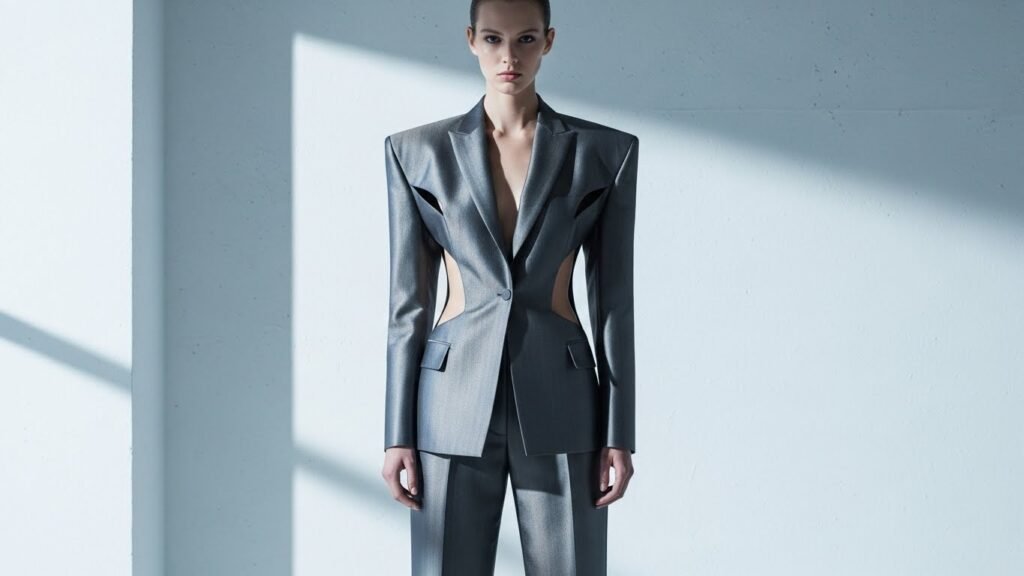
The foundation of Futuristic Elegance is precision. We are talking about razor-sharp cuts and deliberate silhouettes. This look is where minimalism meets sci-fi, but made wearable.
Designers focus heavily on the pure form of the garment. They move away from excessive draping and ornamentation. Emphasis is placed on precise cuts and sharp edges. Structured silhouettes are key to achieving this architectural minimalism. Every line has a purpose. Every seam tells a story. This dedication to clean lines creates a bold impact that looks incredibly polished and tailored.
Smart and Advanced Materials
Modern fashion is now less about how materials look. It is more about what they can actually do. The style relies on advanced materials with dynamic qualities. These smart materials are crucial to the “future” part of the name.
We see fabrics that regulate temperature. We see surfaces that reflect light in impossible ways. High-end designers are blending smart textiles with custom craftsmanship. This merges precision tailoring with advanced materials.
- Metallics and Iridescence: The use of materials like chrome, liquid silver, or high-sheen metallics is essential. Iridescent or holographic fabrics subtly shift color as the wearer moves. This provides a space-age yet luxurious finish.
- Smart Fabrics: These are materials that offer temperature regulation or are self-cleaning. They often incorporate tiny, hidden tech elements like luminous threads.
- Sustainable Tech: Futuristic Elegance is responsible. It uses sustainable materials like lab-grown silks or biodegradable polymers. Recycled ocean plastics are re-engineered for a luxurious finish. This allows designers to achieve stunning outfits while embracing eco-consciousness.
The material itself is now a dynamic element. It feels like it is from another planet but wears like a second skin.
A Refined Color Palette: The New Neutrals
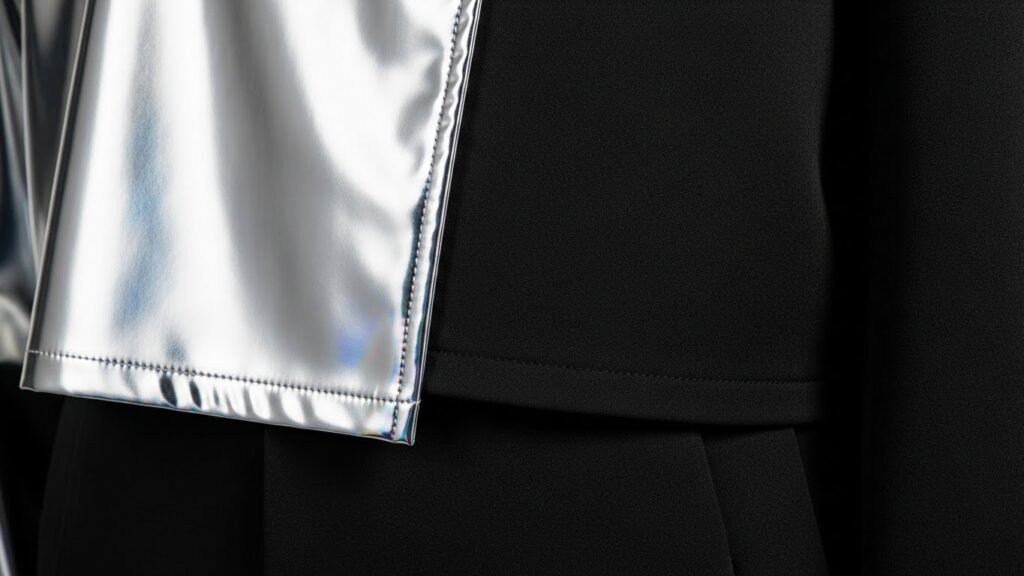
Forget everything you know about traditional color palettes. This new look plays with chrome, iridescent finishes, and subtle color shifts. It is not all metallic, though.
The core elements of the palette are The New Neutrals. These include deep blacks that seem to absorb light. They also feature glowing whites and refined grays. These colors establish a sophisticated baseline.
The bold impact comes from strategic accents. This means using high-sheen metallics or digitally-inspired colors. The color palettes must feel intentional. They must be modern and tailored to the garment’s design. This refined approach to color maintains elegance.
Dynamic Technology and Wearable Innovation
Something incredible is happening here. Modern pieces transform. They adapt. They respond. The garments blur the line between fashion and technology. This isn’t science fiction anymore.
The core concept is this: Technology is integrated thoughtfully and discreetly. It enhances functionality without looking gimmicky. This is where theory meets reality. These aren’t just concepts. These are innovations happening right now. This is wearable innovation at its best.
Subtle Tech Integration and Functional Enhancements
This isn’t about turning people into walking smartphones. This is about technology that serves a purpose. It offers hidden features that enhance function without sacrificing form. This is the definition of thoughtful tech integration.
The technology is subtly integrated into the garment structure. It does not feel overt or visible. This design choice is key to maintaining elegance.
- Hardware Examples: Designers use hidden magnetic clasps instead of buttons. They build invisible pockets for wireless charging and seamless connectivity.
- Comfort Features: Garments include discrete climate control for personalized comfort. This enhances functionality to keep up with technology-savvy lifestyles.
The ultimate goal is a harmonious balance. The innovation is seamlessly integrated. This makes the clothing both aspirational and perfectly wearable. This is how the aesthetic differs from traditional cyberpunk fashion.
Adaptive Wear, Mood-Responsiveness, and Dynamic Elements
Your clothes are about to get much smarter. The mechanism here is that the clothing is constantly adapting. It adjusts its fit, temperature, and visual state based on different factors.
This is adaptive wear in action. You can see fabrics that increase airflow when you are active. Jackets can warm up when you are cold. Materials adjust their fit throughout the day for ultimate comfort. This is smart clothing that actually thinks.
The clothing can also display dynamic elements. Mood-responsive elements mean garments can shift colors based on your mood or environment. Patterns can even respond to music or conversation. This constant transformation is crucial to the futuristic feel.
Digital Fabric Displays and Holographic Layers
This is where the visuals get really high-tech. New digital fabric displays are changing the game. This technology lets you change patterns and colors on demand. One garment offers endless possibilities. It is like having a wardrobe that reinvents itself every morning.
Another key visual tool is holographic layers. Holographic overlays add depth and dimension to simple pieces. The surfaces seem to move and shift in the light. This creates holographic elegance. It is subtle enough to be elegant but innovative enough to turn heads. The light reflection and changing dynamic quality make the piece a true work of art.
This focus on innovative technologies drives the continuous progress in the industry. It keeps the aesthetic moving forward.
Adaptive Wear, Mood-Responsiveness, and Dynamic Elements
Your clothes are about to get much smarter. The mechanism here is that the clothing is constantly adapting. It adjusts its fit, temperature, and visual state based on different factors.
This is adaptive wear in action. You can see fabrics that increase airflow when you are active. Jackets can warm up when you are cold. Materials adjust their fit throughout the day for ultimate comfort. This is smart clothing that actually thinks.
- Adaptive Examples:
- Jackets that warm up when you are cold.
- Fabrics that increase airflow when you are active.
- Materials that adjust their fit throughout the day.
The clothing can also display dynamic elements. Mood-responsive elements mean garments can shift colors based on your mood or environment. Patterns can even respond to music or conversation. This constant transformation is crucial to the futuristic feel.
Digital Fabric Displays and Holographic Layers
This is where the visuals get really high-tech. New digital fabric displays are changing the game. This technology lets you change patterns and colors on demand. One garment offers endless possibilities. It is like having a wardrobe that reinvents itself every morning.
Another key visual tool is holographic layers. Holographic overlays add depth and dimension to simple pieces. The surfaces seem to move and shift in the light. This creates holographic elegance. It is subtle enough to be elegant but innovative enough to turn heads. The light reflection and changing dynamic quality make the piece a true work of art.
This focus on innovative technologies drives the continuous progress in the industry. It keeps the aesthetic moving forward.
Aesthetic and Functional Styling
Futuristic elegance is not about looking like you just stepped off a sci-fi movie set. The overall approach is about balance. You let the tech enhance the style, but you do not let it overwhelm the look. This is the art of functional styling.
Foundational Layers and Smart Layering Techniques
You need to start with the foundation pieces. This is the base layer revolution. Think sleek, form-fitting layers in tech-enhanced fabrics. These are not just basic shirts. They are essentials that work overtime.
- Foundation Piece Benefits: They are temperature-regulating, moisture-wicking, and shape-adapting.
Now, you use smart layering techniques. You combine responsive fabrics under traditional pieces. You might mix a holographic element with a classic cut. The key is allowing the tech to enhance the style, not overwhelm it.
You also need to pick your moments to go bold. This is using statement tech pieces. One piece of adaptive clothing or one holographic accessory is all you need. That is enough to transform an entire look.
Application: Dressing for Modern Life and Occasions
The sophisticated world of tomorrow demands clothing that keeps up. The principles of Futuristic Elegance apply to every area of your life. This goes from your office to your vacation.
Work-Ready Tech (The New Power Dressing)

Your office wardrobe needs a serious upgrade. Modern professional style is all about subtle tech integration.
- Office Wardrobe Upgrades:
- Climate-control blazers keep you comfortable.
- Shirts stay pristine all day; they never wrinkle.
- Suits adjust their fit as you move from your desk to the meeting room.
This is work-ready tech. It proves that professional style does not have to be boring. This is the new power dressing.
Nighttime Transformation (Special Occasion Innovation)
This is where you can really have fun with the aesthetic. Evening wear can literally light up a room.
- Event-Ready Pieces:
- Dresses that change patterns as you dance.
- Accessories that respond to music and movement.
- Event-ready pieces that transform throughout the night.
These are special occasion innovations. They capture and reflect light in impossible ways. Remember, the goal is to shine, not to look like a walking light show.
Travel Smart
Your luggage just got lighter with these innovations. Futuristic Elegance makes travel easier and more efficient.
- Travel Benefits:
- Multi-functional pieces adapt to different weather conditions.
- Outfits refresh themselves, reducing laundry needs.
- One garment can be styled dozens of ways, minimizing what you pack.
This approach is about being efficient and smart. This is the ultimate travel smart strategy.
Everyday Integration
You do not have to dive into the deep end right away. Start small with everyday integration. Maybe it is a smart accessory that monitors your activity. Or perhaps a color-shifting scarf that works with everything you own. The key is finding pieces that enhance your existing wardrobe. They should not compete with it.
Key Outfit Examples and Ensembles
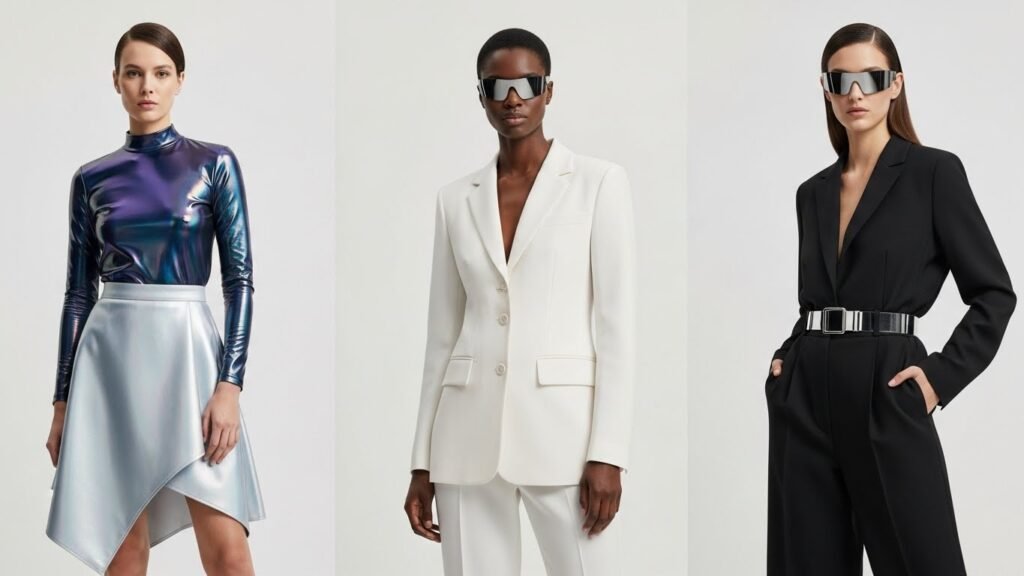
These examples show how designers are using the core elements to create truly unique outfit ideas. These are the designs that define the next generation of fashion.
These looks represent different parts of the cyberpunk aesthetic and space-age luxury. They prove that high fashion can be fully functional and adaptive. These ensembles are becoming the standard for special occasions and beyond.
The next step is to examine the crucial ethical and production side of this transformation. We will look at how sustainability is built into the fabric of Futuristic Elegance.
Design Collections and Sustainable Innovation
Key Outfit Examples and Ensembles
These examples show exactly how designers are creating truly unique outfit ideas. They are using the core elements of the aesthetic. These designs define the next generation of fashion.
AI-Designed Reflective Dress
This is a stunning garment. It is crafted from a reflective fabric. The fabric actually changes color based on the ambient light. Incorporating AI-generated designs ensures each piece is a unique masterpiece. This makes it perfect for special occasions.
Techwear-Inspired Jumpsuit
Consider a sleek jumpsuit. It is made from temperature-regulating materials. It features multiple utility pockets and a stylish silhouette. This design blends functionality and high fashion seamlessly. It is a true example of techwear-inspired jumpsuit design.
Cyberpunk Trench Coat
You can create a trench coat that combines holographic elements with smart textiles. Designers often add LED lighting for a striking visual effect. This coat embodies the cyberpunk aesthetic while still being practical. It is cyberpunk trench coat design.
Minimalist Suit with Personalized Cut
Design a sophisticated minimalist suit. Use AI to optimize the fit based on the individual body shape. Utilizing eco-friendly fabrics, this suit provides both elegance and comfort. It features a personalized cut that is incredibly precise.
Futuristic Crop Top and Asymmetrical Skirt
For a bold statement, pair a holographic crop top with an asymmetrical skirt. The skirt features AI-generated designs. The dynamic textures shift and change with movement. This makes every outfit a work of art.
3D-Printed & Structured Apparel
Designers use 3D printing for many reasons. It allows for intricate detailing and custom fits. It also enables zero-waste production. This technology creates unique architectural forms and maintains a clean, sophisticated line.
Minimalist Metallic & Iridescent Ensembles
These ensembles are dominated by sleek cuts. They use shimmering silver, chrome, liquid silver, or iridescent fabrics. These materials capture light dynamically. This creates a space-age yet luxurious feel. These are the ultimate minimalist metallic ensembles.
Eco-Conscious Smart Fashion
This approach combines sustainability with innovation. It uses biodegradable polymers or lab-grown silks. These materials are then enhanced with tech features. This could include self-cleaning or color-shifting properties. This is eco-conscious smart fashion.
Sustainable Future Fashion: Responsibility Meets Innovation
Futuristic elegance is more than just looking forward. It is about ensuring we have a future to look forward to. The style prioritizes eco-friendly materials and sustainable production as its core elements.
Circularity and Zero-Impact Materials
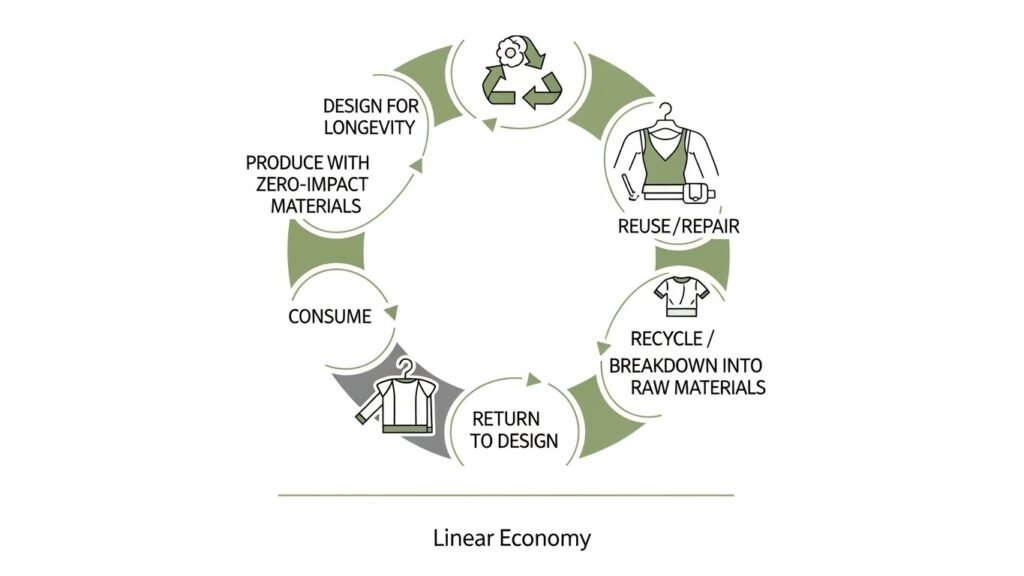
The entire fashion lifecycle is changing. The focus is on materials that leave no environmental trace.
- Zero-Impact Materials: We are talking about fabrics that actively clean the air as you wear them. Other materials break down completely when you are done with them. This leaves zero-impact materials.
- Circular Design: Garments are designed to be completely broken down and remade. This is circular design. One piece transforms into another. This ensures nothing goes to waste.
Self-Sustaining and Energy-Generating Garments
Clothes are becoming active participants in their own maintenance. They are also helping the wearer.
Self-Repairing Fabrics
Yes, you read that right. New materials can actually heal themselves. Self-repairing fabrics mend small tears overnight. They can refresh their own colors. They get stronger with wear instead of weaker.
Energy-Generating Fashion
Your clothes are starting to pull their own weight. Pieces can harvest energy from your movement. Accessories can store solar power to charge your devices. This is energy-generating fashion in action.
Biodegradable Tech
The future of technology is not plastic. New biodegradable tech is emerging. This includes compostable smart materials and circuits. Tech components return to the earth instead of filling landfills. This commitment to sustainable future fashion makes the movement truly revolutionary.
The Designer’s Revolution: AI’s Pivotal Role in Creation
Designing within the realm of Futuristic Elegance is challenging. It demands constant experimentation with advanced materials. It also requires complex patterns and innovative silhouettes. This is where artificial intelligence steps in.
AI-Enhanced Design and Rapid Prototyping
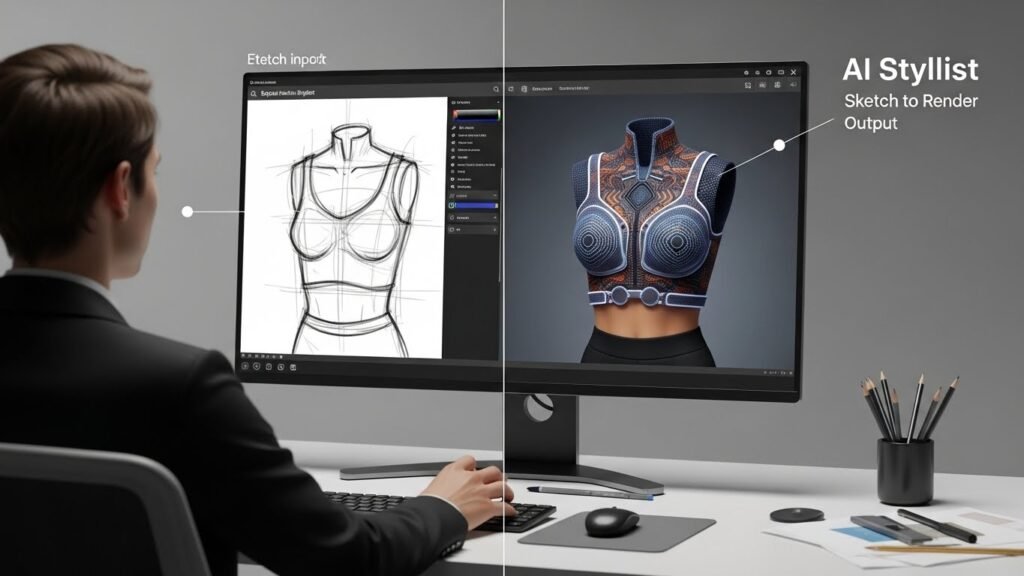
The fashion industry now has new pioneers. These innovators are engineering experiences. They are collaborating with tech companies and AI tools. Their goal is to push the boundaries of what is possible in luxury fashion.
AI is not just a tool. It is an indispensable tool. AI-powered design tools significantly reduce the barriers of cost, time, and resource intensity. This process is changing the traditional design workflow.
- Rapid Prototyping & Visualization: AI tools instantly transform rough sketches or text descriptions. They create high-quality visualizations (e.g., Sketch to Render). Designers can test holographic effects or metallics instantly.
- Material & Pattern Experimentation: Designers easily test how different innovative materials work. They also test complex AI-generated patterns on a design.
- Unmatched Efficiency: These advanced tools slash design iteration time. They can reduce production costs associated with sampling and photography by up to 95%.
AI-Generated Patterns and Enhanced Design
AI assists in concept generation and pattern making. It helps with color harmony testing. This results in AI-generated patterns that would be impossible to dream up otherwise. AI creativity is reshaping the field.
The designer still leads creatively. However, AI fashion design tools speed up and expand their possibilities. This makes the journey from visionary concepts to market-ready reality much quicker.
The Evolving Fashion Landscape
The influence of AI extends beyond the designer’s studio. It is transforming how clothes are presented, bought, and experienced.
Runway Revolution
The catwalk is no longer just about showing clothes. It is about creating a spectacle. Collections now transform as models walk. Garments interact with the environment. Pieces look different from every angle. It is not just a show; it is a glimpse into the future fashion.
Street Style Goes Tech
The gap between high-tech runway pieces and everyday wear is disappearing. Smart fabrics and tech-enhanced basics are integrated into casual cuts. This adaptive wear works as hard as you do. Street style is officially going tech.
Virtual-to-Reality Collections
This is the next big thing for the industry. Designers are creating pieces that exist in both the real world and the digital space. These are virtual-to-reality collections. Outfits often come with their own AR experiences. This bridges the gap between physical and virtual models.
This expansion into the digital space shows the technological advancement of the entire movement. It offers unmatched personalization and customization for the modern consumers.
The Ethical Imperative and Historical DNA of Innovation
Ethical Manufacturing and Supply Chain Transparency
Futuristic Elegance requires commitment to more than just aesthetics. High-tech garments must meet a high standard of social responsibility. True innovation means protecting the workers and the planet.
The Social Cost of Smart Textiles
The production of smart textiles involves complex global supply chains. These chains often hide the origins of the materials. This complexity can obscure poor labor practices. Companies must ensure fair wages and safe working environments for all textile workers. This is important, especially when dealing with complex global supply chains for smart textiles. Audits and unannounced factory visits help verify compliance with certifications like SA8000.
Navigating Tech Waste and Data Privacy
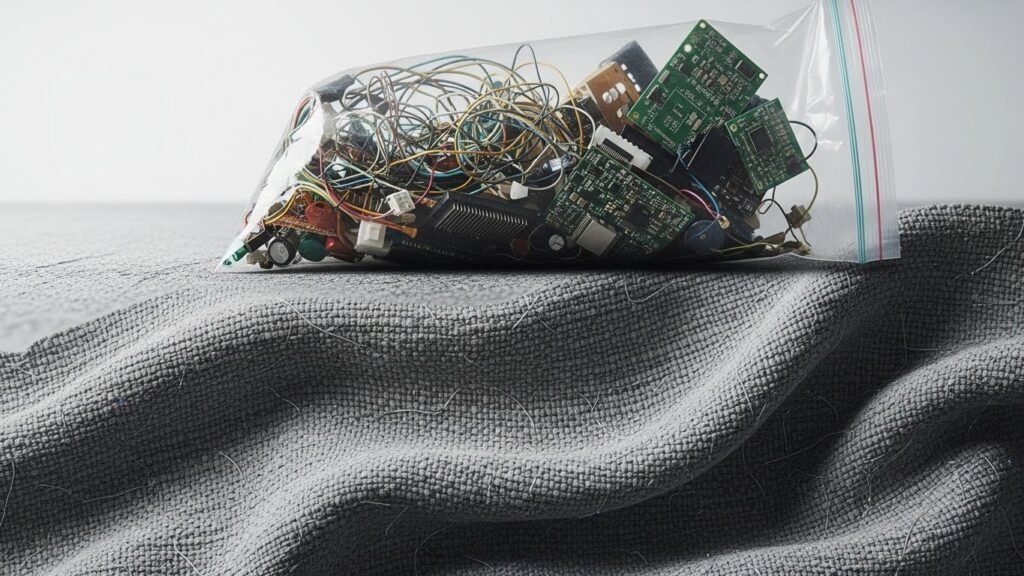
The disposal of electronic components in smart tech-integrated wearables is a unique challenge. Unlike natural fibers, these complex materials are hard to recycle. The article must address the issue of electronic waste from discarded textiles. Designers must create clear protocols for recycling or safely decomposing biodegradable tech circuits.
Furthermore, wearable innovation collects personal data, like heart rate or location. Companies must implement robust data protection measures, such as encryption. Users need control over their information. Transparency about data collection and usage is essential for building consumer trust.
The Power of Traceability
Brands must take responsibility for their entire supply chain. Supply chain transparency is critical for proving ethical sourcing. Blockchain technology offers a promising solution here. It creates a secure and immutable record of transactions. This allows for material traceability from raw components to the final product.
The Historical DNA of Futuristic Design
This aesthetic did not pop up overnight. Futuristic Elegance has deep roots in modern art and design history. Understanding this context enhances the authority of the piece.
The Avant-Garde Beginnings
The initial concept of futuristic fashion originated with the Italian Futurism movement in the early 20th century. Pioneers like Giacomo Balla rejected traditional clothing. They embraced dynamism, speed, and technology. Balla’s manifestos called for clothes free from ornamentation. They should instead be dynamic, asymmetric, and focused on comfort. He even proposed a transforming dress that changed color with the wearer’s mood.
Differentiating from Dystopian Trends
It is important to clearly distinguish this style from the cyberpunk aesthetic. Cyberpunk often presents a gritty, dystopian future. Think exposed wires, neon patterns, and practical tactical gear. Futuristic Elegance, by contrast, envisions a cleaner, more aspirational world. It uses subtle tech integration and polished surfaces. It rejects the maximalist or costume-like elements of traditional sci-fi.
Market Dynamics and Business Model Innovation
Market Segmentation and Consumer Adoption
The success of Futuristic Elegance relies on who adopts the technology and why. Adoption patterns follow a standard model, starting with high-end luxury consumers.
Early Adopters and Opinion Leadership
The first to embrace this style are typically young, wealthy modern consumers. These new pioneers are motivated by two things: functionality and social status. They want adaptive wear and the personalized cut because it offers a practical benefit. They also desire the exclusivity and bold geometric shapes for their aesthetic value.
The adoption is driven by opinion leadership from key figures. Celebrities and digital influencers showcase the pieces. This makes the look desirable to the broader fashion-forward concept market.
The Path to Mass Wearability
For this style to truly achieve growth, it must move beyond the runway. Mass adoption relies on simplifying the tech features.
Smart clothing must offer superior wearability and usefulness. This overcomes consumer hesitation about complex technology. It has to be fashion-first, tech-second.
The Business of Next-Gen Manufacturing
The traditional fashion model cannot support Futuristic Elegance. The complexity of smart fabrics and customization requires new business strategies.
The High Cost of Innovation
Futuristic Elegance pieces command high prices for a reason. Manufacturing smart materials and 3D-printed apparel requires huge investment in research and development. This is high-tech, low-volume production. The cost covers the R&D, specialized machinery, and expert labor required for intricate detailing.
On-Demand Manufacturing and Customization
The industry is shifting from wasteful mass production to agile manufacturing. This is where on-demand manufacturing shines.
- Waste Reduction: Garments are produced only after an order is placed. This eliminates unsold inventory and reduces production costs significantly.
- Mass Customization: Because products are made per order, brands can offer precise adjustments. This includes custom fits and color changes tailored to user preferences. This capability for personalization is the ultimate luxury offering.
- Ethical Production: Localized on-demand hubs improve supply chain oversight. This supports ethical manufacturing and reduces the carbon footprint from shipping.
This business model innovation, supported by AI fashion tools, is the engine that will make Future Fashion sustainable and profitable.
Conclusion: A Future-Proof Investment
Futuristic elegance is not a temporary trend. It is a fundamental shift toward a fashion future. This future meets sophistication with innovation and responsibility. It captures the zeitgeist.
Investment Strategy (Future-Proof)
It is smart to invest in pieces that grow with the wearer. Look for timeless designs that feature adaptable tech. Seek out garments with updateable features.
- Key Investment Qualities:
- Adaptable technology that enhances function.
- Timeless silhouettes that avoid fleeting trends.
- Sustainable materials that offer long-term value.
This focus makes the investment future-proof. You are buying an asset, not just a garment.
Final Takeaway
The future of fashion is not coming. It is already here. You need to be smart, selective, and intentional in embracing it. This means using AI and demanding sustainable materials.
Futuristic Elegance offers a vision of style that is both aspirational and wearable. It proves that technology and sophistication can thrive together. The key is to leverage advanced tools to find your own perfect fit in this evolving world.
Frequently Asked Questions (FAQs)
1. What is the difference between “Futuristic Elegance” and “Techwear”?
Futuristic Elegance focuses on high-level aesthetics and seamless integration of subtle technology, emphasizing clean lines, luxury, and tailored looks. Techwear (or tactical wear) emphasizes overt functionality, weather resistance, and exposed components like straps and zippers, often drawing from military or outdoor gear for a rugged, utilitarian look.
2. How are designers testing these new smart fabrics for safety?
Designers must test smart fabrics rigorously for skin sensitivity and electrical safety. Testing involves ensuring all integrated circuits and luminous threads are fully shielded and don’t cause irritation. Furthermore, they must comply with international standards for low-voltage electricity use in clothing.
3. Will I need to charge all my futuristic elegance clothes?
Not necessarily. While some pieces with dynamic displays or active climate control will require charging, many innovations are passive. For example, self-cleaning fabrics, temperature-regulating materials, and some color-shifting features work passively based on the material’s chemical or physical structure, requiring no battery.
4. What is the role of Virtual Try-On (VTO) and Augmented Reality (AR) in this trend?
VTO and AR experiences are crucial tools for the Futuristic Elegance market. They allow consumers to virtually try on AI-generated designs or holographic layers before purchasing, overcoming the challenge of visualizing complex textures and dynamic elements without visiting a physical store. This is vital for the virtual-to-reality pipeline.
5. Are there specific design tools that leverage AI for this aesthetic?
Yes, AI fashion design tools like generative AI stylists and platforms specializing in Text to Sketch or Sketch to Render are used extensively. These advanced tools help designers quickly generate unique AI-generated patterns and visualize the effect of iridescent or metallic finishes on different silhouettes.
6. What kind of care or maintenance do self-cleaning fabrics require?
Self-cleaning fabrics typically use photocatalytic nanoparticles (like titanium dioxide). They require exposure to UV light (sunlight) and moisture to break down organic dirt and odors. They still need occasional washing, but far less frequently than traditional garments, aligning with the goal of sustainable future fashion.
7. How does 3D-printed apparel ensure comfort and wearability?
Early 3D-printed apparel was rigid and uncomfortable. Today, designers use flexible, lattice-like structures and biodegradable polymers that allow movement and breathability. 3D printing also enables precise custom fits based on body scans, significantly enhancing wearability.
8. Is AI-enhanced design leading to job losses for human designers?
The general consensus is that AI is not replacing designers, but rather changing their role. AI fashion tools handle repetitive tasks like generating basic patterns, color palettes, or design variations. This allows human designers to focus on high-level creative process, visionary concepts, and ethical oversight—acting more as curators of technology.
9. What are the key challenges in making energy-generating fashion commercially viable?
The main challenge is efficiency and size. Harvesting enough energy from human movement (kinetic energy) to charge a small device requires large, bulky piezoelectric or triboelectric generators. Designers must overcome this hurdle and integrate these components discreetly without compromising the garment’s elegance.
10. How does this trend accommodate classic tailoring or traditional silhouettes?
Futuristic Elegance often uses traditional cuts as its foundation, such as the classic trench coat or the business suit. The innovation lies in the material and hidden function. For example, a blazer might look traditionally tailored but uses self-repairing fabrics and features discrete climate control. This is the art of smart layering.
11. What is the financial threshold for a consumer to participate in this trend?
While bespoke, AI-enhanced design pieces can cost thousands, consumers can participate affordably. Entry points include holographic or iridescent accessories, smart jewelry that monitors biometrics, or clothing from fast fashion brands that imitate the clean lines and metallic look using conventional fabrics.
12. Does Futuristic Elegance have a connection to the Metaverse or digital fashion?
Absolutely. The focus on digital patterns, virtual models, and AR experiences means the trend is deeply connected to the Metaverse. Many virtual-to-reality collections start as digital-only assets. These assets can then be “redeemed” for the physical garment, demonstrating a fusion of the digital and physical worlds.
13. What legal issues are brands facing with color-shifting and mood-responsive elements?
The primary legal issues revolve around intellectual property (IP) for the algorithms and patents for the smart materials. Brands must protect their dynamic designs, especially AI-generated patterns, which often fall into a legal gray area concerning copyright and AI creativity.
14. How does the base layer revolution contribute to the overall aesthetic?
The base layer revolution is critical. Modern layers are shape-adapting and moisture-wicking. By making the foundation perfect—smooth, perfectly fitted, and temperature-controlled—the outer architectural forms and structured silhouettes can be shown off with maximum impact and comfort.
15. What is the long-term vision for zero-impact materials?
The long-term vision is circular design and zero-waste production. This means creating materials that are either infinitely recyclable or fully biodegradable, including the tech components (compostable smart materials). The goal is to close the loop completely, where fashion contributes nothing to landfills.
