


Introduction to the Trend: History, Definition, and Appeal
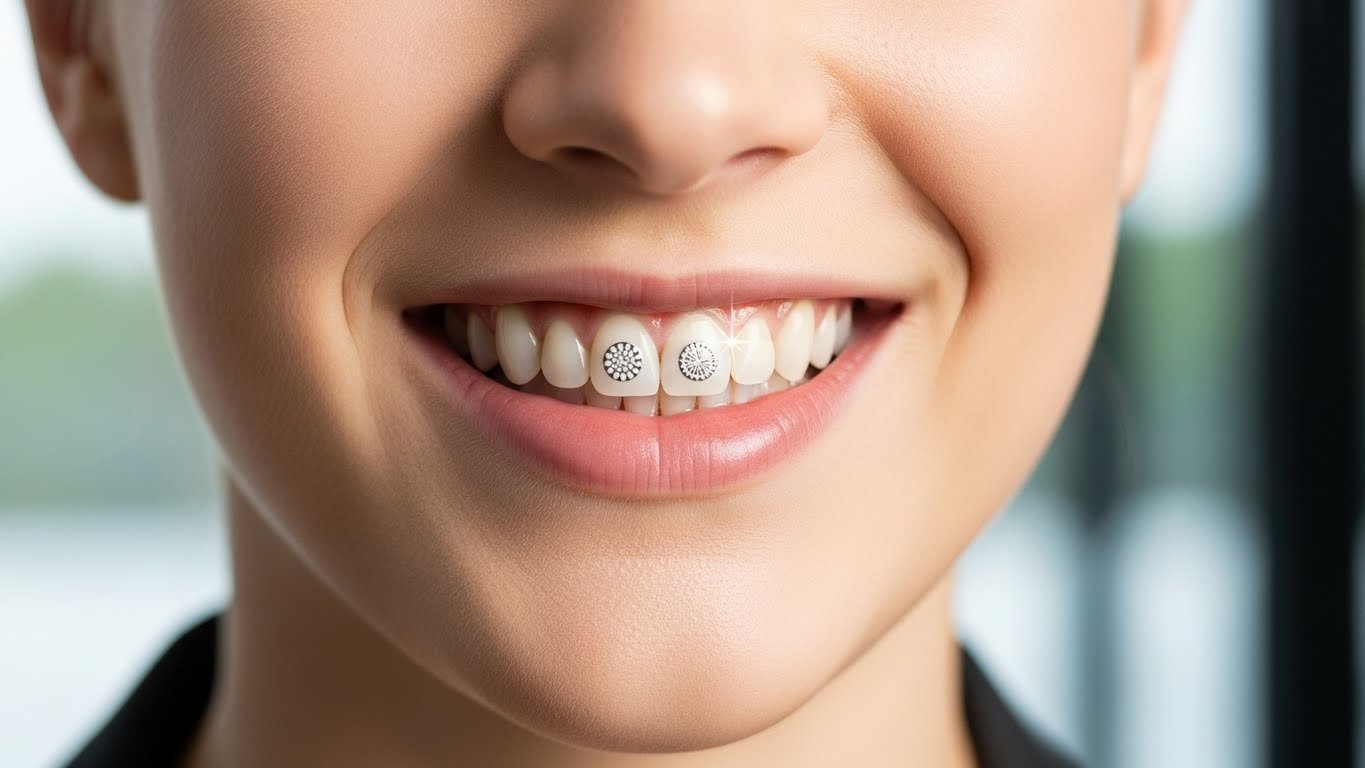
The world of fashion loves a throwback, and right now, the spotlight is shining on Tooth Gems. This tiny accessory, offering a flash of sparkle to your smile, is a major trend once again. Many people are curious about adding this unique touch to their teeth. But before you jump on this decorative bandwagon, it is important to know the real story about Tooth Gems, safety, and oral health. We will break down everything you need to know about this rising cosmetic practice.
The Cultural Comeback: From the 90s to Modern Celebrity Influence
Tooth Gems were originally a hit back in the 1990s. They have recently made a massive return, fueled by social media and celebrity self-expression. When famous faces flash a smile with a tiny diamond or rhinestone, it instantly becomes popular. This trend especially grabs the attention of younger generations. However, many teenagers are too young to fully grasp the long-term impact on their dental health.
Defining Tooth Gems and Their Composition
So, what exactly are Tooth Gems? They are tiny decorative jewels or rhinestones that are affixed to the tooth surface. Some gems are crystals or Swarovski designs, while others are made from gold or high-noble alloys. They are meant to be a cosmetic effect only. Importantly, their application is designed to be a simple, non-invasive procedure.
The Nature of the Commitment
Tooth Gems are considered a temporary form of body art. They are generally advertised to last about six months, but sometimes they stay on longer. This is appealing to people who want self-expression without a long-term commitment. They offer a fun, reversible way to change up your smile. However, remember that the bond is meant to be temporary.
The Central Question: Are Tooth Gems Safe for Your Teeth?
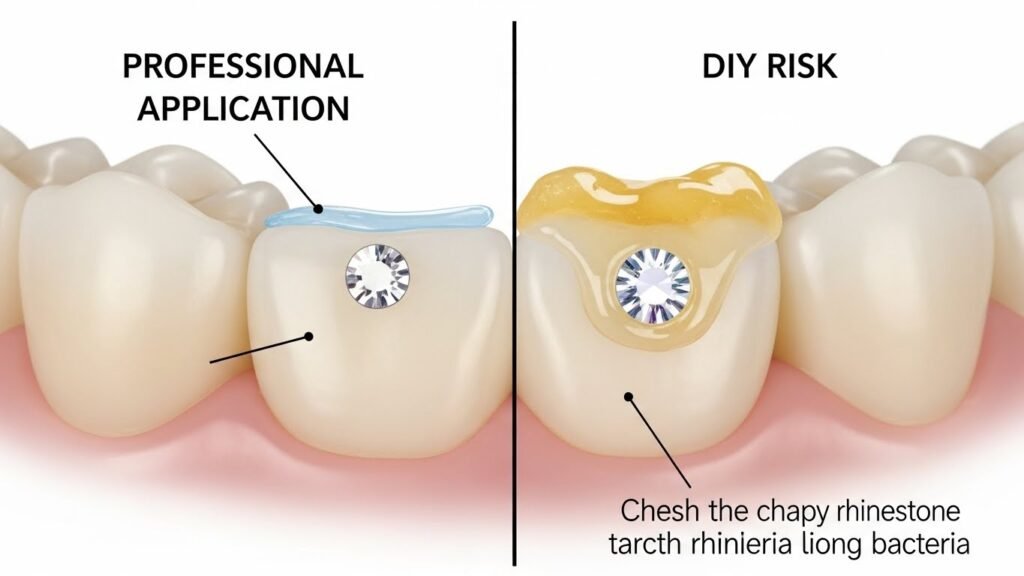
This is the big question for anyone considering Tooth Gems. The answer largely depends on two critical factors: who applies the gem, and what materials are used. When applied by a dental professional, the risks are minimized. Ignoring professional advice, however, can lead to serious harm to your teeth.
The Dental Professional’s Argument for Safety (The “Pro” Case)
When applied correctly, dentists often view the procedure as safe and reversible. They use techniques and materials that have been proven safe in cosmetic dentistry. The key is the biocompatible nature of the materials. Reputable dental offices use gems and adhesives specifically made for the mouth.
- Material Integrity: The dental jewelry used is custom-made and manufactured by registered dental technicians.
- Technique Similarity: The application process is very much like placing orthodontic brackets or composite fillings.
- Safety Protocol: The procedure is performed in a sterile setting, which is key for overall health.
Understanding the Bonding Agent
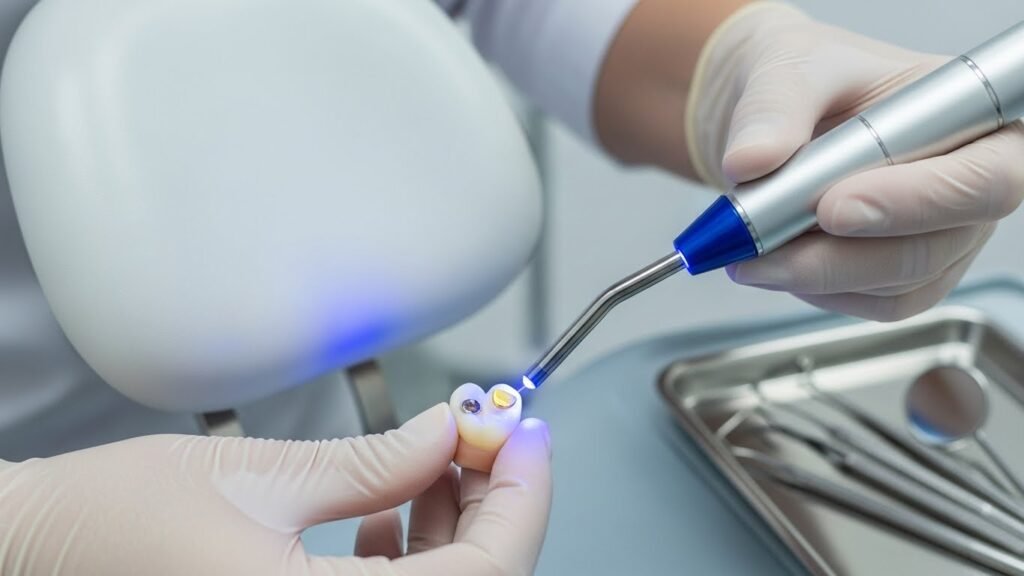
The glue, or dental-grade adhesive, is everything for Tooth Gems. It is a special bonding agent formulated to adhere securely to the enamel. Most importantly, this adhesive must be capable of being safely removed by a dentist. A curing light (or UV light) is used to harden and set the bonding.
The Primary Concerns: Direct and Indirect Tooth Damage (The “Con” Case)
Even with professional application, there are real risks. The majority of problems come from improper technique or low-quality materials. The consequences often involve lasting damage to the tooth structure. This is why research before getting Tooth Gems is so important.
- Enamel Compromise: If a non-dental adhesive is used, or removal is incorrect, the protective enamel can be permanently worn away or etched.
- Sensitivity and Vulnerability: Loss of enamel leads directly to increased sensitivity to hot and cold. The tooth also becomes more vulnerable to acidic attack.
- Aesthetic Risk: When the gem is taken off, the tooth may show noticeable discoloration. This visible “scar” can remain for years.
Application Protocol: The Key to Risk Minimization
The number one way to ensure safety is choosing the right practitioner for your Tooth Gems. This procedure should never be treated lightly. It requires the expertise of someone trained in dental health and hygiene.
Selecting a Qualified and Reputable Practitioner
You must only trust a licensed dental professional with your Tooth Gems. Look for a dentist or a trained technician working in a certified dental office. A professional practitioner is trained to minimize harm.
- Licensing Requirements: The person applying the gem must be authorized to work with dental-grade adhesive.
- Initial Oral Health Assessment: A good dentist will check for underlying issues like cavities. The application should not hide existing tooth decay.
- Avoiding Substandard Providers: Stay away from untrained kiosks or pop-up shops. They often use materials that are not biocompatible.
The Professional Bonding Procedure: Step-by-Step
The professional way to apply Tooth Gems is very specific. It is designed to create a strong, temporary bond. This process does not involve drilling.
- Preparation: The selected tooth surface is thoroughly cleaned and dried.
- Bonding Agent: A small amount of special dental-grade adhesive is placed on the tooth.
- Placement: The jewel or rhinestone is carefully positioned.
- Curing: A UV light or curing light is used to harden the adhesive in seconds.
The Dangers of DIY Kits and Non-Dental Materials
The biggest risks with Tooth Gems come from DIY kits. These kits are very popular online but should be avoided entirely. The potential for damage far outweighs the lower cost.
- Toxic Adhesives: Many DIY kits contain non-dental adhesives like super glue. These are toxic and can cause serious chemical irritation or burns to the gums and cheek.
- Lack of Assessment: When you do it yourself, you cannot check the tooth for early decay. You risk sealing bacteria into a new cavity.
- Risk of Poor Bond: The bond is often weak, leading to easy gem chipping or loss. This leaves behind hardened glue that traps plaque.
Potential Dental Risks and Adverse Effects
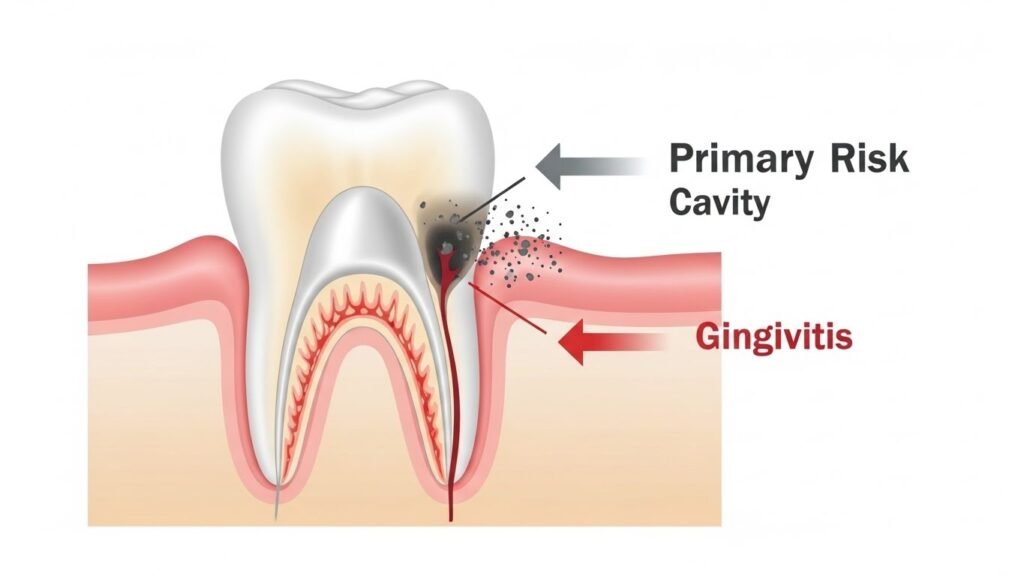
Even the most perfect application of Tooth Gems requires commitment to care. If hygiene slips, or if the gem is slightly too large, problems can occur. These are the issues that cause dentists the most concern. Understanding these risks is part of making an informed decision.
Increased Risk of Oral Hygiene Issues
The presence of any foreign object on the teeth changes the way you clean them. The jewel’s raised surface acts like a shelter for bacteria. This is known as the “plaque trap” effect. Diligent flossing and brushing are essential to prevent buildup.
- Localized Pathologies: Trapped plaque leads to specific issues near the gem:
- Cavities and localized tooth decay.
- Gingivitis (gum inflammation).
- Chronic irritation if the gem is placed too close to the gumline.
Material Safety and Physical Injury Concerns
Professional Tooth Gems are usually biocompatible, but you must verify the source. Poor quality jewels or metals can cause allergic reactions in the sensitive mouth lining. There are also mechanical risks involved with the bond breaking.
- Allergic Reactions: Metals or alloys in cheaper jewels can cause localized swelling, discomfort, and redness of the gums.
- Aspiration and Ingestion: If the adhesive fails, the small gem can become dislodged. The biggest risk is accidentally inhaling the jewel (aspiration) or swallowing it.
Impact on Bite and Occlusion
Most Tooth Gems are designed to be thin and flat. However, if you choose a very large stud or the application is imprecise, it can affect your bite. This is called occlusal interference.
- Occlusal Interference: The bump created by the gem can change how your top and bottom teeth meet.
- Excessive Wear: Constant pressure from the opposing tooth hitting the gem can lead to abnormal wear on the enamel of that opposite tooth.
Proper Care, Lifespan, and Safe Removal
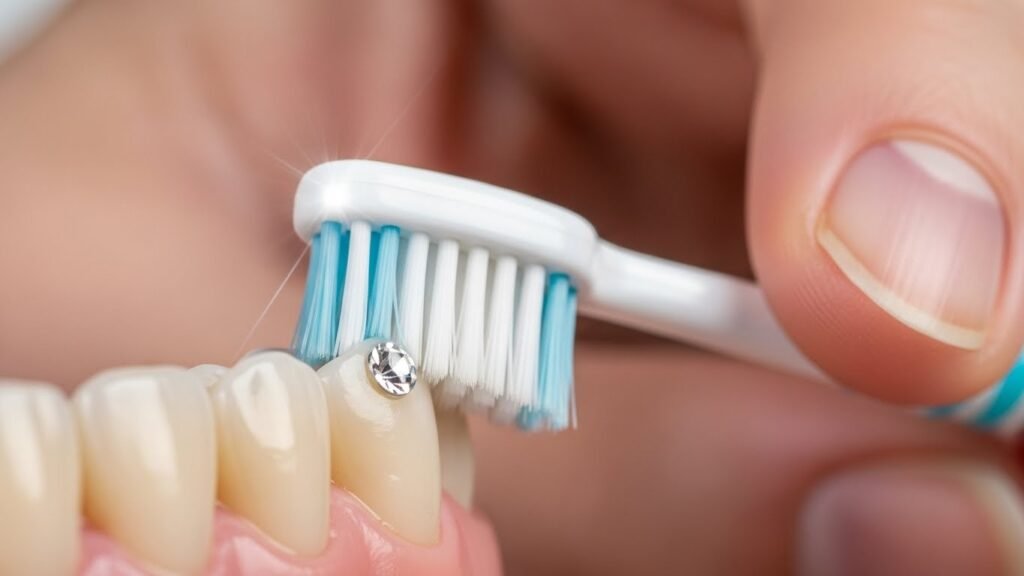
The temporary nature of Tooth Gems means you must commit to strict care. The jewel will not last forever, and safe removal is just as important as safe application. A few simple habits can prevent serious damage.
Essential Maintenance and Daily Care
Your hygiene routine must become highly focused. Regular brushing is not enough. You need a modified technique to keep plaque away from the edges of the gem.
- Modified Brushing Technique: Use a soft-bristled, non-abrasive brush. Clean gently around the edges of the stud.
- Flossing Strategies: Continue flossing daily to clean between teeth. Use extra care near the gem to avoid pulling it off.
- Fluoride and Mouthwash Use: Use fluoride toothpaste to keep enamel strong. A gentle mouthwash can help control bacteria.
Dietary and Behavioral Precautions
What you eat and drink right after application is crucial. You must also change some long-term habits to protect the bonding. This helps extend the life of your Tooth Gems.
- Initial Care Instructions: Do not eat or drink for at least one hour after the procedure. Stick to soft foods for the first 24 hours.
- Long-term Behavioral Modification: Strictly avoiding chewing on hard items like ice or nuts. Sugary and sticky foods can also loosen the bond.
- Physical Avoidance: Do not use your tongue to pick at the gem. This can weaken the bond and cause discomfort.
Duration, Replacement, and Professional Removal
Tooth Gems are not meant to last forever. Regular dental checkups are necessary while you have them. This allows the dentist to monitor your oral health.
- Mandatory Professional Removal: When you are done with the trend, a dentist must perform the removal. Never try to remove the gem at home.
- The Clinical Removal Process: The dentist carefully loosens the adhesive. After the gem is off, the remaining bonding is polished off the enamel. This smooths the tooth surface.
Comparison to Other Trends and Safer Alternatives
Tooth Gems are not the only form of dental decoration. Other trends carry even greater risks. If the goal is a beautiful smile, there are safe, professional options that enhance your cosmetic effect without the risks.
Risks Associated with Dental Grills
Grills are metal covers that fit over the teeth. They were popularized by rappers and are often made from metals. Dentists consider grills more dangerous than Tooth Gems.
- Physical Irritation: Grills are bulky and can cause constant rubbing and irritation to the gums and cheek.
- High Contamination Risk: They cover large surfaces of the teeth, trapping immense amounts of plaque. This significantly increases the risk of widespread tooth decay and gingivitis.
- Functional Interference: Grills can seriously affect your ability to speak clearly. They also change how you eat.
Recommended Safer Aesthetic Enhancements
You do not have to compromise your dental health for a better smile. Your dental office provides several safe cosmetic options. These procedures are long-lasting and effective.
- Professional Teeth Whitening: This is the safest way to instantly enhance the sparkle of your smile. It is performed by a dentist and has no risks of decay.
- Other Cosmetic Options: Depending on your needs, dentists can offer:
- Porcelain Veneers.
- Cosmetic Dental Bonding.
- Invisalign for a straighter smile.
The Psychological and Social Context of Body Modification
The decision to get Tooth Gems often involves more than just aesthetics. It is a form of personal expression and identity.
Non-Permanent vs. Permanent Body Art
Tooth Gems are popular because they are non-permanent body modification. Unlike tattoos or piercings, there is no long-term commitment. They appeal to those who want visible self-expression that can be easily removed. This makes them an attractive option for following a fleeting trend.
Patient Consultation and Informed Consent
A responsible dental office always prioritizes the patient’s safety. The dentist will fully discuss all potential risks. This ensures the patient provides informed consent.
- The consultation covers the temporary nature and the need for frequent routine checkups.
- Special attention is given to younger patients to ensure they understand the commitment to strict hygiene.
Financial and Logistical Considerations of Tooth Gems
While the aesthetic appeal of tooth gems is immediate, potential clients must understand the procedural and recurring costs involved. Unlike essential dental care, cosmetic procedures like tooth gem application are almost always out-of-pocket expenses, making financial planning a crucial part of the decision.
Understanding the Cost of Application and Removal
The price of a tooth gem application varies dramatically based on two factors: the quality of the jewel and the expertise of the practitioner. The massive cost difference directly correlates with the safety risk.
- Professional Dental Application: The cost typically ranges from $150 to $500 per gem. This price covers the consultation, the use of sterile, dental-grade materials, biocompatible adhesive, a high-quality gem (Swarovski crystal or genuine gold), and the dentist’s time and expertise. This is the safest, though most expensive, route.
- Non-Dental/Kiosk Application: These services are often priced much lower, ranging from $50 to $150. While affordable, the cost saving comes at the risk of using non-medical adhesives, unsterile environments, and untrained staff, increasing the potential for permanent enamel damage.
- Professional Removal: When applied professionally, removal is usually quick and costs between $50 and $150, which includes the necessary polishing and fluoride treatment.
Insurance Coverage and Recurring Costs
Patients must be aware that tooth gem application is considered an elective cosmetic procedure.
- Lack of Insurance Coverage: Dental insurance plans, including PPO and HMO, do not cover the cost of tooth gem application or removal. All fees associated with the procedure are the patient’s responsibility.
- Recurring Replacement Costs: Given the temporary nature of the gems (6 months to 1 year), the procedure must be repeated. The ongoing cost of replacement over several years can quickly add up, making this a significant long-term cosmetic investment.
- Emergency Fees: If a gem falls off or causes an infection, the subsequent emergency dental visit to repair the damage or treat the infection may be partially covered by insurance, but the original cosmetic application remains uninsured.
Technical Specifications: Materials and Precise Placement
To fully appreciate the skill involved in safe tooth gem application, it is essential to look at the specific materials used and the precise placement on the tooth structure. This requires careful consideration of both aesthetics and function (occlusion).
Detailed Examination of Jewelry and Adhesion Materials
The quality of the gem and the bond is the first line of defense against damage. Dental practitioners adhere to strict material standards to ensure patient safety.
- Jewelry Composition: Professional gems are often 22-karat or 24-karat gold (which is less reactive than lower karats), or certified genuine Swarovski crystals. These materials are chosen for their inertness and non-allergenic properties. Inferior materials may include nickel or poor-quality plastic, which can trigger oral allergies.
- Bonding Technique: The Etch Factor: While drilling is not required, the tooth surface must be prepared. This usually involves applying a mild acidic solution (like phosphoric acid) for a few seconds—a process known as etching. This creates microscopic porosity in the enamel to allow the composite resin to mechanically bond. While standardized in dentistry, improper etching (too long or too strong) is a key way the enamel can be compromised, underscoring the need for a professional.
- Curing Process: The placement of the resin and the gem requires polymerization using a blue LED or halogen light. This “curing” process is identical to that used for dental fillings, ensuring a strong, non-toxic, and durable bond.
Strategic Tooth Selection for Optimal Placement
Gems are rarely placed randomly. Dentists strategically select teeth that maximize visibility while minimizing the risk of breakage from biting and chewing forces (occlusion).
- Common Placement Sites: The most common teeth chosen are the upper lateral incisors (the teeth next to your two front teeth) and the canines (eye teeth). These teeth are highly visible when smiling but are generally less involved in the heavy, crushing phase of chewing.
- Avoiding Occlusal Interference: Placement is carefully checked to ensure the jewel does not make contact with the opposing tooth when the jaw is closed or during grinding/chewing movements. Even a millimeter of interference can cause undue stress on the enamel and lead to rapid gem loss or opposing tooth wear.
Interferences with Comprehensive Dental Care
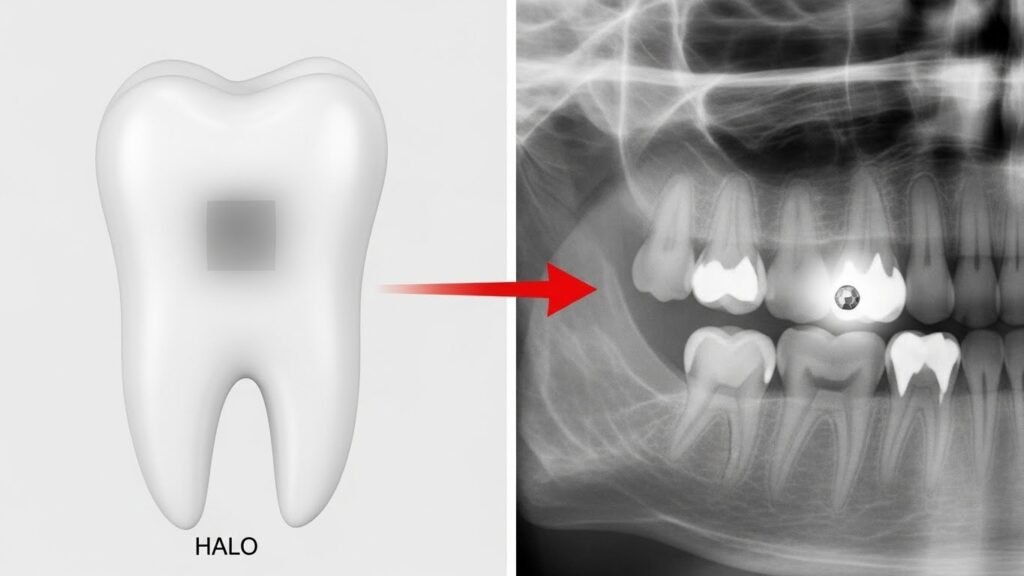
Getting a tooth gem can affect your ability to undergo, or the outcome of, other routine and cosmetic dental treatments. These interferences are crucial to discuss with a dentist before application.
Impact on Diagnostic Imaging (X-rays)
Any metallic or dense material placed on the tooth surface can interfere with diagnostic images.
- Radiopacity and Obscuration: Tooth gems, especially metallic ones, are highly radiopaque (they block X-rays) and appear as bright white, dense spots on the image.
- Masking Underlying Issues: The dense shadow cast by the gem can completely obscure the area of the tooth beneath and immediately surrounding it. If a cavity, root decay, or gum disease is developing in that area, the dentist will not be able to see it on a routine radiograph. This necessitates the removal of the gem before a thorough diagnostic X-ray can be taken.
Compromising Cosmetic Procedures (Whitening)
One of the most significant and often-regretted issues related to tooth gems is their incompatibility with professional teeth whitening.
- The Shielding Effect: Whitening products, whether gel or in-office light-activated systems, only work on the exposed enamel. The area directly beneath the gem is completely shielded from the product.
- The “Halo” Effect: If a patient whitens their teeth with the gem in place, the rest of the tooth will lighten, but the shielded spot will remain the original, darker color. When the gem is eventually removed, this un-whitened spot—often called a “halo” or “shadow”—will be visible. This typically requires significant time and further, targeted whitening to correct.
Orthodontic Incompatibility
Tooth gems are strictly incompatible with current and future orthodontic treatment.
- Braces and Attachments: If a patient needs braces, the gem must be completely removed first. The space occupied by the gem is needed for the placement of orthodontic brackets or bands.
- Invisalign and Clear Aligners: Clear aligners are custom-molded to the exact surface of the tooth. A tooth gem will prevent the aligner from seating properly, rendering the orthodontic treatment ineffective or forcing the patient to remove the gem permanently.
The Legal Landscape and Functional Experience
Regulatory Oversight and Liability Gaps
The tooth gem industry operates in a mostly unregulated space, particularly concerning the materials and application standards outside of licensed dental practices.
- Lack of FDA Classification: In the United States, the Food and Drug Administration (FDA) does not specifically regulate tooth gems as medical devices, meaning there are no government-mandated standards for biocompatibility or safety.
- Zero Recourse for Patients: If a patient receives treatment at an unlicensed cosmetic parlor and suffers permanent enamel damage or infection, they have virtually no legal recourse, as the practitioner is operating outside of established professional dental standards. This reinforces the need for consumers to assume all risk when choosing a non-professional applicator.
The Sensory and Functional Experience
Beyond the visual impact, patients often want to know how the gem will feel in their mouth, particularly in the days following application.
- Initial Sensation: Immediately after the procedure, patients report a noticeable foreign feeling in their mouth. The tongue naturally seeks out and rubs against the raised surface of the gem. This sensation usually subsides within a few days or weeks as the mouth adapts.
- Impact on Speech: In rare cases, especially with larger gems placed close to the incisal edge, a temporary lisp or alteration in speech sounds can occur until the tongue musculature adjusts its movement patterns.
- Functional Interference: For musicians who play wind instruments (like the saxophone or clarinet), a tooth gem can be problematic. The contact point between the mouthpiece and the tooth can be disrupted, or the jewel itself can cause abrasion to the lip or gum tissue during prolonged playing.
The Post-Removal Phase: Healing and Restoration
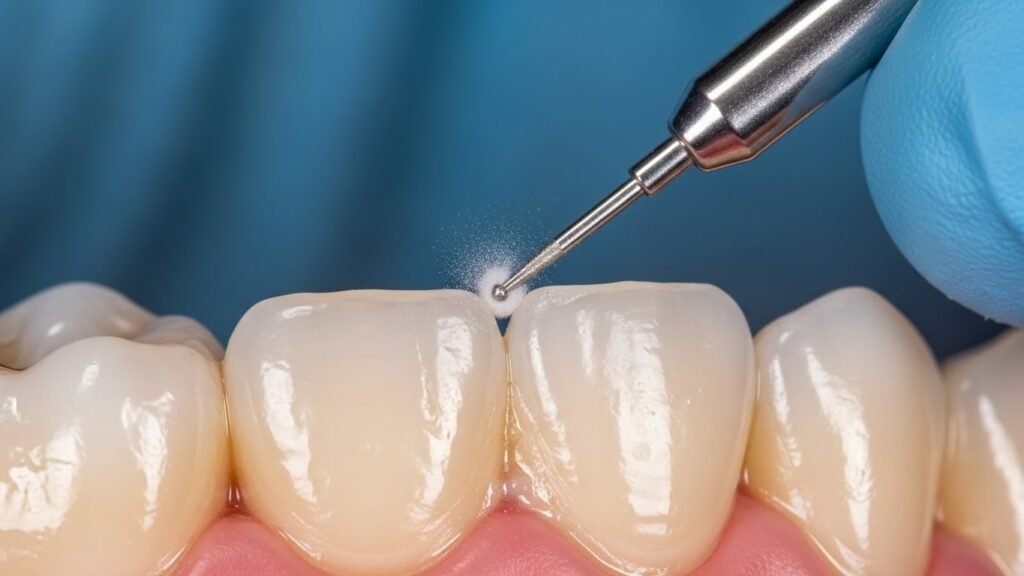
The “reversible” aspect of a tooth gem depends entirely on the dentist’s skill during the removal process. The goal is not just to take the gem off, but to restore the tooth’s original, healthy appearance.
Polishing and Finishing the Enamel Surface
After the gem is detached, a layer of bonding resin remains on the tooth surface.
- Resin Removal: The dentist uses a series of fine burs and polishing strips to gently remove all traces of the remaining composite resin. This process must be meticulous to ensure no resin is left behind to attract plaque.
- Restoring Smoothness: The final step involves using a high-shine polishing paste to buff the tooth surface back to its original smoothness, ensuring the tongue no longer detects a rough or etched area. This prevents residual roughness from irritating soft tissues or trapping bacteria.
The Importance of Remineralization
Once the tooth surface is clean and smooth, it needs protection, especially if any minor enamel disruption occurred during application or removal.
- Post-Procedure Fluoride Application: Dentists routinely apply a high-concentration fluoride varnish or gel to the treated area. This process, known as remineralization, helps seal any microscopic pores created during the etching process and strengthens the enamel, providing final protection against decay.
- Monitoring for Discoloration: The dentist will monitor the area for any signs of post-removal discoloration (the “halo” effect). If noticeable, the patient may be advised to undergo a supervised, focused whitening treatment to ensure the entire tooth returns to a uniform shade.
Conclusion: Making an Informed Decision
Tooth Gems offer a fun way to personalize your smile. The main takeaway is clear: safety is almost entirely dependent on professional application and flawless aftercare. Never attempt to save money by using DIY kits or unlicensed practitioners. Your enamel is irreplaceable, so treat it with care. If you are considering Tooth Gems, your first call should always be to a dentist. Get professional advice to ensure your sparkle does no harm.
Frequently Asked Questions (FAQs) About Tooth Gems
Can I get a tooth gem if I have fillings or composite bonding?
It is generally recommended to place the gem on natural, healthy enamel. If the desired location has an existing composite filling or bonding, a dentist may be able to bond the gem directly to the composite material, but the adhesion may not be as strong or long-lasting as bonding to natural tooth structure. Placement on amalgam (metal) fillings is not possible.
Does the tooth gem sparkle or shine all the time?
The brilliance of the gem depends entirely on its quality and cleanliness. High-quality crystals and polished gold will reflect light intensely. However, if the gem is covered by a film of plaque or saliva, its sparkle will be significantly dulled. Regular, targeted cleaning is essential to maintain its shine.
What happens if I accidentally swallow a tooth gem?
If the gem’s adhesive bond fails and you swallow it, it is usually not a cause for panic. Since the gems are small and inert (non-toxic), they typically pass safely through the digestive system within a few days. However, if you experience pain, choking, or respiratory issues, you must seek emergency medical attention immediately, as aspiration (inhaling the gem) is a serious risk.
Can I brush my teeth with an electric toothbrush after getting a gem?
Yes, you can use an electric toothbrush. However, you must use a soft brush head and avoid pressing the bristles directly onto the gem’s surface for prolonged periods, as excessive vibration or pressure could potentially weaken the adhesive bond over time. Focus on gently cleaning the area around the base of the gem.
Are there any age restrictions for getting a tooth gem?
While there are no universal legal age limits, most reputable dental professionals will not perform the procedure on minors without explicit parental consent. Many dentists prefer to wait until the patient is at least 16 or 18 years old to ensure all permanent adult teeth have fully erupted and the patient is mature enough to maintain the required rigorous oral hygiene.
Can I get multiple tooth gems placed at once?
Yes, some patients choose to have two, three, or even a pattern of small gems placed. A dentist will assess the feasibility of multiple gems based on the size of your teeth, the natural spacing, and the ability to maintain a healthy occlusion (bite). Placing too many gems too close together significantly increases the plaque-trapping risk.
How soon after application can I return to eating normally?
While you should avoid sticky or hard foods for 24-48 hours, you can usually return to your normal diet within a few days. The most crucial factor is avoiding all biting or chewing on the gem itself, especially within the first hour while the adhesive is fully setting.
Does the procedure hurt?
No, the application of a tooth gem is completely painless. The procedure is non-invasive and does not involve any drilling, needles, or direct contact with the sensitive dentin layer of the tooth. The only sensation is the application of the cleaning gel and the feeling of the curing light.
What are the signs that a gem is about to fall off?
Common warning signs that the adhesive bond is failing include feeling a rough edge around the gem with your tongue, experiencing slight movement or wobbling when you touch the gem, or noticing food debris consistently getting trapped beneath the gem’s edges. You should see a dentist immediately if you notice these signs.
How are colored gems different from clear ones?
Colored gems (like blue, pink, or red) are typically made from colored crystals or cubic zirconia. Clear gems are often made from colorless Swarovski crystals or diamonds. The difference is purely aesthetic, but some colored gems use a foil backing that, if scratched, can dull the color more quickly than un-foiled clear crystals.
Can a tooth gem be transferred to another tooth?
No. Once the gem is professionally removed, the adhesive is cleaned from both the gem and the tooth. The adhesive bond is permanent for that session, and attempting to reuse the gem would require scraping off all the old adhesive, which often results in damage to the delicate backing of the jewel. A new gem and fresh adhesive must be used for reapplication.
Does a tooth gem change my breath (cause bad breath)?
A tooth gem does not directly cause bad breath (halitosis). However, if a patient fails to clean around the gem properly, the resulting localized plaque buildup and gum inflammation will produce volatile sulfur compounds, which do cause bad breath. It is a sign of poor hygiene, not the gem itself.
Can I still undergo professional cleanings and scaling?
Yes, routine dental cleanings are absolutely necessary, perhaps even more so. The dental hygienist will simply work around the gem. They may use specialized, fine-tipped instruments and careful ultrasonic scaling techniques to remove calculus right up to the edge of the gem without dislodging it.
Are there different shapes of tooth gems available?
Yes, while round rhinestones are the most popular, tooth gems are available in various shapes, including hearts, stars, crescent moons, triangles, and small custom logos. The larger or more angular the shape, the greater the potential risk for occlusal interference and plaque retention.
Is the adhesive visible after the gem is applied?
If the application is done correctly by a professional, only a very thin, clear layer of adhesive should be visible under the gem. A large, noticeable ring of adhesive around the gem is a sign of poor application technique and a higher risk of collecting stain and bacteria.
Does a tooth gem affect how I talk or eat?
The gem is typically so small and thin that it does not affect your speech. It may feel odd for a day or two, but it won’t permanently impede your tongue movements. It should not affect your eating, provided you follow the precaution of not biting or chewing directly on the gem.
Can I get a tooth gem on a temporary or baby tooth?
While technically possible, dentists strongly discourage this. The adhesive and removal process can be too harsh for the developing permanent tooth underneath. Additionally, the gem could interfere with the natural exfoliation (shedding) of the baby tooth.
What if my gem feels sharp or rough after it’s applied?
If the gem or the surrounding adhesive feels sharp or rough, you should contact your dentist immediately. This usually means there is a tiny burr of excess adhesive that needs to be gently polished off. Ignoring it can lead to chronic irritation or even an ulcer on the inside of your lip or cheek.
How long does the entire application procedure take?
The entire professional procedure, from the initial consultation and cleaning to the final curing of the adhesive, is quick. It usually takes a total of 10 to 20 minutes per gem.
Are there temporary, stick-on gems that don’t require bonding?
Yes, non-dental temporary tooth decals or stickers are sold. They are applied using water or a weak, temporary adhesive (like those used for false nails) and only last for a few hours. While risk-free in terms of enamel damage, these products are not durable and pose a risk if accidentally swallowed.
