


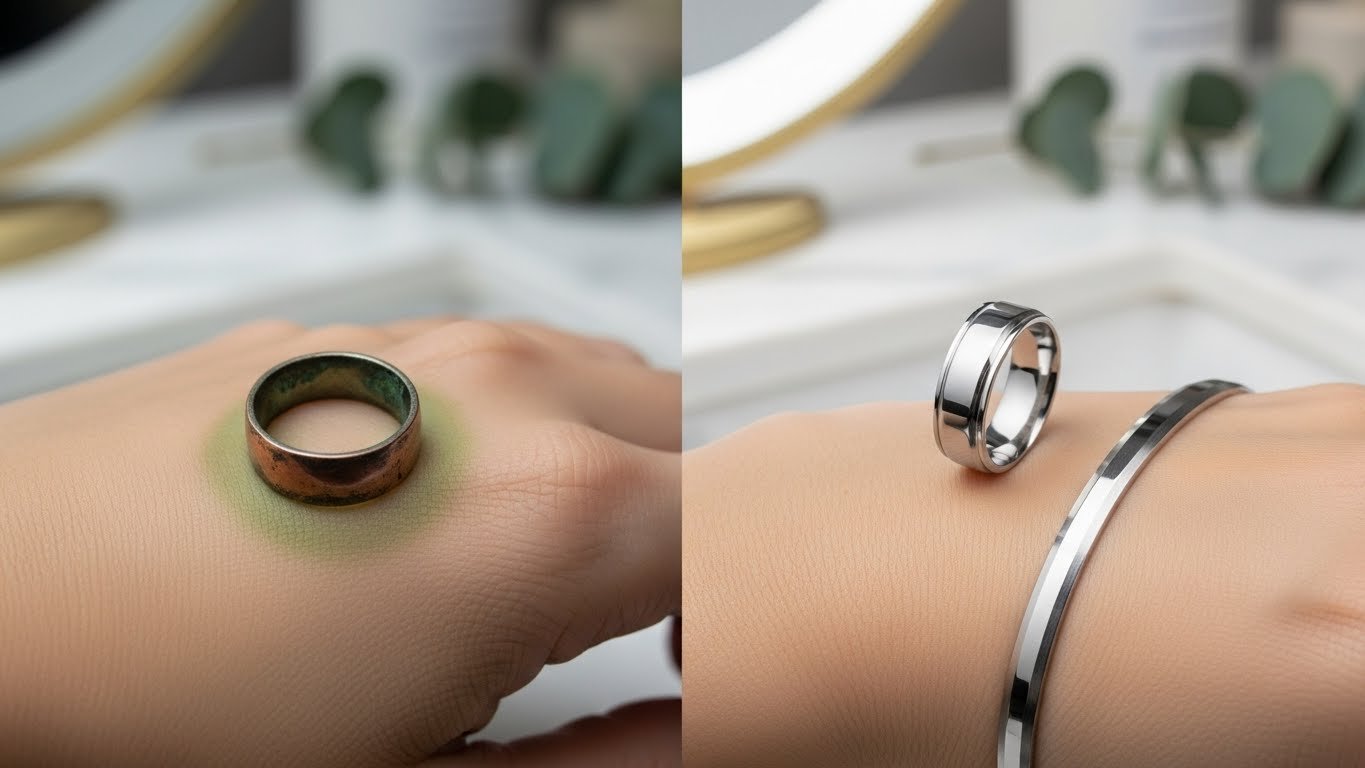
You just bought a fresh new ring and it looks fire. But after wearing it all day, you look down and see a weird green ring around your finger. It is super annoying and honestly kind of embarrassing. You might think you got scammed with fake jewelry. But does stainless steel turn skin green like those cheap rings from the mall?
The short answer is a big fat no. High-quality stainless steel is a total game changer for your jewelry collection. It does not react with your body like copper or brass does. In this guide, we will break down the science of the green skin struggle. We will also show you why stainless steel is the GOAT for sensitive skin.
Understanding the Green Skin Phenomenon
Seeing your skin turn green can be a total mood killer. Most people think it means the jewelry is trash or made of plastic. That is actually a huge myth in the fashion world. Green skin is just a sign of a chemical reaction happening right on your body.
It does not mean you have a dangerous infection or a disease. It just means the metal in your jewelry is not vibing with your skin. This happens to almost everyone at some point. Knowing why it happens helps you pick better pieces that last longer.
The Misconception: Real vs. Fake Jewelry
A common mistake is thinking only cheap jewelry turns you green. Even some expensive gold or silver pieces can leave a mark. The green color is not a sign of quality but a sign of metal content. You can spend a lot of money and still end up with a green wrist.
- Metal content matters more than the price tag on the item.
- Pure metals like 24k gold are usually too soft for jewelry.
- Alloys are created by mixing different metals together for strength.
Discoloration vs. Allergic Reactions
It is important to know if your skin is just colored or actually irritated. Simple green staining is usually harmless and washes right off. An allergic reaction is a different beast entirely. That is when your skin gets red, itchy, or bumpy.
- Oxidation causes the green color on your skin surface.
- Dermatitis is a real allergy that causes itching and rashes.
- Nickel allergies are the most common cause of jewelry-related itching.
The Science of Oxidation: Why Does Jewelry Turn Skin Green?
The whole green skin situation comes down to a process called oxidation. This is basically a chemistry experiment happening on your hand. When certain metals meet oxygen and moisture, they change. This change creates a new substance that rubs off on you.
Think of it like a car rusting out in the rain. Your jewelry goes through a similar struggle. The only difference is that instead of red rust, you get a green stain. It is all about how the metal handles the world around it.
The Process of Chemical Oxidation
Oxidation happens when electrons move around between atoms. When metal is exposed to air, it starts to break down slowly. This creates a layer on the metal called a patina. This patina is what eventually transfers to your skin.
- Oxygen in the air starts the breakdown of the metal surface.
- Moisture acts as a bridge to speed up the whole process.
- Patina is the scientific name for that colorful surface layer.
The Role of the Acid Mantle
Your skin is actually slightly acidic to protect you from germs. This is called your acid mantle and it is totally normal. However, this acid can be a nightmare for certain types of jewelry. It reacts with metals like copper to create a blue-green hue.
- Skin acids vary from person to person based on biology.
- Natural oils help the metal stay in contact with your skin.
- pH levels determine how fast the jewelry will start to turn green.
Chelated Copper and Skin Penetration
If your jewelry has copper in it, things get even more scientific. The acid in your sweat dissolves the copper into tiny pieces. These are called chelated copper ions. They are so small that they can actually soak into your skin.
- Copper ions are the specific particles that cause the staining.
- Absorption happens when these ions stay on the skin for too long.
- Staining is just the visible evidence of this chemical soak.
External Catalysts and Environmental Triggers
Sometimes it is not just your body causing the problem. The world around you can make your jewelry react much faster. If you live in a place that is super hot or humid, watch out. Your jewelry is going to face a lot of stress from the elements.
Even things you do every day can trigger the green effect. Simple tasks like washing your hands or putting on lotion matter. You have to be careful about what your jewelry touches. These external factors are often the biggest culprits for a ruined look.
The Humidity Factor
Humidity is a major enemy for jewelry that is not made of steel. Wet air provides constant moisture for the oxidation process. If you are at the beach or in a swampy area, your jewelry reacts faster. Sweat is even worse because it contains salt and acids.
- High temperatures make you sweat more and increase reactions.
- Salt in sweat acts as a catalyst to speed up metal breakdown.
- Moisture buildup under a ring is the perfect spot for green skin.
Water Exposure and Chemicals
Water is not always pure, especially in pools or the ocean. Chlorine is a harsh chemical that eats away at metal finishes. Saltwater is also very corrosive and can destroy jewelry in no time. Even the soap you use in the shower can cause a reaction.
- Chlorine in swimming pools causes jewelry to tarnish rapidly.
- Saltwater is extremely aggressive toward copper and brass alloys.
- Household cleaners can strip away protective plating on your pieces.
The Role of Personal Body Chemistry
Have you ever noticed that a ring turns your friend green but not you? That is because everyone has a unique body chemistry. Your diet and lifestyle play a huge role in how your skin reacts. It is not just the metal; it is you too.
Some people have more acidic sweat than others. This is why some people can wear cheap jewelry for years with no issues. Others might turn green within minutes of putting a ring on. It is all about your personal pH balance and health.
The pH Balance of Your Skin
Your skin pH is a measure of how acidic or basic your skin surface is. A low pH means your skin is more acidic. This acid acts like a solvent on reactive metals. It melts a tiny bit of the metal right onto your skin.
- Low pH levels lead to faster greening of the skin.
- Acidity levels can change throughout the day or month.
- Skin type (oily vs. dry) affects how much metal stays on you.
Diet and Medications
What you eat actually changes the chemistry of your sweat. If you eat a lot of processed foods or specific spices, your sweat changes. Some medications can also alter your body’s acidity. This can make you more likely to experience skin discoloration.
- Processed foods can increase the acidity of your sweat.
- Medications often have side effects that alter skin chemistry.
- Hydration levels affect the concentration of acids in your perspiration.
Common Metal Culprits Responsible for Discoloration

Not all metals are created equal when it comes to skin safety. Some metals are famous for causing that dreaded green stain. If you want to avoid the mess, you need to know which metals to skip. Most of the time, the culprit is hidden inside an alloy.
Copper is the number one enemy of clear skin in the jewelry world. It is used in almost everything because it is cheap and strong. But it is also the most reactive metal you will find. Let’s look at the metals that cause the most trouble.
Copper: The Primary Cause
Copper is the king of the green stain. When it meets moisture and acid, it creates copper carbonates. These are naturally green or blue in color. Since copper is in so many jewelry pieces, it is the most common cause of the issue.
- Copper carbonates are the actual green substance you see.
- Base metals in cheap jewelry are usually loaded with copper.
- Reaction speed for copper is very fast compared to other metals.
Gold and Silver Alloys
Wait, gold and silver can turn you green? Yes, they absolutely can. Pure gold and silver are too soft to hold a shape. Makers mix them with other metals like copper to make them hard. These “helper” metals are what cause the green skin.
- 14k and 18k gold contain copper to make the gold durable.
- Sterling silver usually has about 7.5% copper in the mix.
- Lower karat gold has more copper and is more likely to stain.
Brass and Bronze
Brass and bronze are basically copper’s cousins. Brass is a mix of copper and zinc, while bronze is copper and tin. Both of them are super reactive. If you buy “antique” looking jewelry, it is likely one of these.
- High copper content makes these metals turn skin green very fast.
- Oxidation rates for brass are some of the highest in jewelry.
- Costume jewelry often uses brass because it looks like gold.
Hypoallergenic Stainless Steel Jewelry: The Ultimate Solution
So, does stainless steel turn skin green? The answer is a solid no, and here is why. Stainless steel is a special kind of alloy designed not to react. It was made to handle tough environments without breaking down or rusting.
This makes it the perfect material for jewelry you want to wear every day. You can sweat in it, shower in it, and live your life. It stays shiny and your skin stays its natural color. It is the ultimate hack for looking good without the green mess.

Composition and Chemistry of Stainless Steel
Stainless steel is a mix of iron, carbon, and chromium. The secret sauce is the chromium. It changes the way the metal reacts with the world. Even though it has a tiny bit of nickel, it is trapped inside the metal.
- Iron and carbon provide the strength and weight of the piece.
- Chromium is the ingredient that stops the oxidation process.
- Nickel trace amounts are held tightly so they don’t leak out.
The Chromium Factor
Chromium is like a superhero for your jewelry. It reacts with oxygen to form a thin, invisible layer on the surface. This layer is so tight that nothing can get through it. It protects the metal underneath from your skin acids and sweat.
- Invisible barrier keeps the metal from touching your skin oils.
- Self-healing properties mean the layer fixes itself if scratched.
- Non-reactive surface ensures no green hue ever develops.
Key Benefits of Choosing Stainless Steel
There are so many reasons to love stainless steel jewelry. It is not just about avoiding green skin. This metal is built to last a lifetime. It is one of the most durable materials you can put on your body.
- Corrosion resistance ensures it won’t rust or tarnish over time.
- Everyday wear is easy because it is very scratch-resistant.
- Hypoallergenic nature makes it safe for the most sensitive skin.
- Low maintenance means you never have to spend hours polishing it.
Understanding Different Grades of Stainless Steel
Not all stainless steel is the same. When you are shopping, you might see different numbers. These numbers tell you how much of each metal is in the mix. For jewelry, you want the grades that are the safest for your skin.
The most common grades are 316L and 304. One is a bit more high-end than the other. Knowing the difference helps you make sure you are getting the best quality. Always look for these numbers when buying new pieces.
316L Surgical Grade Steel
This is the gold standard for stainless steel jewelry. The “L” stands for low carbon. This grade is used for medical implants and piercings. It is the most resistant to corrosion and the least likely to cause any reaction.
- Surgical grade means it is safe for inside the body too.
- Low carbon prevents the metal from becoming brittle or reacting.
- Maximum safety for people who have severe metal allergies.
304 Stainless Steel
This is a very common grade used in many household items. It is still great for jewelry but a little less resistant than 316L. It is usually more affordable. If you don’t have super sensitive skin, 304 works just fine for most pieces.
- Affordable option for high-quality fashion jewelry.
- Durable enough for rings and bracelets worn daily.
- Good resistance to basic moisture and skin acids.
Other High-Quality Materials and Components
Great jewelry is often more than just metal. It can include pearls, crystals, and special coatings. When these are high-quality, they add to the beauty without causing issues. You want materials that match the durability of stainless steel.
Using premium components ensures the whole piece stays looking new. You don’t want a great steel chain with a cheap pendant that turns green. Look for brands that care about every single part of the jewelry.
European Crystal Pearls
These are not your average fake pearls. They are made with a crystal core and a special silk-like coating. They are much tougher than natural pearls. They won’t peel or lose their shine when they touch your skin.
- Lustrous finish gives them a deep and realistic glow.
- Durable coating resists sweat, perfume, and skin oils.
- Consistent shape makes them perfect for modern handcrafted designs.
European Crystals
Crystals add that extra sparkle and glamour to your look. High-quality European crystals are famous for their precision cut. They catch the light better than cheap glass or plastic. They are also set in ways that keep them secure.
- Exceptional clarity ensures the sparkle lasts for years.
- Brilliance that rivals much more expensive gemstones.
- Secure settings prevent the crystals from falling out during wear.
High-Quality Plating Techniques

If you want the look of gold without the price, plating is the way to go. But not all plating is good. Some thin layers rub off in days, leaving the copper underneath exposed. You want plating that is thick and bonded well.
- Gold-plated stainless steel gives you the gold look with a steel core.
- Rhodium plating provides a bright white finish that won’t tarnish.
- PVD coating is a modern method that makes the color last way longer.
Metal Comparison: Durability and Skin Reaction Levels
Choosing the right metal is the best way to ensure your jewelry collection remains beautiful and skin-safe. The following table compares the most common jewelry metals based on their chemical stability and how they interact with your body.
| Metal Type | Durability Level | Risk of Green Skin | Best Use Case |
| 316L Stainless Steel | Extreme | None | Daily wear and sensitive skin |
| Titanium | Extreme | None | Active lifestyles and piercings |
| 14k/18k Gold | Moderate | Low to Medium | Fine jewelry and investments |
| Sterling Silver | Low | Medium | Occasional fashion wear |
| Copper | Very Low | Very High | Industrial or decorative use |
| Brass/Bronze | Low | High | Costume or vintage style |
Key Takeaways for Your Collection
- Stainless steel is the top choice because it features a protective layer that stops rust and tarnish.
- Copper and brass are the most common causes of the greenish-blue hue due to their high reactivity with natural oils.
- Surgical grade steel (316L) is moisture-resistant and non-reactive, making it safe for those with metal allergies.
- Sterling silver often contains copper as an alloy, which is why it can still cause skin discoloration.
- Durability in stainless steel means it is scratch-resistant and ideal for everyday wear.
Practical Prevention: How to Stop Your Jewelry from Turning You Green
If you have jewelry that isn’t stainless steel, don’t throw it away yet. There are ways to stop the green stain before it starts. It takes a little extra work, but it can save your favorite pieces. Prevention is always easier than cleaning up a mess.

The key is to create a barrier between the metal and your skin. You also need to change how you handle your jewelry. A few simple habits can make a huge difference in your daily style. Here is how to keep your skin clear.
Daily Habits and Jewelry Care
Your daily routine can actually be hurting your jewelry. Chemicals in your beauty products are often very reactive. If you change the order of your routine, you can protect your pieces. It is all about minimizing the time the metal touches chemicals.
- Last on, first off is the golden rule for wearing jewelry.
- Dry skin is essential before you put any rings or bracelets on.
- Nightly removal gives your skin time to breathe and recover.
The “Nail Polish” Hack and Protective Barriers
This is an old-school trick that actually works. You can use clear nail polish to seal the inside of a ring. This creates a plastic wall so the metal never touches your skin. It is not permanent, but it is a great quick fix.
- Clear enamel acts as a physical barrier against skin acids.
- Jewelry sealants are professional versions of the nail polish trick.
- Beeswax or oils can provide a temporary shield for shorter wear.
Environmental Precautions
You have to be smart about where you wear your jewelry. Some places are just bad news for reactive metals. If you are going to be in water or working out, leave the jewelry at home. This protects both your skin and the piece itself.
- No swimming in pools or hot tubs with reactive jewelry.
- Workout safety means removing rings to avoid sweat reactions.
- Kitchen care involves taking off rings before handling acidic foods.
What to Do If Your Skin Is Already Green
So you forgot to take off a cheap ring and now you have a green finger. Don’t panic! It is not permanent and it is easy to fix. You just need to break down the metal ions that are stuck to your skin. A quick clean-up will have you looking normal in no time.
Most of the time, simple soap and water will do the trick. For tougher stains, you might need something a bit stronger. Just be gentle so you don’t irritate your skin while scrubbing. Here is the best way to get rid of the green.
Cleaning the Affected Skin Area
The green color is just on the surface level of your skin. You need to wash it away without being too rough. Using warm water helps open up your pores to release the stain. Soap breaks down the oils that are holding the green pigment.
- Warm soapy water is usually enough for most light stains.
- Makeup remover works great for breaking down stubborn metal stains.
- Rubbing alcohol can be used for the most difficult green marks.
Skin Recovery and Soothing
After you scrub the green away, your skin might feel a little dry. It is a good idea to put some moisture back into the area. This helps the skin barrier stay healthy. If you feel any itching, you might need a soothing cream.
- Moisturizers help repair the skin after cleaning with alcohol.
- Vaseline creates a protective layer if the skin feels sensitive.
- Rest time is needed before you wear any jewelry on that spot again.
Maintenance and Cleaning of Jewelry to Prevent Buildup
Your jewelry gets dirty just like your clothes do. Over time, it collects dead skin, lotion, and dust. This buildup can make even good jewelry start to look dull. It can also trap moisture against your skin and cause irritation.
Cleaning your jewelry regularly keeps it looking brand new. For stainless steel, this is super easy. You don’t need fancy chemicals or expensive machines. A little bit of home care goes a long way for your collection.
Routine Cleaning at Home
You should give your everyday pieces a quick clean every few weeks. This prevents the “gunk” from building up in the cracks. Stainless steel is tough, so you don’t have to be super delicate. Just a simple soak and wipe will do.
- Mild dish soap and warm water are perfect for steel jewelry.
- Microfiber cloths help you dry the piece without leaving lint.
- Soft toothbrushes are great for getting into detailed designs.
Polishing and Professional Care
Sometimes your jewelry needs a little extra love. While steel doesn’t tarnish, it can lose its luster if it gets covered in oils. Storing your jewelry correctly also helps keep it in top shape. Good storage prevents accidental scratches.
- Airtight containers protect your pieces from dust and humidity.
- Anti-tarnish strips are helpful for any silver or copper pieces you own.
- Re-plating might be needed for gold-plated items after a year or two.
Specialized Advice for Different Types of Jewelry

Different types of jewelry interact with your body in different ways. A necklace sits on a different kind of skin than a ring. Some areas of your body are more prone to sweating or irritation. You should tailor your jewelry choices to where you are wearing them.
Rings are usually the biggest problem because they are tight. Earrings are a close second because they actually go through your skin. Let’s look at how to handle each type of jewelry to avoid the green mess.
Rings and Finger Discoloration
Rings are the most common cause of green skin. This is because they trap moisture and sweat right against your finger. There is very little airflow under a ring band. This creates a perfect little oven for chemical reactions.
- Wide bands trap more moisture than thin, dainty rings.
- Hand washing often leaves soap trapped under the ring, causing issues.
- Stainless steel rings are the best choice for wedding bands and daily wear.
Earrings and Ear Lobe Sensitivity
Your ears are very sensitive to metals. Since the earring goes through the skin, any reaction happens inside your body. This can lead to “blackening” of the hole or painful infections. You should always use the highest quality metals for earrings.
- 316L steel is highly recommended for any ear or body piercings.
- Lightweight metals like titanium prevent pulling on the ear lobe.
- Regular cleaning of the earring post prevents bacteria buildup.
The Sustainability and Value of Non-Greening Jewelry
Buying jewelry is an investment in your style. It might be tempting to buy a bunch of cheap rings for five dollars. But if they turn you green and break in a month, they aren’t a good deal. Quality jewelry actually saves you money over time.
This is called the cost per wear. If you wear a twenty-dollar steel ring every day for years, it costs pennies per day. If you buy a five-dollar ring and wear it twice, it’s more expensive. Plus, it is better for the planet to buy things that last.
The Cost Per Wear (CPW) Analysis
Think about how much you spend on jewelry each year. If you keep replacing cheap items, the cost adds up fast. Investing in stainless steel or gold-filled pieces is a smarter move. You get a better look that actually lasts.
- Durability means you don’t have to replace broken or tarnished items.
- Long-term value of stainless steel is much higher than base metals.
- Affordability makes steel a great middle ground between cheap and luxury.
Environmental Impact
Fast fashion is a big problem for the environment. Millions of pieces of cheap jewelry end up in landfills every year. By choosing durable metals like stainless steel, you are being more eco-friendly. You are buying less and keeping it longer.
- Longevity reduces the need for constant manufacturing of new items.
- Recyclability of stainless steel makes it a more sustainable metal choice.
- Less waste is created when your jewelry doesn’t turn green and get tossed.
Summary: Making Informed Jewelry Choices
We have covered a lot of ground today. You now know that the green skin struggle is just simple chemistry. You know that copper is the main villain and stainless steel is the hero. Choosing the right jewelry doesn’t have to be a guessing game.
Next time you are shopping, check the labels. Look for 316L stainless steel for the best experience. Remember to take care of your pieces and keep them away from harsh chemicals. Your skin will thank you, and your jewelry will look amazing for years.
- Choose stainless steel to avoid green skin and irritation forever.
- Check the metal grade to ensure you are getting surgical quality.
- Keep it clean and dry to maintain that fresh out of the box shine.
FAQs About Stainless Steel and Green Skin
Can I wear stainless steel jewelry in a hot tub?
You should be cautious because hot tubs contain much higher concentrations of chlorine and bromine than regular pools. While stainless steel is highly resistant to corrosion, prolonged exposure to these harsh chemicals at high temperatures can eventually break down the protective chromium layer. It is always better to remove your jewelry before soaking to maintain its long-term brilliance.
Does gold-plated stainless steel eventually turn skin green?
No, it will not turn your skin green because the base metal is stainless steel rather than copper or brass. Even if the gold plating wears off over time due to friction, the underlying metal is non-reactive and hypoallergenic. You might see a change in the color of the jewelry itself, but your skin will remain its natural tone.
Is stainless steel better than sterling silver for daily wear?
For most people, stainless steel is superior for everyday wear because it does not tarnish or require constant polishing. Sterling silver contains 7.5% copper, which can react with skin acids and lead to the greenish-blue hue or black smudges on the skin. Stainless steel is also much harder and more scratch-resistant than silver.
Why does my stainless steel jewelry have a metallic smell?
High-quality stainless steel like 316L is generally odorless because it is non-reactive. If you notice a metallic smell, it is usually caused by a reaction between skin oils and the trace amounts of carbon or iron in lower-grade steels. It can also be caused by a buildup of sweat and dead skin cells on the surface of the jewelry.
Can hand sanitizer damage stainless steel rings?
Occasional contact with hand sanitizer is usually fine, but the high alcohol content can be abrasive to certain finishes. If your stainless steel ring is gold-plated or has European crystals, the chemicals in the sanitizer might dull the shine or weaken the crystal settings over time. It is best to let your hands dry completely before putting your rings back on.
Does the thickness of the jewelry affect skin discoloration?
A thicker band or a heavy necklace has more surface area in contact with your skin, which can trap more moisture and sweat. If the metal contains copper or brass, a larger piece will likely cause a more noticeable green stain than a thin, dainty piece. With stainless steel, thickness does not matter since the metal is non-reactive regardless of its size.
Can I clean stainless steel jewelry with vinegar?
While vinegar is a natural cleaner, it is quite acidic and can potentially damage the protective layer of the steel if left on too long. It is much safer to stick to mild dish soap and warm water for routine maintenance. If you do use vinegar for a deep clean, ensure you rinse the piece thoroughly with fresh water afterward.
Is 316L stainless steel the same as “surgical steel”?
Yes, 316L is often marketed as surgical steel because its properties make it suitable for medical instruments and body piercings. It has a very low carbon content and high corrosion resistance, ensuring it stays non-reactive even when in contact with internal body tissues or fluids.
Does stainless steel jewelry contain lead?
Reputable manufacturers of hypoallergenic stainless steel jewelry strictly follow safety standards that prohibit the use of lead. Unlike some “costume jewelry” made from mystery alloys that may contain lead or cadmium, 316L stainless steel is considered safe and non-toxic for human wear.
Why do some people still get a rash from stainless steel?
While rare, a small percentage of the population has an extreme sensitivity to nickel. Even though the nickel in 316L stainless steel is tightly bonded and rarely leaches out, people with severe allergies might still experience itching or a rash. In these cases, moving to nickel-free metals like titanium or niobium is recommended.
Can I wear stainless steel while applying hair dye?
It is highly recommended to remove all jewelry before using hair dye or chemical hair treatments. The strong oxidizers and chemicals in hair dye can react with the metal surface, leading to permanent staining or pitting of the jewelry.
Does sunscreen affect stainless steel jewelry?
Sunscreen often contains oils and chemical filters that can create a film on your jewelry. While it won’t cause the steel to turn your skin green, it can trap dirt and make the metal appear dull or greasy. You should apply sunscreen first, let it absorb, and then put on your jewelry.
How do I store stainless steel to keep it from scratching?
Even though it is scratch-resistant, stainless steel can still be marked by harder stones like diamonds or other steel pieces. Storing your jewelry in individual microfiber pouches or an airtight container prevents them from rubbing against each other.
Will salt air at the beach damage my stainless steel necklace?
Stainless steel is highly resistant to salt air, which is why it is often used in marine environments. However, it is still a good habit to rinse your jewelry with fresh water after a day at the beach to remove any salt crust that could trap moisture against your skin.
Does medications like antibiotics change how jewelry reacts?
Yes, certain medications can alter the acidity (pH) of your sweat. If your sweat becomes more acidic due to a change in diet or medication, it can accelerate the oxidation of reactive metals like copper, making skin discoloration happen faster than usual.
Can I use ultrasonic cleaners for stainless steel?
Ultrasonic cleaners are generally safe for plain stainless steel bands and chains. However, if your jewelry contains European crystals or pearls, the high-frequency vibrations can loosen the glue or damage the delicate luster of the stones.
Is PVD coating better than traditional electroplating?
PVD (Physical Vapor Deposition) is considered superior because it creates a much thicker and more durable bond than traditional electroplating. It is more resistant to sweat, friction, and daily wear, ensuring the gold or black finish on your stainless steel stays intact longer.
Why did my “stainless steel” ring leave a black mark instead of green?
Black marks are often caused by “metallic abrasion,” where the metal is harder than the makeup or lotions on your skin. The metal grinds off tiny particles of the cosmetic product, creating a dark dust that looks like a stain. This is common with hard metals like stainless steel and is not a sign of oxidation.
Does age affect how stainless steel looks?
Because it is resistant to rust and tarnish, stainless steel does not “age” or develop a patina like copper or brass. With basic care and occasional cleaning, a stainless steel piece will look the same ten years from now as it did the day you bought it.
Is stainless steel magnetic?
Most 300-series stainless steels, including 316L, are non-magnetic or only very weakly magnetic. If your jewelry is strongly attracted to a magnet, it may be made of a different grade of steel or have a different base metal inside.
