


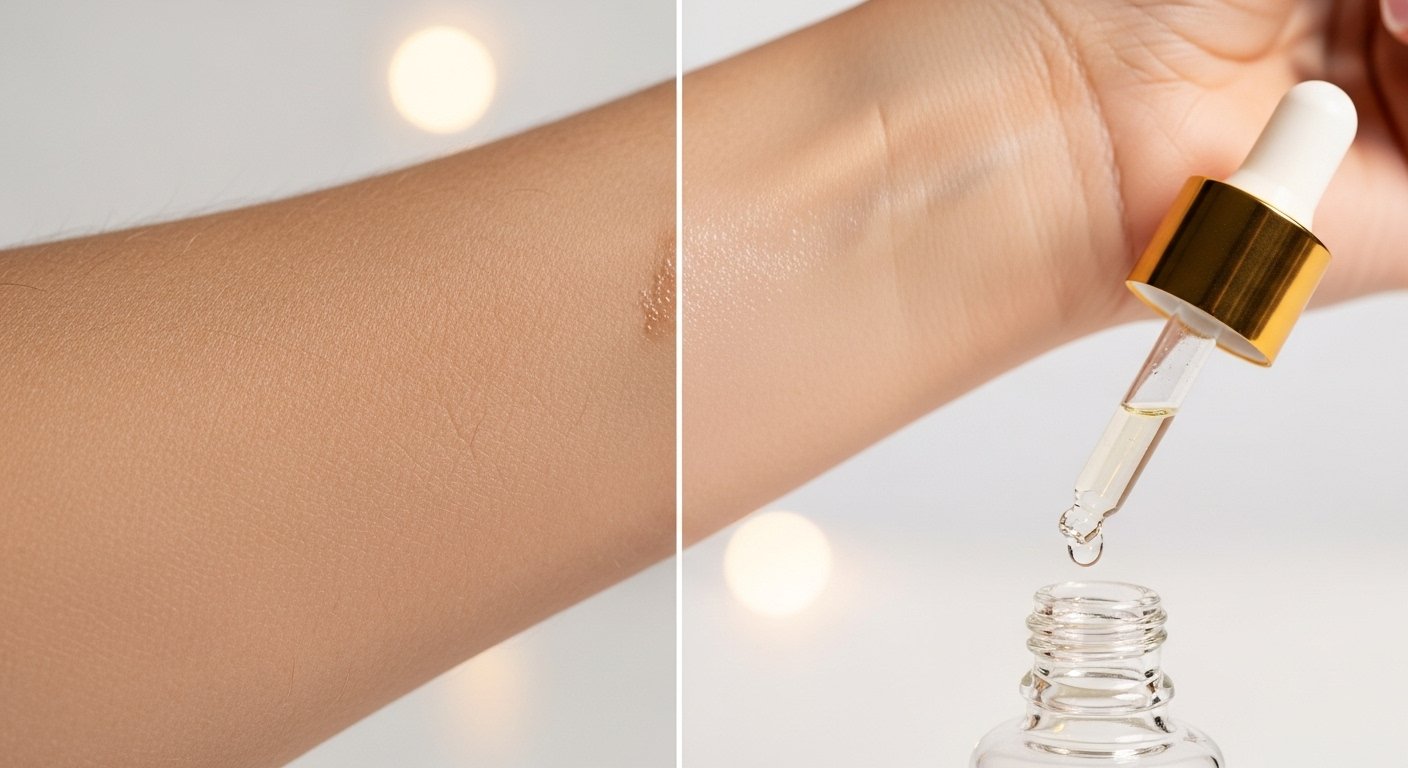
Discovering thin, crinkly skin can feel like a total bummer. You might notice it on your arms, legs, or face. This texture looks like old crepe paper. It is different from regular deep wrinkles. Many people want to know how to get rid of crepey skin to feel young again. This guide covers every single detail about this skin issue. We will talk about why it happens and how to fix it.
Understanding Crepey Skin
Crepey skin is skin that looks very thin and fragile. It looks exactly like the crinkled paper used at birthday parties. This happens when your skin loses its bounce. It feels dry and can show up in large areas. Unlike expression lines, it covers more surface area. It makes the skin look like it might tear easily.
Definition and Texture
The texture of crepey skin is very distinct. It is characterized by many tiny, fine lines. These lines run in different directions. This creates a crisscross pattern on your body. You might see this most on your inner arms or under your eyes. It feels much thinner than the skin you had years ago.
Crepey Skin vs. Traditional Wrinkles
Wrinkles usually form in spots where your face moves a lot. Think about the lines around your mouth or eyes. Crepey skin is not about repetitive movement. It is about the overall thinning of the skin layers. Traditional wrinkles are often deep and singular. Crepey skin is shallow but covers a lot of ground.
The Biological Mechanism
Deep inside your skin, two proteins keep things tight. These are called collagen and elastin. Collagen provides the strength and structure. Elastin gives the skin its ability to snap back. When these break down, the skin starts to sag and crinkle. This structural failure is the root of the “crepey” look.
Primary Causes of Crepey Skin
Knowing the cause is the first step to a solution. Most of the time, it is not just one thing. It is a mix of your habits and the world around you. Some causes are out of your control. Others are things you can change today. Let’s look at why your skin is losing its firmness.
UV Radiation and Sun Damage
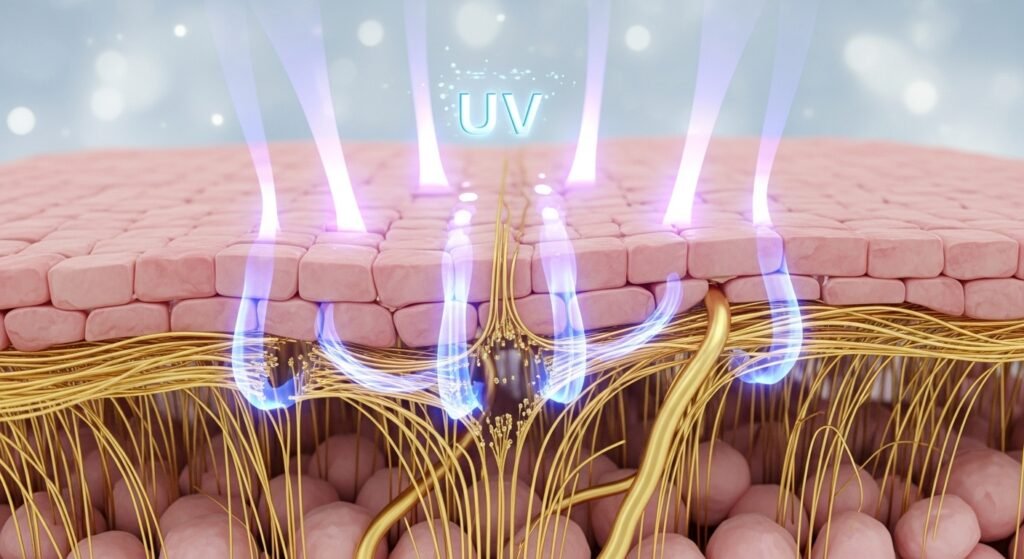
The sun is the biggest enemy of smooth skin. UV radiation acts like a hammer on your collagen. It breaks those strong fibers into tiny pieces. This is often called photo-damage or extrinsic aging. Even a little bit of sun adds up over the years.
- UVA Rays: These rays go deep into the skin and cause long-term aging.
- UVB Rays: These cause sunburns on the surface but still damage the structure.
- Photoaging: This is the scientific name for skin damage caused by light.
- Blue Light: The light from your phone and computer also hurts your skin.
Biological and Environmental Factors
Your body changes as you get older. This is called intrinsic aging. Your skin produces less oil than it used to. This makes it harder for the skin to stay hydrated. Environmental irritants also play a massive role. Pollution in the air can cause oxidative stress.
- Aging Process: Natural cell turnover slows down as the years pass.
- Dehydration: A lack of water makes the skin shrivel like a grape into a raisin.
- Pollution: Smog and dust create free radicals that eat away at your skin.
- Moisture Barrier: A weak barrier lets moisture escape far too easily.
Lifestyle and Behavioral Triggers
Your daily choices show up on your face. Smoking is a huge factor for thin skin. It stops blood from reaching the surface. Alcohol also sucks the moisture out of your cells. Even how much you sleep matters. Your skin needs rest to fix itself.
- Smoking: This habit depletes Vitamin C and hurts blood flow.
- Alcohol Consumption: Drinking too much leads to systemic dehydration.
- Sleep Deprivation: Without sleep, your skin cannot enter renewal mode.
- Weight Fluctuations: Gaining and losing weight quickly stretches the skin.
- Chronic Stress: High cortisol levels break down the skin’s repair team.
Proactive Prevention Strategies
You do not have to wait for skin to get bad. Prevention is the best way to keep skin smooth. It is much easier to keep collagen than to regrow it. Starting these habits now will save you a lot of trouble. Consistency is the secret sauce here. Follow these steps for the best results.
Comprehensive Sun Protection
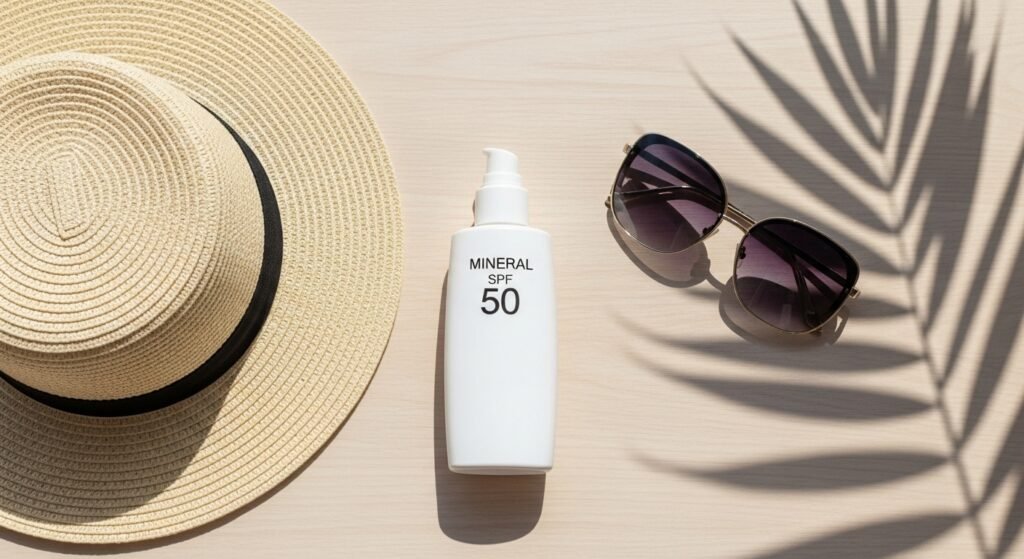
You must protect yourself from the sun every single day. This is the most important rule in skincare. Even if it is cloudy, the rays are there. You need a broad-spectrum sunscreen. This protects against both types of harmful rays.
- Daily SPF: Use at least SPF 30 every morning on exposed skin.
- Mineral Sunscreen: These use zinc or titanium to block the sun.
- Protective Clothing: Hats and long sleeves are your best friends outdoors.
- Sunglasses: Protect the thin skin around your eyes with UV-rated lenses.
Hydration and Barrier Support
Wet skin is happy, plump skin. You need to hydrate from the inside and the outside. Drinking water is great, but you also need topical help. Look for ingredients that hold onto water. This keeps the skin looking full and fresh.
- Internal Hydration: Try to drink plenty of water throughout the day.
- Hyaluronic Acid: This molecule holds 1,000 times its weight in water.
- Ceramides: These are lipids that help glue your skin cells together.
- Humectants: These ingredients pull moisture from the air into your skin.
Holistic Health Habits
Your skin is a reflection of your overall health. Eating well provides the building blocks for new skin. Antioxidants are like tiny shields for your cells. They fight off the damage from the environment. A healthy lifestyle makes your skin glow.
- Antioxidants: Eat colorful fruits and veggies to get plenty of Vitamin C.
- Omega-3 Fatty Acids: These healthy fats keep the skin barrier strong.
- Limit Alcohol: Reducing drinks keeps your skin from looking parched.
- Quit Smoking: Stopping will immediately improve the oxygen in your skin.
Topical Treatments and Ingredients
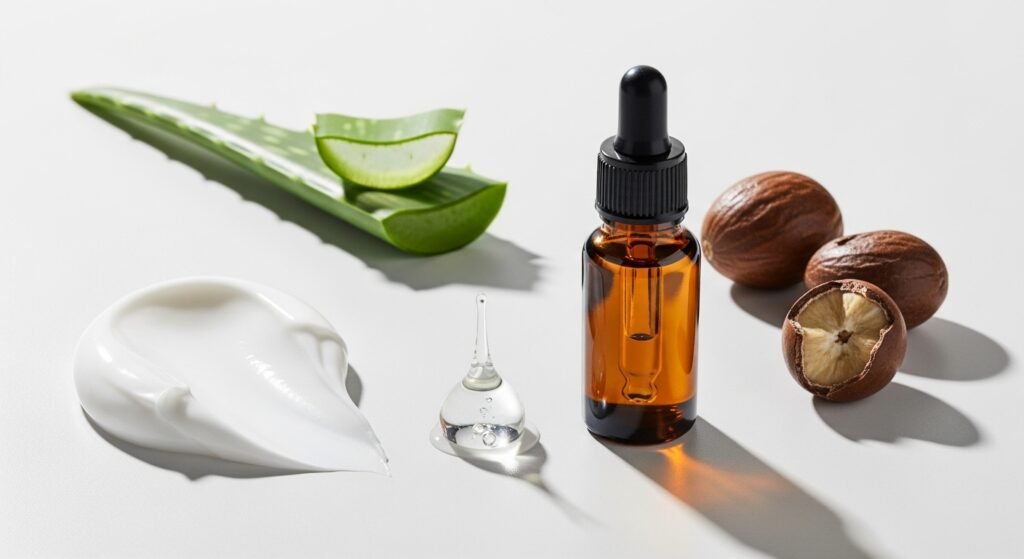
If you already have crinkly skin, do not worry. There are many products that can help. Some ingredients are proven to change the skin. You just need to know what to look for at the store. These items help speed up cell turnover. They also help build back that lost collagen.
The Power of Retinoids and Tretinoin
Retinoids are the gold standard for aging skin. They come from Vitamin A. They tell your skin to make new cells faster. This thickens the deeper layers of the skin. Tretinoin is a very strong version you get from a doctor.
- Retinol: A gentler version found in many over-the-counter creams.
- Cell Turnover: This process replaces old, damaged cells with fresh ones.
- Thickening: Regular use makes thin skin feel much more substantial.
- Collagen Boost: Retinoids are famous for waking up collagen production.
Alpha Hydroxy Acids (AHAs) for Resurfacing
Exfoliation is key for getting rid of the “crepe” look. AHAs are acids that eat away dead skin. This reveals the smoother skin hiding underneath. It also helps your other products soak in better. Use these a few times a week for the best glow.
- Glycolic Acid: A small molecule that goes deep to refresh the skin.
- Lactic Acid: This acid is more moisturizing and great for sensitive types.
- Mandelic Acid: A very gentle choice for people with delicate skin.
- Surface Smoothing: These acids flatten out the tiny bumps and ridges.
Essential Growth Factors and Proteins
Your skin needs specific signals to stay young. Peptides are short chains of amino acids. They act like little messengers for your cells. They tell the skin it is time to repair itself. Adding these to your routine can make a huge difference.
- Signal Peptides: These tell the body to produce more collagen fibers.
- Vitamin C: A powerful brightener that also builds structure.
- Niacinamide: This form of Vitamin B3 improves the skin’s texture.
- Growth Factors: These advanced ingredients help speed up tissue repair.
Professional Clinical Interventions
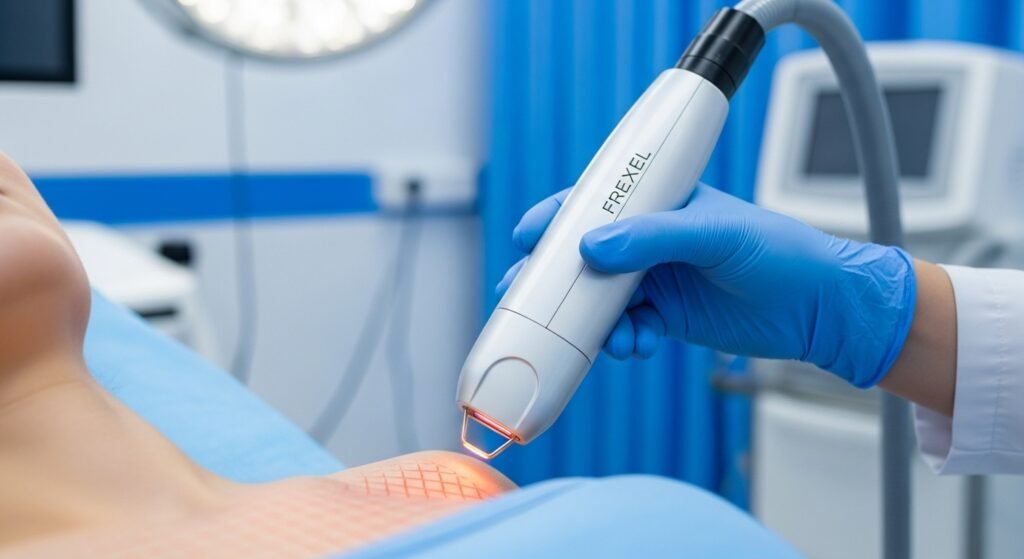
Sometimes home creams are not enough for deep issues. This is when you call in the pros. Dermatologists have tools that go deeper than any cream. These treatments can give you faster and more dramatic results. They are great for how to get rid of crepey skin quickly.
Non-Invasive Laser Therapy
Lasers use light and heat to fix the skin. They create tiny, controlled “injuries” deep down. Your body rushes to heal these spots with new collagen. This process tightens the skin from the inside out. Most people need a few sessions for the best results.
- Fractional Laser: These treat small zones of skin while leaving others alone.
- Fraxel: A popular brand of laser that helps with texture and tone.
- CO2 Laser: A stronger laser used for more severe skin thinning.
- IPL: This light therapy helps with redness and sunspots too.
Dermal Fillers and Injectables
Fillers add volume back to the skin. Crepey skin often happens because the face loses fat. Fillers can “plump up” the area and stretch out the wrinkles. Some fillers even help your body grow its own collagen. These are very popular for the face and neck.
- Hyaluronic Fillers: Brands like Juvéderm add instant moisture and volume.
- Biostimulators: Sculptra and Radiesse make your skin grow more collagen.
- Restylane: Another great filler for smoothing out fine lines.
- Micro-Botox: Small doses can help relax the surface of crepey skin.
Professional Chemical Peels
A pro peel is much stronger than one you do at home. It removes several layers of dead skin at once. This forces the skin to regenerate very quickly. Your new skin will be smoother and tighter. Doctors can customize the strength for your specific needs.
- Medium Peels: These go deeper to treat moderate crepey texture.
- TCA Peels: A common acid used for resurfacing the skin.
- Exfoliation: Removing the top layer makes light reflect better off the skin.
At-Home Skincare Optimization
You do not always need a doctor for a better routine. Small changes at home make a big impact. How you apply your products matters a lot. You want to make sure your skin can actually use the ingredients. Follow a simple but effective daily plan.
The Importance of a Nighttime Routine
Nighttime is when the real magic happens for your skin. While you sleep, your body fixes the day’s damage. This is called the renewal mode. You should use your strongest products before bed. This gives them hours to work without sunlight interference.
- Heavy Creams: Use thicker moisturizers at night to seal everything in.
- Treatment Time: Apply your retinoids and peptides during this phase.
- Absorption: Skin is more permeable at night, so it drinks up products.
Cleansing Protocols
You must start with a clean canvas every day. Washing your face removes dirt and old oils. If your skin is dirty, your expensive creams won’t work. However, you should not use harsh soaps. Harsh cleansers can strip away your natural moisture barrier.
- Gentle Cleansers: Use creamy washes that do not make your skin feel tight.
- Twice Daily: Wash in the morning and right before you go to sleep.
- Polished Surface: Clean skin looks smoother and more radiant immediately.
Effective Occlusives and Sealants
Sometimes you need to lock the moisture in. Occlusives are ingredients that form a physical barrier. They stop water from evaporating off your skin. This is very helpful for people with extremely dry or thin skin. It keeps the skin plump for a much longer time.
- Petroleum Jelly: An amazing and cheap way to seal in hydration.
- Shea Butter: A natural fat that softens and protects the skin.
- Coconut Oil: Contains fatty acids that help repair the surface.
- Glycerin: A classic humectant that keeps the skin feeling soft.
Cosmetic Adjustments and Concealment
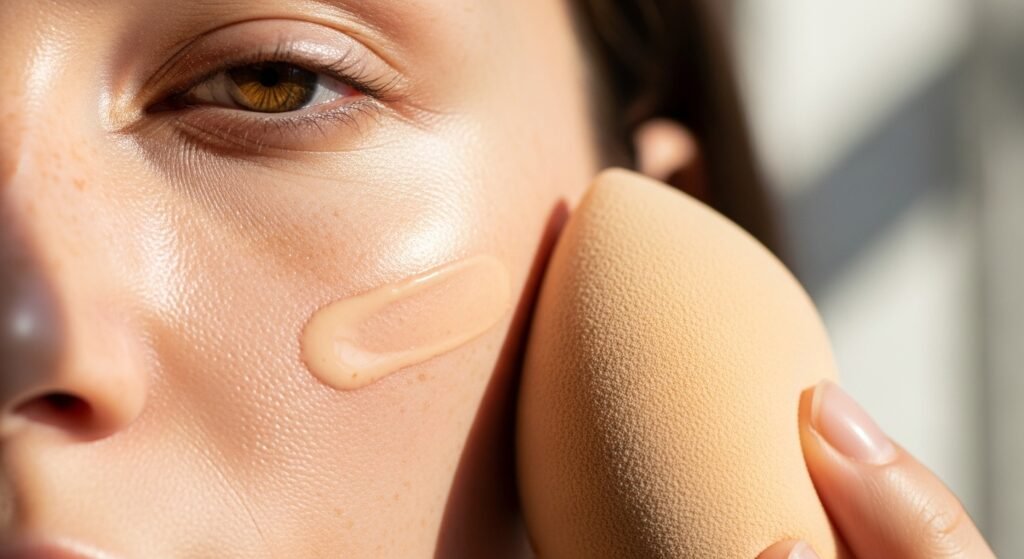
While you wait for treatments to work, you can use makeup. But you have to be careful with your technique. The wrong makeup can make crepey skin look much worse. It can settle into the lines and highlight the texture. The goal is to create a soft, blurred effect.
The “Less is More” Philosophy
Heavy foundation is a big no-no for thin skin. Thick products sit on top and crack. This makes every tiny line look ten times deeper. Instead, you want to use sheer products. They let your natural skin show through while evening out the tone.
- Sheer Tints: These provide a little color without the heavy weight.
- Blurring Primers: These fill in the tiny gaps before you apply color.
- Mineral Tints: Lightweight options that often include sun protection.
Specialized Application Techniques
How you put on your makeup is just as important as what you use. Avoid dragging or pulling on your skin. This can cause more damage to the fragile fibers. Use soft tapping motions with your fingers or a sponge. This keeps the product on the surface where it belongs.
- Rose Glow Oil: A drop of oil before makeup can plump the skin.
- Light Blotting: Use a tiny bit of powder only where you really need it.
- Hydrating Sprays: Use a mist to keep your makeup looking fresh all day.
Advanced Surgical Solutions
For some people, creams and lasers are not enough. If there is a lot of extra skin, surgery might be the answer. This is often the case after losing a lot of weight. Surgeons can remove the loose skin and pull the rest tight. These procedures are more serious but have lasting results.
- Facelifts: These pull the skin of the face and jaw upward.
- Neck Lifts: Removes the “turkey neck” look by tightening the skin.
- Blepharoplasty: A surgery that fixes crepey skin on the eyelids.
- Brow Lifts: Lifts the forehead to smooth out the area above the eyes.
Long-Term Maintenance and Outlook
Getting rid of crepey skin is a marathon, not a sprint. You won’t see changes overnight. It takes time for your body to build new collagen. Stay patient and keep up with your daily habits. If you stop your routine, the crinkles will eventually come back.
- Consistency: Stick to your routine every single day for months.
- Realistic Goals: Know that you can improve skin, but you can’t stop time.
- Combined Approach: Use creams, sun protection, and professional help together.
Comparison of Treatment Options
| Treatment | How It Works | Best For |
| Retinol | Boosts cell turnover | Fine lines and early signs |
| Laser | Heat creates collagen | Deeper texture issues |
| Fillers | Adds volume | Sunken areas and hollows |
| Surgery | Removes extra skin | Extreme sagging |
| Moisturizers | Plumps the surface | Instant temporary fix |
Frequently Asked Questions
Can pregnancy cause crepey skin on the stomach?
Rapid stretching of the skin during pregnancy damages elastin fibers. While the skin may retract slightly after birth, the loss of structural integrity often leaves a thin, crinkled texture that requires topical retinoids or radiofrequency treatments to improve.
Does taking collagen supplements help fix skin texture?
Ingested collagen is broken down into amino acids by the digestive system. While it provides the building blocks for skin repair, there is no guarantee the body will send those nutrients specifically to the skin; a balanced diet is often just as effective.
Can weightlifting or building muscle reduce the appearance of crepey skin?
Building muscle can help fill out the area beneath the skin, creating a “plumping” effect from the inside. This tension can stretch the skin slightly, making the crepey texture less noticeable on the arms and thighs.
Is crepey skin hereditary?
Genetics play a role in how much natural oil your skin produces and your baseline level of collagen. If your parents developed thin skin early, you may be more predisposed to it and should start preventative care in your 20s.
Can certain medications make skin look crepey?
Long-term use of oral or topical corticosteroids can thin the skin significantly. This is known as skin atrophy and creates a fragile, translucent appearance very similar to age-related crepiness.
How does menopause affect skin thickness?
The drop in estrogen during menopause leads to a rapid loss of collagen—up to 30% in the first five years. This hormonal shift is a leading cause for the sudden appearance of crepey skin in women.
Can air conditioning contribute to skin crinkling?
Constant exposure to air conditioning strips moisture from the air and your skin. Over time, this chronic dryness weakens the moisture barrier, making fine lines and a crepe-like texture more prominent.
Does body brushing or lymphatic drainage help?
Dry brushing increases circulation and exfoliates dead cells, providing a temporary glow and smoothness. However, it does not rebuild elastin or collagen, so the results are surface-level and temporary.
Can sleeping on your side cause crepey skin on the chest?
Sleeping on your side causes the skin on the décolletage to fold and furrow for hours at a time. Over years, these “sleep lines” become permanent and contribute to a crepey look on the chest.
Is there a difference between crepey skin and cellulite?
Cellulite is caused by fat pushing through connective tissue bands, creating dimples. Crepey skin is a surface-level thinning of the dermis itself; however, they often appear together as skin loses its firmness.
Can hot showers make the condition worse?
Very hot water strips the skin of its natural sebum and lipids. Frequently taking hot showers can lead to chronic dryness, which accelerates the breakdown of the skin barrier and emphasizes crinkling.
Are there specific fabrics that irritate crepey skin?
Because crepey skin is thin and fragile, scratchy synthetic fabrics or wool can cause micro-abrasions. Wearing soft, breathable cotton or silk helps protect the delicate surface from further irritation.
Does sugar consumption impact skin elasticity?
High sugar intake leads to a process called glycation, where sugar molecules attach to collagen fibers. This makes the fibers stiff and brittle, preventing them from keeping the skin smooth.
Can facial yoga fix crepey skin under the eyes?
Facial yoga strengthens underlying muscles but does not address the thinning of the actual skin. While it may slightly lift the area, it won’t change the “tissue paper” texture of the epidermis.
Does chlorine from swimming pools damage skin texture?
Chlorine is highly drying and can chemically strip the skin’s protective oils. Frequent swimmers should apply a waterproof barrier cream before entering the pool to prevent the skin from becoming parched and crepey.
Can “slugging” help with crepey skin on the face?
Slugging, or applying a thick layer of petroleum jelly over moisturizer, is excellent for repairing the moisture barrier. It traps hydration in, which can temporarily “fill” crepey lines and prevent further water loss.
How does seasonal change affect skin crepiness?
Low humidity in winter causes the skin to lose water to the environment faster. Many people notice their skin looks significantly more crepey in the winter months compared to the humid summer.
Can micro-needling at home fix the problem?
At-home rollers have short needles that mostly help with product absorption. Professional microneedling uses longer needles to reach the dermis and trigger actual collagen production, which is more effective for crepey texture.
Does caffeine in skincare help crepey skin?
Caffeine is a vasoconstrictor that temporarily tightens the skin and reduces puffiness. It provides a short-term smoothing effect, but it is not a permanent fix for lost elasticity.
Are silk pillowcases effective for preventing facial crepiness?
Silk pillowcases reduce friction and “tugging” on the skin while you move in your sleep. This helps prevent the formation of sleep-induced crinkles on the face and neck over time.
