


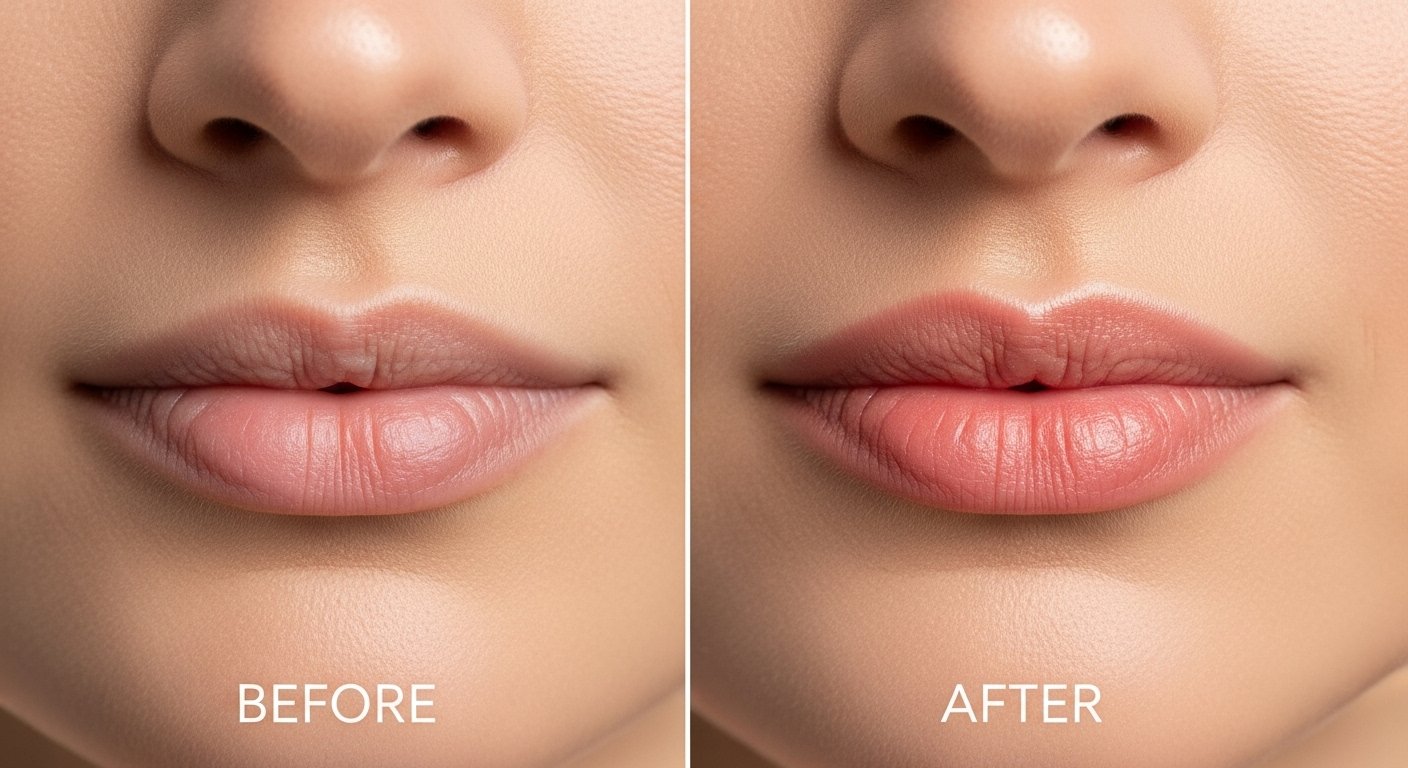
Lip blushing is the hottest beauty secret of the century that helps you wake up with perfect lips every single day. This semi-permanent tattooing technique introduces a soft tint of color to your lips to fix symmetry and add natural volume. While the results are amazing, the lip blush healing process requires patience and careful attention to aftercare. Understanding the timeline helps you manage expectations and ensures your lips look incredible for years to come.
Understanding Lip Blushing: The Modern Secret to Perfect Lips
The lip blush healing process begins the moment your artist finishes the procedure. This treatment is not like an old-school lip tattoo that looks like heavy lipstick. Instead, it uses a soft shading technique to give your lips a healthy and youthful flush. It is perfect for anyone who wants to save time on their morning makeup routine.
Definition of Lip Blush
Lip blushing is a form of permanent makeup or PMU that uses tiny needles to deposit pigment into the dermal layer. It is a semi-permanent tattooing method that enhances the natural shape of your smile. The goal is to create a soft tint rather than a solid or harsh line. This technique is popular because it looks very natural in everyday lighting.
The “Your Lips But Better” Philosophy
The technique focuses on enhancing what you already have rather than changing your face completely. It creates a pixelated effect that mimics the look of a light lip tint. Most people will not even know you had work done once the healing is over. It just looks like you have naturally vibrant and healthy lips all the time.
Primary Benefits
Many people choose this procedure for its long-lasting and smudge-proof results. You can eat and drink without worrying about your lip color fading away.
- Time savings is a huge benefit because you do not need to apply lipstick daily.
- Symmetry correction helps fix uneven lip borders or a crooked cupid’s bow.
- Natural volume is achieved by defining the edges where your natural color might be pale.
- Confidence boost comes from having a put-together look the moment you roll out of bed.
Pre-Procedure Preparation: Setting the Stage for Better Healing
The lip blush healing process goes much smoother if you prepare your body correctly. Your skin needs to be in top shape to take the pigment well. Proper prep reduces the risk of excessive swelling or poor color retention. Taking these steps helps you get the most out of your beauty investment.
The Importance of Hydration
Drinking plenty of water in the days leading up to your appointment is a must. Hydrated skin is more supple and accepts the pigment much easier during the tattooing. Dry or dehydrated lips can be harder to work on and may heal unevenly. Make sure you are drinking at least eight glasses of water daily for a week.
Lip Priming
You should prepare the surface of your lips so the needles can glide smoothly. Use a gentle lip scrub a few days before your session to remove dead skin. Follow this up with a high-quality lip balm to keep the tissue soft. Do not exfoliate the day of the appointment as the skin might be too sensitive.
Medical Precautions
There are some health factors that can impact how you heal from the procedure. You should always be honest with your artist about your medical history.
- Cold sore prevention is vital if you have ever had a breakout in the past.
- Antiviral medication like Valtrex is usually recommended by doctors to prevent a flare-up.
- Blood thinners such as alcohol, caffeine, or aspirin should be avoided for 24 hours.
- Fish oil supplements should also be paused as they can increase bleeding during the session.
The Consultation
Every good lip blush experience starts with a detailed talk with your professional artist. You will discuss your goals and look at different pigment shades together. They will explain the lip blush healing process so you know exactly what to expect. This is the best time to ask questions about aftercare and maintenance.
The Science of the Procedure: What Happens During Your Appointment
Knowing how the tattoo is applied helps you understand why your lips react a certain way. The process involves making tiny incisions in the skin to place the color. Your artist uses professional tools designed specifically for the delicate tissue of the lips. This ensures the pigment sits at the correct depth for long-lasting results.
The PMU Technique
Artists use a specialized electric device with ultra-fine needles for this procedure. The machine moves the needle up and down quickly to deposit pigment into the dermis. This is the layer of skin just below the surface epidermis. The process creates thousands of tiny dots that blend together for a soft look.
Customization Options
You can choose from several different styles depending on the look you want to achieve. Your artist will help you decide which method fits your face shape best.
- Aquarelle lips provide a very sheer and borderless wash of color.
- Ombre lips feature a darker edge that fades into a lighter center for depth.
- Full lip tint gives a more saturated look that mimics wearing a light lipstick.
Pigment Selection
Choosing the right color is a science that involves looking at your natural undertones. Your artist will check if your skin is cool, warm, or neutral.
- Cool tones might need warmer pigments like peach to prevent the lips from looking purple.
- Warm tones look great with soft pinks or rosy flushes that brighten the face.
- Custom blends are often made to match your favorite daily lip tint or gloss.
Duration
A typical lip blush appointment lasts between 40 minutes and one hour. This does not include the time spent numbing the area with a topical anesthetic. You should plan to be at the studio for about two to three hours total. This gives the artist enough time to map your lips and perfect the color.
The Realistic Healing Timeline: What to Expect Overall
The lip blush healing process is a journey that changes every single day. You will experience different sensations as your skin repairs itself. It is important to remember that the look on day one is not the final result. Being patient is the most important part of the entire recovery phase.

Surface Healing
The most noticeable changes happen within the first 7 to 10 days. During this time, your lips will swell, peel, and feel very dry. Once the peeling stops, the surface of the skin is mostly closed up. You can usually go back to your normal routine after this first week.
Internal Healing and Pigment Stabilization
Even after the peeling stops, your lips are still working hard under the surface. It takes a full 4 to 6 weeks for the pigment to fully settle into the skin. During this time, the color might seem to disappear and then slowly return. You should wait until this period is over before judging the final color.
Longevity
Once the lip blush healing process is complete, the results can last for 2 to 5 years. Factors like your skin type and sun exposure will affect how fast it fades. Most professionals suggest a touch-up every six months to a year to keep the color fresh. This helps maintain the vibrancy and definition of your new look.
Phase One: The Immediate Aftermath (Day 1)
The first day of the lip blush healing process can be a bit of a shock. Your lips will feel very different than they did before the appointment. It is normal to feel some regret or worry during this intense first stage. Just remember that these side effects are temporary and part of the plan.
Initial Reactions and Sensations

As the numbing cream wears off, you will start to feel the effects of the needles. Your body is sending blood to the area to help start the repair process.
- Lip swelling happens almost immediately and can make your lips look very large.
- Tenderness is common and feels like a tight or stinging sensation.
- Lymph fluid might leak from the skin in tiny clear droplets.
- Blotting with a clean tissue is necessary to stop this fluid from turning into thick scabs.
The Bold Shock: Color Intensity
The color of your lips will be at its absolute brightest on day one. Many clients worry that the color is too dark or “clown-like” at first.
- Visual impact is high because the pigment is sitting right on the surface of the skin.
- Oxidation occurs as the pigment is exposed to the air, making it look even darker.
- Fading will happen quickly, so do not panic if the initial shade is too bold.
Phase Two: Transition and Texture Changes (Day 2)
On the second day, the initial excitement or shock begins to settle down. The swelling usually starts to drop, but the lips begin to feel very dry. You will notice the texture of your lips changing as the scabbing starts. This is a critical time to stay on top of your moisturizing routine.
The Subsiding of Swelling
Most people see their lips return to a more normal size by the end of day two. If you still have significant swelling, it might be a sign of an allergic reaction.
- Normal recovery means the heavy feeling starts to go away slowly.
- Sunburn sensation may replace the sharp pain from the previous day.
- Artist contact is a good idea if the swelling does not seem to be going down at all.
The Onset of Dryness
Your lips will begin to feel very tight and perhaps even a bit stiff. It might feel like there is a layer of plastic or a “mask” over your smile. This is the beginning of the protective scabbing layer forming over the wounds. You must resist the urge to stretch your lips or laugh too hard during this phase.
Phase Three: The Peeling Stage (Days 3–4)
Days three and four are often the most difficult part of the lip blush healing process. This is when the old skin begins to shed to make room for the new. It can look quite messy and may make you want to stay indoors for a bit. However, this is a sign that your body is regenerating perfectly.
Heavy Peeling

The skin will start to flake off in patches rather than all at once. This usually starts in the center of the lips where they are the most moist.
- Patchiness is totally normal and will make the color look very uneven.
- Holes in color might appear where the scabs have fallen off, revealing pale skin.
- Edge peeling happens last as the flakes move toward the outer lip line.
Managing the Itch
As the skin heals, it is very common to feel an intense itching sensation. This can be very frustrating and may keep you up at night.
- Do not pick or pull at the peeling skin no matter how tempting it feels.
- Pigment loss can happen if you pull off a scab before it is ready to fall.
- Scarring is a risk if you manually peel the skin and cause a new wound.
Phase Four: The Ghosting Stage (Days 5–10)
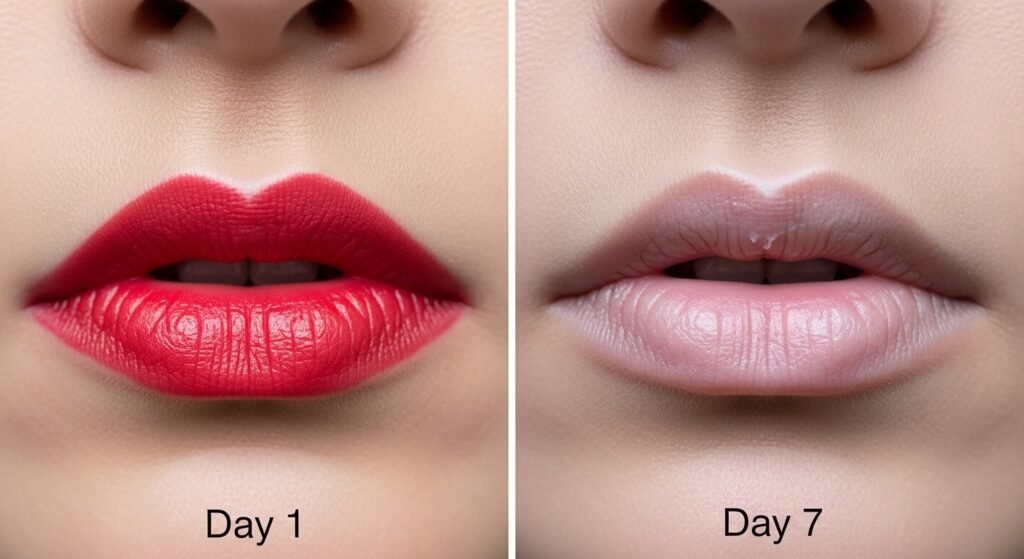
The “ghosting” stage is a famous part of the lip blush healing process that causes many people to panic. After the peeling is done, the color seems to vanish almost entirely. You might think the procedure was a waste of money during these few days. Rest assured that this is a scientific part of how skin heals over pigment.
The Disappearing Act
The new skin forming over the pigment is thick and not yet transparent. This acts like a frosted window that hides the color sitting underneath.
- Color ghosting means your lips might look just like they did before the tattoo.
- Invisibility of the pigment is temporary and does not mean it is gone.
- Cell turnover is the process that will eventually reveal the color again.
Return to Softness
By day ten, the rough texture of the scabbing and peeling is usually gone. Your lips will start to feel soft and supple once more. The tightness should be completely gone, and you can move your mouth normally. Even though they feel normal, you should still be gentle with them.
Phase Five: The Blooming Period (Weeks 2–6)
This is the final stretch of the lip blush healing process where the magic happens. You will slowly start to see the color return and settle into its final shade. This period is much easier because the surface discomfort is long gone. You just need to watch and wait for the results to bloom.
The Resurgence of Pigment

As the new skin matures and becomes more translucent, the pigment shows through. The color will look much more natural and blended than it did on the first day.
- The final tone will be a soft version of the pigment you and your artist chose.
- Color blooming describes the way the tint seems to get stronger each day.
- Stability is reached around the six-week mark when the skin is fully recovered.
Final Texture Refinement
The lips will fully integrate the pigment into the dermal layer during this time. You will be able to see if there are any areas that need more color.
- The healed result is usually about 40% to 60% lighter than the day of the procedure.
- Evaluation should happen now to see how well your skin retained the ink.
- Daily life is back to normal, and you can enjoy your smudge-proof smile.
Variation in Healing Based on Technique
Not everyone heals exactly the same way after getting their lips done. The specific style of tattoo you chose will change the peeling pattern. Different techniques put different amounts of stress on the lip tissue. Understanding these differences helps you stay calm during your specific journey.
Full Lip Blush vs. Ombre Healing
A full lip blush involves more needle passes and higher saturation of color. This often leads to more intense peeling across the whole mouth.
- Ombre healing might be more concentrated at the borders of the lips.
- Lined lips may only peel along the outer edges where the artist worked the most.
- Recovery speed might be slightly faster for sheerer styles like Aquarelle.
Special Case: Dark Lip Neutralization
If you have naturally dark or melanin-rich lips, your healing journey is unique. The goal here is to cancel out cool or purple tones before adding a target color.
- Multi-session journey is required because you cannot neutralize and color in one go.
- Warm tones like orange or peach are used first to balance out the darkness.
- Ashy phase is common where the lips look a bit greyish before they look bright.
Strict Aftercare Rules: The Non-Negotiables
Your artist provides about 50% of the result, but the other 50% is up to your aftercare. If you ignore the rules, you risk infection or losing all the pigment. Following these steps ensures the lip blush healing process is successful. Treat your new tattoo like an open wound that needs protection.
The Dos for Optimal Retention
Doing the right things will help the pigment stay exactly where it should. It also helps the skin repair itself without excessive scarring.
- Moisturize correctly with the balm your artist gave you, such as Aquaphor.
- Use a straw for all drinks to keep the area dry and clean for the first week.
- Sleep on your back to avoid rubbing your lips against your pillow at night.
- Keep it clean by gently dabbing the area with a damp cotton pad to remove bacteria.
The Don’ts to Prevent Complications
Avoiding certain habits is just as important as the things you should do. Many daily activities can actually harm your healing tattoo.
- No picking is the most important rule to prevent pigment loss and infection.
- Avoid makeup like lipstick or gloss for at least 10 days while the skin is open.
- Skip the gym for 5 days because sweat and salt can irritate the micro-wounds.
- Stay out of the sun as UV rays will fade the fresh pigment very quickly.
- Avoid spicy food because it will sting and could cause more inflammation.
- No kissing for a few days to keep foreign bacteria away from your lips.
Potential Complications: What is Normal vs. What is Not
Most people have a very standard lip blush healing process without any issues. However, it is important to know when something is going wrong. Catching a problem early can save your results and your health. Never be afraid to call your artist if you feel something is off.
Normal Side Effects
Some things might look scary but are actually a healthy part of recovery. Your body is just doing its job to fix the skin.
- Minor bruising can happen around the edges of the lips from the needles.
- Moderate swelling is expected for the first 24 to 48 hours.
- Dryness and itching are the most common signs that the skin is regenerating.
Abnormal Signs to Watch For
There are a few symptoms that mean you should seek medical help or call your pro. These are not a normal part of the lip blush healing process.
- Excessive redness that starts to spread past the lip line and onto the face.
- Pus or discharge that is yellow or green and has a bad smell.
- Worsening pain that gets more intense after the third day instead of better.
- Fever or chills can be a sign that your body is fighting a systemic infection.
Cold Sore Outbreaks
Even if you take medicine, a flare-up can still happen during the healing phase. The trauma of the needles can trigger the virus to become active.
- Small blisters that appear in a cluster are usually a sign of a cold sore.
- Call your doctor immediately to get a prescription for an antiviral cream or pill.
- Inform your artist so they can help you manage the aftercare for that specific spot.
The Role of Lifestyle in Healing Retention
Your daily habits and biology play a role in how well your lips hold onto the color. Some people will naturally have better results than others based on their lifestyle. Being aware of these factors helps you adjust your habits during the recovery. This ensures you get the most longevity out of your treatment.
Smoking and Healing
Smoking is one of the worst things you can do during the lip blush healing process. It has a direct negative impact on how your body repairs tissue.
- Restricted blood flow from nicotine means the lips get less oxygen to heal.
- Slower recovery increases the window of time where an infection could happen.
- Fading can happen faster in smokers due to the constant heat and chemicals.
Alcohol Consumption
Drinking alcohol can actually interfere with the early stages of your recovery. It is best to avoid it for a few days before and after your session.
- Increased swelling occurs because alcohol dilates the blood vessels.
- Dehydration makes your lips feel even tighter and drier during the scabbing phase.
- Blood thinning can lead to more bruising on the first day of healing.
Skin Type Factors
Your natural skin chemistry affects how much pigment stays in the dermal layer. Everyone’s body reacts slightly differently to the ink.
- Oily skin may lose pigment faster as the natural oils push the ink out.
- Dry skin can be more prone to heavy scabbing and may need more moisturizer.
- High vascularity means you might bleed more, which can dilute the pigment during the tattoo.
The Perfecting Session: Why the Touch-Up is Essential
You should never view your first appointment as the final step in the process. Lip blushing is always a two-part journey for the best results. The touch-up is where the real magic happens and the look is completed. Skipping this step often leads to dissatisfaction with the final color.
The Two-Step Process
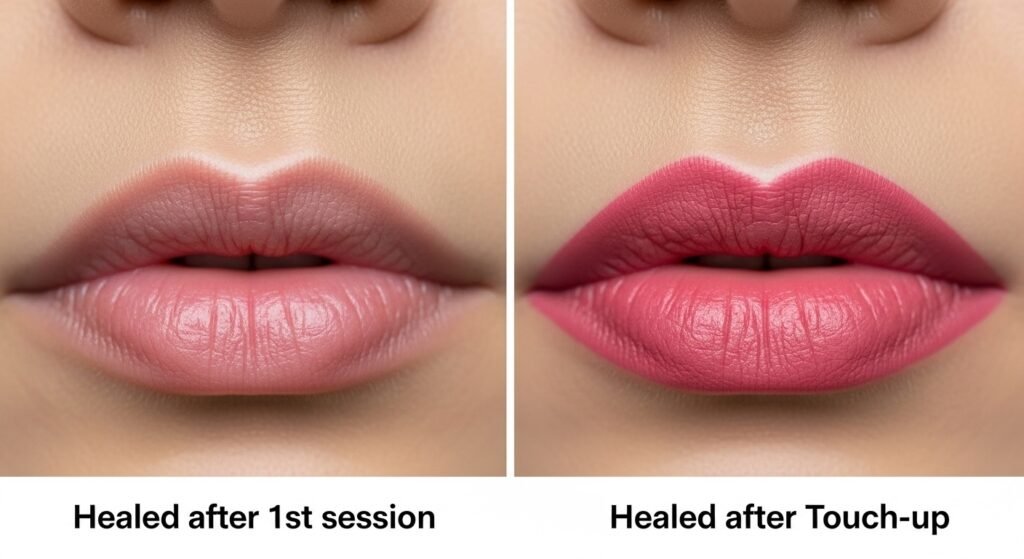
Your body’s immune system will naturally try to remove some of the pigment during healing. This is why the first session is often considered a “base layer”.
- Filling in spots is common because some areas of the lip may not hold ink well.
- Reinforcing color helps the tint last much longer than just one session would.
- Perfecting symmetry allows the artist to make tiny adjustments once the swelling is gone.
Timing
You must give your skin enough time to fully recover before going back for more. Going too soon can cause permanent damage or scarring to the tissue.
- Wait 6 to 8 weeks to ensure the internal healing is 100% complete.
- Pigment visibility must be fully back so the artist knows where to add more.
- Artist evaluation will happen at this time to see how your skin took the color.
Long-Term Maintenance and After-Healing Care
Once the lip blush healing process is over, you want to protect your investment. Good habits will keep your lips looking vibrant for years. If you ignore long-term care, the color will fade much faster than expected. It only takes a few small changes to your routine to save the color.
Sun Protection
The sun is the biggest enemy of any tattoo, especially on the thin skin of the lips. UV rays break down the pigment particles over time.
- SPF lip balm should be worn every single day when you are outdoors.
- Reapplication is key, especially after eating or drinking.
- Wide-brimmed hats provide an extra layer of physical protection from the sun.
Skincare Compatibility
Many popular anti-aging products can actually damage your lip blush results. You need to be careful with where you apply your powerful serums.
- Retinol and Vitamin C should never be applied directly to the lip border.
- Chemical peels or laser treatments near the mouth should be avoided or done with care.
- Exfoliating acids can travel through the skin and cause the pigment to fade early.
Color Refreshers
Over time, your body will naturally metabolize the pigment and the color will lighten. This is a normal part of the semi-permanent nature of the treatment.
- 12 to 24 months is the average time most people wait for a “color boost”.
- Personal preference dictates when you go back—some like it bold, others like it soft.
- Maintenance costs are usually lower for a refresh than for the initial full session.
Conclusion: Trusting the Journey
The lip blush healing process is a true emotional rollercoaster that requires a lot of trust. You will go from loving the bold color to worrying that it has vanished entirely. By following the rules and staying patient, you will reach the final “bloom” stage successfully. The reward is a beautiful, smudge-proof smile that lasts for years.
Frequently Asked Questions
Can I get a lip blush if I have existing lip fillers?
Yes, you can absolutely get lip blushing with fillers. However, you must wait at least four weeks after your filler injection before getting a lip blush. This allows the filler to settle completely so the artist can work on a stable lip shape.
Does the lip blush healing process change if I have dark lips?
The timeline is similar, but the visual stages differ. Dark lip neutralization often involves a “bright orange” phase where the lips look very warm for a few weeks. This is necessary to cancel out cool or blue undertones before the final target color emerges.
Is it safe to use a straw immediately after the procedure?
Using a straw is actually recommended for the first several days. It prevents liquids, especially staining ones like coffee or tea, from coming into direct contact with the fresh pigment. It also keeps the lips dry, which is essential for proper scab formation.
Can I drink alcohol during the first week of healing?
It is best to avoid alcohol for at least 48 to 72 hours post-procedure. Alcohol thins the blood and can increase swelling or cause minor bleeding. It also dehydrates your body, which can make the “tight” feeling of the lips more uncomfortable.
How do I brush my teeth without ruining my new lip color?
Be very careful when brushing. Use a small amount of toothpaste and a soft brush to avoid splashing. Try to keep the lips still and use a straw or a small cup to rinse so that water and toothpaste do not sit on the treated area.
Will the lip blush cover up my freckles or moles on the lips?
Lip blush can blend the color of small freckles, but it usually does not completely hide dark moles. A professional artist will work around significant moles to ensure the pigment is deposited safely and evenly without causing irritation to the growth.
Can I go into a tanning bed while my lips are peeling?
No, you must avoid tanning beds for at least four weeks. UV light is extremely concentrated in tanning beds and can cause the fresh pigment to change color or fade drastically. It can also cause a painful reaction on the sensitive, regenerating skin.
What should I do if I accidentally pick a scab?
If you accidentally pick a scab, do not panic. Clean the area gently with a damp cotton pad and apply a very thin layer of your healing balm. Note the area, as you may see a light spot there once healed, which can be fixed at your touch-up.
Is it normal for one lip to heal faster than the other?
Yes, it is common for the bottom lip to heal slightly faster or slower than the top lip. This is usually because the tissue thickness varies and the bottom lip often experiences more movement during talking or eating.
Can I use my regular face wash during the healing phase?
You should keep your regular face wash away from the lip area. Most cleansers contain acids or alcohols that will sting the micro-wounds and potentially strip the pigment. Use only plain water or a very mild, fragrance-free soap around the mouth.
Will the procedure affect my ability to get dental work?
You should avoid any dental appointments for at least two weeks after your lip blush. Dental work involves a lot of stretching of the mouth, which can crack the healing scabs and lead to scarring or pigment loss.
Can I use ice packs to reduce the initial swelling?
You can use ice packs on the first day, but they must be clean and wrapped in a dry barrier like a paper towel. Never put ice directly on the lips and ensure no moisture from the melting ice leaks onto the fresh tattoo.
Does smoking affect the final color of the lip blush?
Smoking can negatively impact the final result. The heat from cigarettes can irritate the skin, and the chemicals can cause the pigment to heal with a grey or ashy undertone. It also slows down the blood flow needed for healthy skin regeneration.
Can I go swimming in a salt-water pool?
Salt water should be avoided for at least 10 to 14 days. Salt is an abrasive and can “draw out” the pigment from the skin before it has a chance to settle. It also risks introducing bacteria from the water into the healing tissue.
How soon after the procedure can I resume intimacy?
You should avoid kissing or any friction on the lips for at least 5 to 7 days. This prevents the transfer of bacteria and stops the scabs from being pulled off prematurely by physical contact.
Can I get a lip blush while pregnant or breastfeeding?
Most professional artists will not perform lip blushing on pregnant or nursing women. This is due to the risk of infection, the use of topical anesthetics, and the fact that hormonal changes can lead to poor pigment retention and unpredictable healing.
Why do my lips look purple or blue during the second week?
This is often part of the “ghosting” stage for people with cooler undertones. As the new skin grows over the pigment, it can temporarily create a bruised or cool appearance. The true, warm color usually returns by week four or five.
Should I use Vitamin E oil on my peeling lips?
While Vitamin E is great for skin, you should stick only to the balm recommended by your artist. Some oils can be too heavy and “suffocate” the skin or cause the scabs to get too soggy, leading to premature falling.
Is it okay to sweat at the gym after 48 hours?
Even though the initial swelling is down, you should avoid heavy sweating for 5 days. Sweat contains salt and bacteria that can irritate the micro-incisions and lead to patchy color or a localized infection.
Can I use a damp cloth to help the scabs come off?
No, you should never try to “help” the scabs. Let them fall off naturally during your daily gentle cleaning or while applying balm. Using a cloth to rub them off is essentially the same as picking them.
