 Skip to content
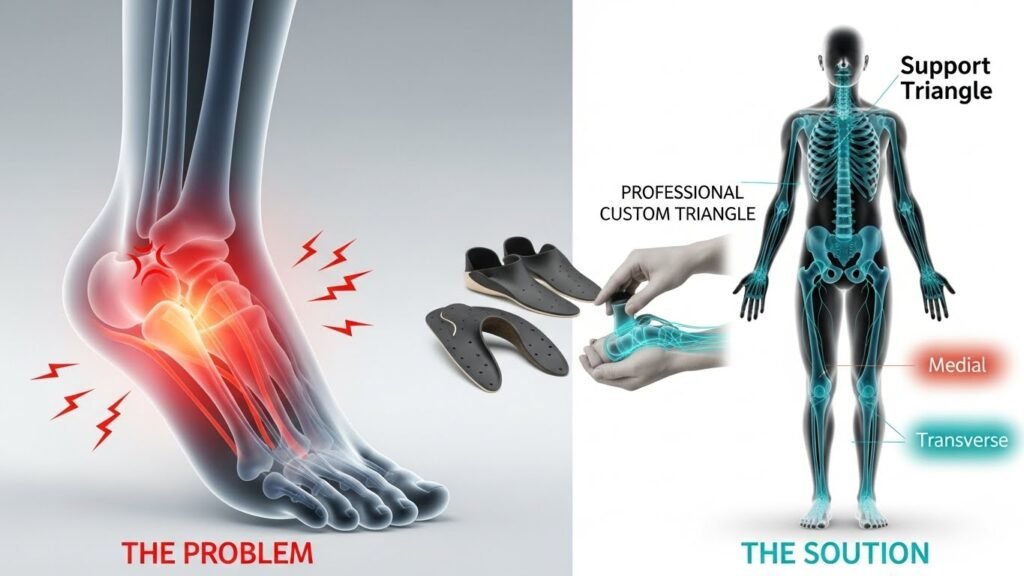
If you ever wake up and feel like you are stepping on a Lego, you might have plantar fasciitis. This deep heel pain hits millions of Americans every single year. Many folks think they just have to live with the achiness. But did you know that a chiropractor can do way more than fix a stiff neck? When asking can a chiropractor help with plantar fasciitis, the answer is a big yes. They look at your whole body to find out why your feet are acting up. This guide will show you how to get back on your feet fast.
Understanding the Foundation: What is Plantar Fasciitis?
Plantar fasciitis is a fancy name for a very common foot problem. It happens when the thick band of tissue on the bottom of your foot gets inflamed. This tissue is called the plantar fascia. It connects your heel bone to your toes. When it gets irritated, every step can feel like a chore.
Defining the Condition
- Tissue Inflammation: The plantar fascia is a tough band of connective tissue. It supports the arch of your foot while you walk. Too much stress causes tiny tears in this tissue. These tears lead to swelling and a lot of heat in the area.
- Pain Location: Most people feel the most pain right under the heel. It can also spread along the entire bottom of the foot.
The Sinking Foundation Analogy
- Body Structure: Think of your feet as the foundation of your house. If the foundation starts to crack, the walls upstairs will eventually shift. Your feet do the same thing for your knees, hips, and back.
- Chain Reaction: When your feet are off, your whole body moves differently. This puts weird pressure on your spine and joints.
Common Symptoms
- Morning Pain: The first few steps out of bed are usually the worst. The tissue tightens up while you sleep.
- Post-Rest Stiffness: Pain often returns after you sit down for a long time.
- Deep Aching: It feels like a dull throb or a sharp jab in the heel.
Impact on Quality of Life
- Mood Changes: Dealing with chronic pain can make anyone feel grumpy or sad. It clouds your mind and makes it hard to focus.
- Lost Productivity: It is hard to work when you can barely stand. You might stop doing the things you love, like hiking or dancing.
Causes and Risk Factors of Heel Pain
So, how did your feet get this way in the first place? It usually is not just one thing that causes the trouble. Many daily habits can put too much stress on your arches. Understanding these risks is the first step toward getting better.
Physical Strain
- High-Impact Sports: Running or jumping puts a ton of pressure on your feet. Runners are very likely to deal with this issue at some point.
- Sudden Changes: Starting a new workout too fast can shock your feet.
Occupational Hazards
- Hard Surfaces: Standing on concrete all day is brutal for your fascia.
- Lack of Rest: Jobs like teaching or nursing require constant walking. This gives your feet zero time to recover during the day.
Biomechanical Issues
- Flat Feet: If your arches are low, the tissue has to stretch further. This constant stretching leads to chronic inflammation.
- High Arches: Feet that are too stiff also fail to absorb shock well.
Age and Elasticity
- Aging Tissue: As we get older, our tissues become less stretchy. People between 40 and 60 years old get this condition the most.
- Wear and Tear: Years of walking eventually add up.
Weight and Pressure
- Body Mass: Carrying extra weight puts a constant load on your feet. This makes it harder for the fascia to stay healthy.
- Mechanical Stress: Even a little extra weight changes how your foot hits the ground.
The Three Arches of the Foot: A Support Triangle
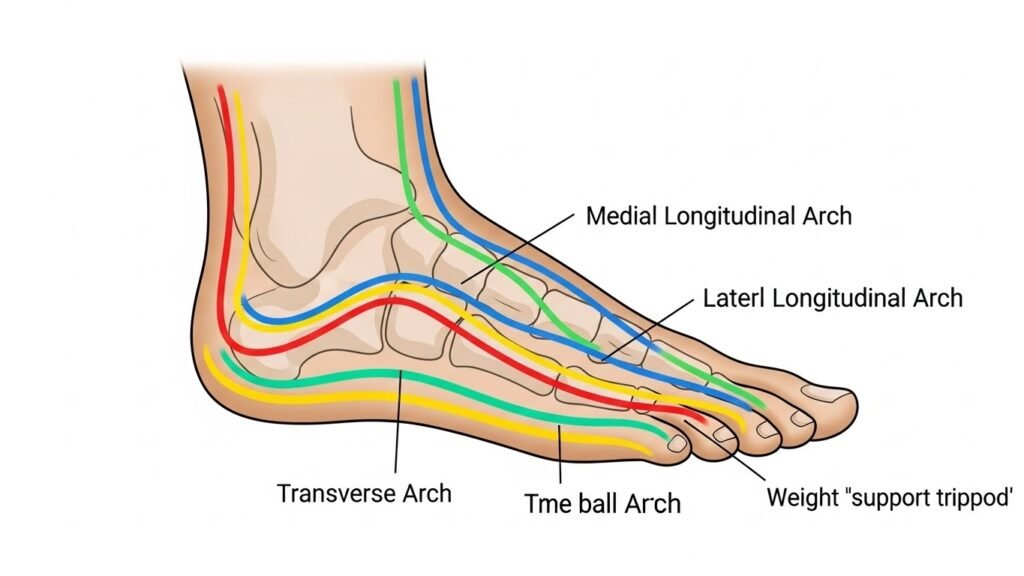
Most people think they only have one arch in their foot. But experts like Dr. Kevin Wong say you actually have three. These three arches work together like a tripod to keep you balanced. If one fails, the whole foot starts to struggle.
The Medial Arch
- Main Support: This is the big arch on the inside of your foot. It is the one most people check to see if they are flat-footed.
- Shock Absorber: It handles the most weight when you step down.
The Lateral Arch
- Outside Support: This arch runs along the outside edge of your foot. It helps you stay steady on uneven ground.
- Balance Keeper: It keeps you from rolling your ankle outward.
The Transverse Arch
- The Bridge: This arch runs across the ball of your foot. It helps distribute weight across your toes.
- Structural Integrity: It holds the other two arches together in a strong shape.
The Power of Three
- The Support Triangle: These three arches form a triangle on the bottom of your foot. This shape is the strongest foundation for your body.
- Long-Term Support: You need to support all three arches to stay pain-free.
The Chiropractic Approach to Healing Plantar Fasciitis
Many people ask can a chiropractor help with plantar fasciitis since they usually treat backs. The truth is that chiropractors are experts in the whole musculoskeletal system. They do not just rub the spot that hurts. They want to find out why the pain started in the first place.
Treating the Root vs. the Symptom
- Whole-Body View: A chiropractor looks at your gait and posture. They check if your hips or knees are causing your feet to twist.
- Nervous System Connection: They focus on how your nerves talk to your muscles.
The Recovery Timeline
- Natural Healing: Without help, this pain can last up to 18 months. That is a long time to suffer.
- Faster Results: Chiropractic care can cut that time down significantly. Many patients feel better in just a few weeks.
Resetting Communication
- Neurological Flow: Adjustments help clear up “static” in your nervous system.
- Muscle Response: When nerves work right, your muscles can support your arches better.
The Role of the Lower Back and Spine
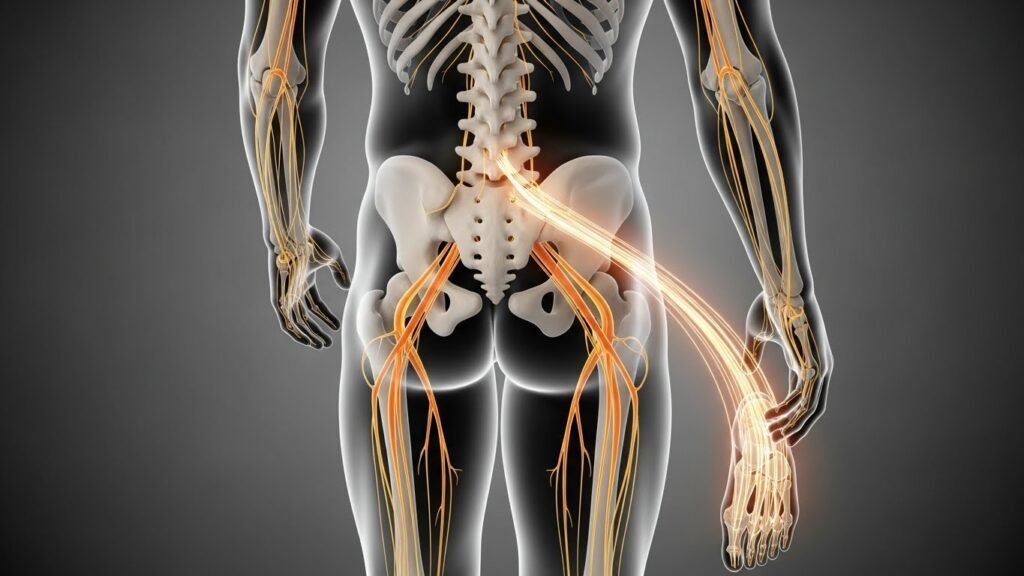
- Spinal Connection: The nerves that control your feet come from your lower back. Dr. Amanda Bledsoe notes that back issues often cause foot pain.
- Nerve Flow: If a joint in your back is stuck, it can “choke” the nerve flow to your feet. This makes the tissue in your feet weak and inflamed.
- Identifying Blockages: A chiropractor finds these blockages and fixes them. This lets the body heal itself naturally.
- Spinal-Pelvic Stabilizers: Keeping your pelvis level is key for even weight on your feet.
Advanced Chiropractic Treatment Modalities
When you visit a clinic like Kalkstein Chiropractic, you get more than just an adjustment. They use many different tools to fix the problem fast. This multi-pronged strategy is the best way to get long-term relief.
Dry Needling for Rapid Relief

- Mechanical Stimulus: Very thin needles are placed into the foot and calf. This triggers the tissue to relax and heal.
- Constant Pressure: The needles stay in for about 15 minutes. This provides a deeper release than a regular massage can.
- Targeting the Achilles Tendon: Tight calves pull on the heel bone. Needling the Achilles helps take the tension off the plantar fascia.
- Big Toe Muscle Integration: The muscle that moves your big toe is connected to your arch. Treating this muscle helps the whole foot move better.
Ultrasound and Deep Heat Therapy
- Deep Healing: Ultrasound uses sound waves to create heat deep inside your foot. This increases blood flow to the damaged fascia.
- Accelerating Repair: More blood means more nutrients for the tissue to heal micro-tears.
Specialized Foot Adjustments
- Joint Mobility: Chiropractors can actually “pop” or adjust the small bones in your foot. This restores normal motion to the arches.
- Superficial vs. Deep Layers: They use manual techniques to stretch every layer of the tissue.
- Soft Tissue Work: This helps break up scar tissue that makes your feet feel stiff.
The Necessity of Custom Orthotics
One of the biggest questions is can a chiropractor help with plantar fasciitis using inserts? Most chiropractors highly recommend custom orthotics. Unlike the ones at the drugstore, these are made specifically for your feet.
The Failure of Over-the-Counter Inserts
- Rigid Problems: Cheap inserts are often too hard and just make the foot go numb. They do not actually fix the arch collapse.
- One Size Fits None: Everyone’s foot shape is different, so a generic insert won’t work well.
Tailored Arch Support
- Three-Arch Support: Custom orthotics support all three arches at once. This keeps your foot in the perfect position.
- Spinal-Pelvic Stabilizers: They help keep your whole body aligned from the ground up.
Prolonging Chiropractic Adjustments
- Foundation Stability: If your feet are stable, your back adjustments will stay in place longer.
- Better Results: Patients who wear orthotics often heal twice as fast.
The 5-Minute Foot Scan
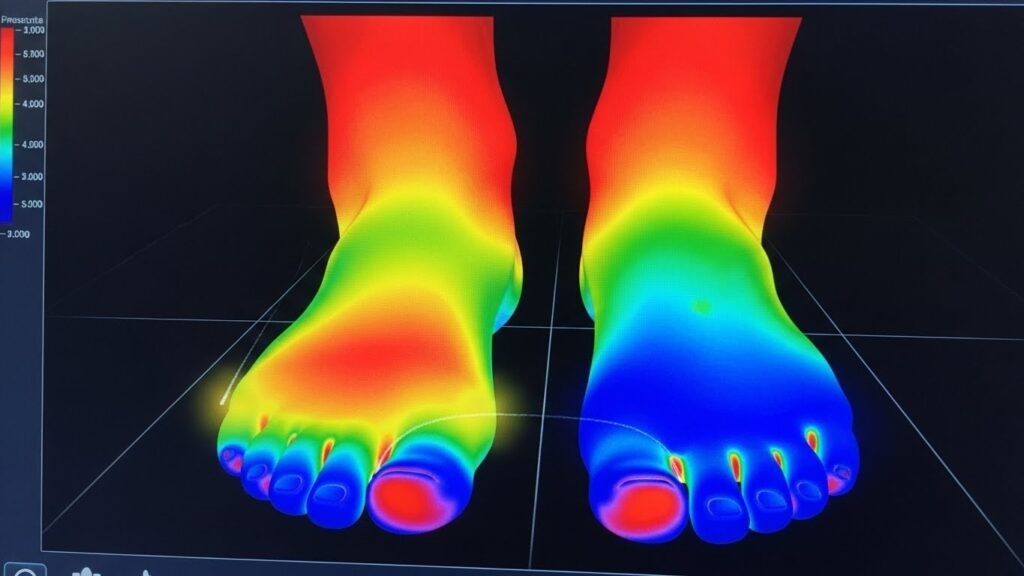
- Modern Tech: Chiropractors use a digital scanner to see exactly where your arches are falling.
- Pressure Mapping: It shows which parts of your feet are taking too much weight.
Movement, Posture, and Lifestyle Management
Getting treated is great, but you also have to change some daily habits. Your chiropractor will give you a “movement strategy” to follow at home. This prevents the pain from coming back once it is gone.
The Fallacy of Normal Pain
- Stop Ignoring It: It is not normal for your feet to hurt every day.
- Age is a Number: Even kids or young adults can get foot pain if their posture is off.
Strategic Movement
- Active Recovery: You shouldn’t just sit still all day, but don’t overdo it either.
- Step-by-Step: Gradually increase your walking as the pain goes away.
Workplace Ergonomics
- Break the Cycle: Stand up and stretch every single hour. This keeps the tissue from tightening up while you work.
The Importance of Sleep Position
- Spinal Alignment: How you sleep affects your nerves all night long.
- Stomach Sleeping Dangers: Sleeping on your stomach twists your spine and can make foot pain worse.
- Side and Back Sleeping: These are the best ways to keep your spine neutral and your nerves happy.
At-Home Care and Prevention Strategies
You can do a lot of work at home to help the process along. Your chiropractor will show you the right way to stretch without getting hurt.
Self-Stretching Techniques
- Morning Routine: Gently stretch your toes toward your shin before you get out of bed.
- Calf Stretches: Keeping your calves loose is the best way to protect your heels.
The Pin and Stretch Method
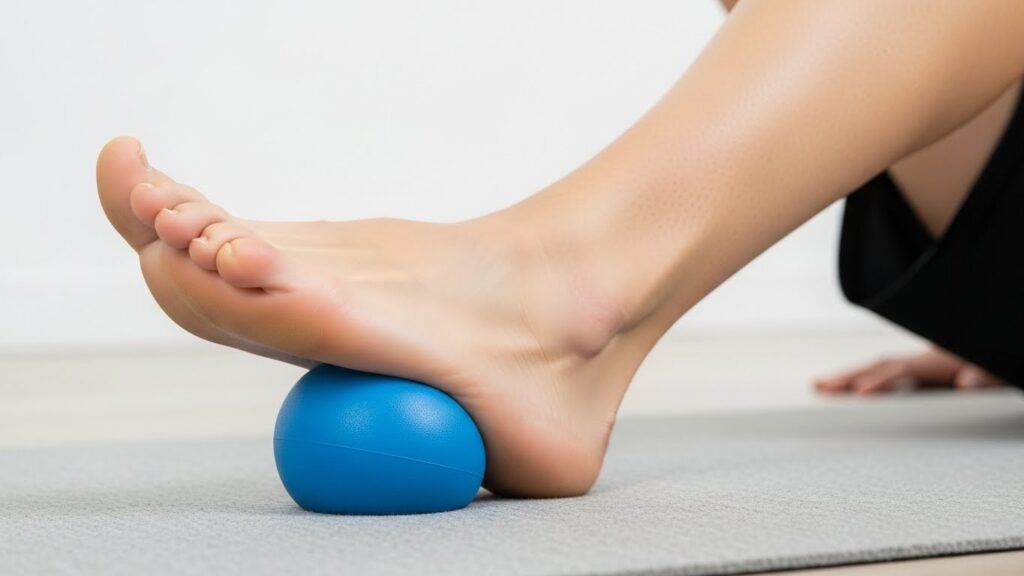
- Ball Massage: Use a lacrosse ball or tennis ball to roll out the bottom of your foot.
- How to do it: Pin the ball under a tight spot and then flex your toes up and down. This breaks up the tension safely.
Safety Warnings
- Avoid Thumbs: Don’t try to dig your thumb into your heel pain. You might hurt your hand or bruise the already sore tissue.
- Use Tools: Let a ball do the hard work for you.
Hydrotherapy
- Heat is Key: Hot baths or showers help relax the muscles and increase blood flow.
- Recovery Boost: Use heat after a long day of walking to prevent morning stiffness.
Conclusion: Fixing the Foundation for a Pain-Free Life
So, can a chiropractor help with plantar fasciitis? Absolutely. By fixing your spine, adjusting your feet, and providing custom orthotics, they attack the problem from every angle. You don’t have to wait 18 months for the pain to go away on its own. A quick foot scan and a few adjustments can change your life. Stop limping through your day and start living again. Reach out to a local chiropractor and see how fast your foundation can be restored.
Frequently Asked Questions
Can a chiropractor help with plantar fasciitis if I have heel spurs?
Yes, chiropractors can address the tension that leads to bone spurs. While the spur itself is a calcium deposit, adjusting the foot and using dry needling can relieve the pull on the heel bone. This reduces the pain associated with the spur.
What is the difference between custom orthotics and over-the-counter insoles?
Store-bought insoles are often too rigid and only cushion the foot until it feels numb. Custom orthotics are made from a digital foot scan to support all three arches. They act as spinal-pelvic stabilizers to keep your whole body aligned.
How does dry needling feel during a treatment session?
The foot is a sensitive area, so the needles can feel a bit uncomfortable or sharp at first. However, the mechanical stimulus provides rapid relief for tight muscles. Most patients find the temporary discomfort well worth the long-term pain relief.
Why does my chiropractor check my lower back for foot pain?
The nerves that control the tissue in your feet start in your lower back. If there is a restriction in the spine, it can cause inflammation and pain in the feet. Fixing the back blockage often remedies the foot symptoms.
Is plantar fasciitis only found in older adults?
While it is common in people aged 40 to 60, it can affect people of any age. Children with scoliosis or flat feet are also at risk for developing this condition. Age becomes irrelevant if the body’s foundation is poorly supported.
How long does a typical chiropractic treatment for foot pain take?
A standard session including a foot adjustment, dry needling, and ultrasound takes about 20 to 30 minutes. The dry needling portion usually lasts 15 minutes. The ultrasound treatment adds another 5 to 6 minutes.
What is the purpose of using ultrasound on the heel?
Ultrasound uses a deep heat modality to stimulate the tissue. It helps the needles work better and encourages blood flow to the inflamed area. It is a non-invasive way to speed up the healing of the fascia.
Can I treat plantar fasciitis by just resting my feet?
Rest can help, but without professional care, it can take 6 to 18 months to heal. Chiropractors use a multi-pronged approach to resolve the issue much faster. Simply resting does not fix the underlying biomechanical or spinal issues.
What is the “support triangle” in the foot?
The support triangle is formed by the medial, lateral, and transverse arches. These three arches work together to provide balance for the entire body. If any of these arches fall, the foundation of the body becomes unstable.
Can scoliosis contribute to plantar fasciitis?
Yes, scoliosis causes an imbalance in the spine and pelvis. This imbalance changes how weight is distributed to the feet. This uneven pressure can lead to chronic inflammation of the plantar fascia.
Why is stomach sleeping discouraged during recovery?
Sleeping on your stomach inverts your spine and puts it in a poor position. This can essentially erase the positive effects of your chiropractic adjustment. It prevents the nerves in your lower back from communicating correctly with your feet.
How does a chiropractor adjust the small bones of the foot?
The chiropractor uses specific manual techniques to work on the superficial and deep layers of the fascia. They also adjust the joints to ensure the three arches can move and flex naturally. This restores mobility to the entire musculoskeletal system of the foot.
What at-home tools are safest for stretching the foot?
Using a lacrosse ball, golf ball, or tennis ball is recommended. These tools allow you to “pin” the muscle and stretch the foot safely. You should avoid using your thumb as it can lead to hand strain and more pain.
Can obesity cause the plantar fascia to lose elasticity?
Extra weight puts constant, heavy pressure on the connective tissue of the foot. Over time, this stress causes the tissue to lose its natural stretchiness. This makes the foot more prone to micro-tears and inflammation.
What is the role of the big toe muscle in arch pain?
The big toe muscle runs down the foot and attaches to the plantar fascia. If this muscle is tight, it pulls on the arch and causes pain. Chiropractors target this specific muscle during adjustments and dry needling.
How often should I move during the day to prevent stiffness?
You should aim to stand and walk around at least once every hour. This keeps the blood flowing and prevents the fascia from tightening up during long periods of sitting. Regular movement is a key preventative strategy.
What happens during a digital foot scan?
A chiropractor uses a scanner to map the pressure and height of your arches while you stand. The process is quick and takes less than five minutes. This data is then used to create custom inserts that fit your specific needs.
Can laser therapy be used for foot inflammation?
Yes, some chiropractors use laser therapy to help reduce soft-tissue inflammation. It works similarly to other modalities by targeting the deep layers of the fascia. It is often part of a holistic wellness and recovery plan.
Is it safe to exercise immediately after the pain is gone?
It is important to be mindful of your movement strategy. Moving too quickly or too much right after the pain is relieved can cause long-term problems. Your chiropractor can help you figure out a safe plan for returning to activities.
What is the “kinetic chain” and why does it matter?
The kinetic chain is the idea that all parts of your body are connected, from your feet to your spine. If the foundation (your feet) is off, it affects the alignment of everything above it. Custom orthotics act as stabilizers to keep this chain moving as it should.