 Skip to content
Thinking about upgrading your brow game but feeling totally lost? You are not alone in this beauty maze. Deciding between nano brows vs microblading is the hottest debate in the cosmetic tattoo world right now. Both of these semi-permanent tricks can give you those dream brows you see on your feed. This guide is here to break down every single detail so you can choose the best vibe for your face.
Understanding Modern Eyebrow Enhancements
Eyebrow trends have come a long way from the old-school permanent tattoos of the nineties. Back then, people ended up with solid blocks of ink that often turned weird colors like blue or orange over time. Today, we have moved into the era of semi-permanent makeup, also known as PMU. These new methods focus on making things look totally natural and realistic.
The biggest shift in the industry has been the move toward hair-stroke techniques. Instead of a solid fill, artists now draw individual lines that look just like real brow hairs. This creates a 3D effect that can trick anyone into thinking you were born with thick, bushy brows.
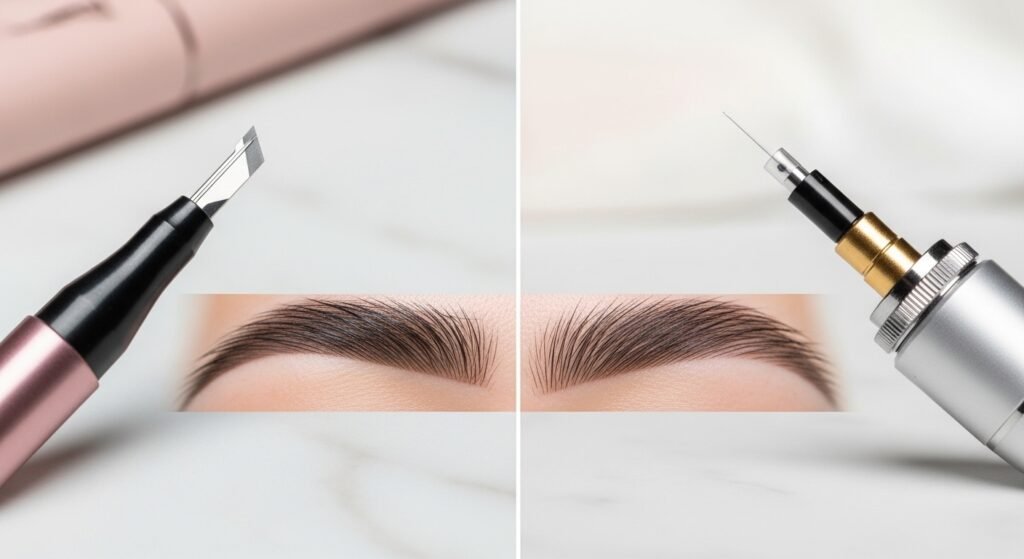
The two heavy hitters in this space are nano brows vs microblading. While they might look similar from a distance, they use totally different tools and tech to get the job done. One uses a manual blade while the other uses a high-tech machine. Let’s dive into the specifics of each one so you can see which matches your lifestyle.
What is Microblading? The Art of Manual Hair Strokes

Microblading is the OG of the hair-stroke world and has been a fan favorite for years. It is a manual cosmetic tattooing approach designed to mimic natural brow hair perfectly. This technique is famous for giving people that “I woke up like this” look without the need for pencils or gels.
- Definition: Microblading is a semi-permanent procedure where pigment is scratched into the skin to look like hairs.
- The Tool: Artists use a handheld manual wand that has a tiny “blade” made of 12 to 16 fine needles.
- The Process: The artist manually draws each stroke by making tiny incisions in the skin and filling them with pigment.
- Primary Goal: It is mostly used to add definition, structure, and density to brows that are sparse or thin.
This method is an art form that relies heavily on the steady hand of your technician. Because it is manual, the artist has total control over the length and direction of every single stroke. It is a great way to rebuild a brow from scratch if you over-tweezed back in the day.
What are Nano Brows? The Digital Evolution of Brows

If microblading is the classic version, then nano brows are the high-tech upgrade. Nano machine brows use a digital device to create the same hair-like look but with more precision. It is an advanced eyebrow enhancement technique that is quickly becoming the new gold standard.
- Definition: Nano brows use a digital machine to place pigment into the skin with extreme accuracy.
- The Tool: A high-speed PMU device is used, which features a single, ultra-fine “nano” needle.
- The Process: The needle moves up and down very fast to deposit pigment through thousands of tiny dots that form a line.
- Aesthetic Appeal: This method is famous for creating a softer, more feathered, or wispy look that looks very light.
The machine used for nano brows is similar to a traditional tattoo machine but much more delicate. Because it uses a single needle, it can create incredibly thin lines that are almost impossible to distinguish from real hair. It is the perfect choice for someone who wants a very soft and natural result.
Technical Comparison: How the Methods Differ

When looking at nano brows vs microblading, the biggest difference is how the pigment actually gets into your skin. Microblading is all about manual pressure and slicing, while nano is about digital speed and puncturing. These technical details matter because they change how the brows look as they heal.
- Application Method: Microblading uses manual hand-pressure, while nano uses a controlled digital machine.
- Pigment Deposition: Microblading creates a tiny slice or cut in the skin, whereas nano brows create a pixelated line.
- Stroke Precision: Nano needles allow for more creative and curved patterns because the needle can move in any direction.
- Depth of Pigment: Nano brows usually sit at a shallower and more controlled depth within the dermis layer of the skin.
Because microblading involves making actual cuts, the hair strokes tend to look very crisp and sharp right after the appointment. However, nano brows offer a bit more flexibility for the artist to draw “cross-strokes” that look more like a messy, natural brow. The machine is also more consistent, so you don’t have to worry about the artist pushing too hard in one spot and too light in another.
Tool and Needle Variations
The tools used in these procedures are what define the final outcome. Even though both aim for a hair-stroke look, the mechanics are totally different. Understanding the needles helps you understand why one might feel more comfortable than the other.
The Microblade Tool
The microblade is not actually a single blade, but a row of tiny needles grouped together. These needles are so small they look like a blade, which is where the name comes from. Artists can choose different needle counts depending on how thick they want the hair strokes to be.
- Nanoblading: This is just microblading that uses a smaller manual blade for finer lines.
- Manual Control: The artist has to be an expert at judging the depth of the skin by feel alone.
- Blade Shape: Most blades are slanted or “U-shaped” to help the artist glide through the skin.
The Nano Machine Needle
The nano machine needle is a single, super-thin needle that is much finer than what you would find in a microblade. Because it is just one needle, it causes way less stress to the surrounding skin. The machine handles the depth for the artist, which keeps things very even.
- Oscillation: The needle vibrates at a high speed, which is why it feels more like a buzzing sensation.
- Consistency: Digital precision ensures that every dot of pigment is placed at the exact same depth.
- Flexibility: The single needle can move in loops or curves that a flat blade simply cannot do.
Skin Type Suitability and Considerations
Your skin type is probably the most important factor when choosing between nano brows vs microblading. Not every skin type reacts the same way to these treatments. If you pick the wrong one for your skin, your brows might not last or could end up looking blurry.

The Ideal Candidate: Normal to Dry Skin
If you have normal skin with small pores and no oiliness, you are in luck. This skin type is the easiest to work with for any PMU artist. The pigment stays exactly where it is put and heals with very little fading.
- Retention: Pigment holds exceptionally well on dry skin types.
- Clarity: Hair strokes stay crisp and do not spread out during the healing process.
- Healing: Dry skin usually heals faster with fewer complications like excessive scabbing.
The Oily Skin Challenge
Oily skin is the toughest to work with, especially for microblading. The oil, or sebum, in the skin can actually push the pigment out or cause the strokes to blur together over time. This can leave you with a solid look rather than individual hairs.
- Blurring: Oily skin can cause pigment to migrate, making hair strokes look fuzzy.
- Fading: The constant production of oil can cause the pigment to fade much faster than usual.
- Nano vs Micro: While both are tricky, nano brows are sometimes slightly better for oily skin because the machine can be more precise.
Sensitive and Mature Skin
As we get older, our skin gets thinner and more delicate. This is also true for people who just naturally have very sensitive skin that turns red easily. In these cases, you want to be as gentle as possible.
- Less Invasive: Nano brows are the preferred choice for thin or aging skin because the machine is less traumatic.
- Reduced Irritation: There is a much lower risk of bruising or long-term irritation with nano brows.
- Gentle Application: The machine allows for a shallower placement that doesn’t stress out sensitive tissue.
Healing Process and Aftercare Requirements
The work doesn’t end once you leave the salon chair. How you take care of your brows during the healing phase determines how they will look for the next few years. Both nano brows vs microblading have similar healing stages, but the intensity can vary.

The Six-Week Healing Timeline
It takes a full six weeks for your skin to completely heal and for the pigment to settle into its final color. You will go through an emotional rollercoaster during this time. Your brows will change every single day.
- Day 1-7: Brows will look very dark and bold, which can be a bit shocking.
- Day 7-14: You might experience scabbing, flaking, and itching as the skin repairs itself.
- The Ghosting Phase: After flaking, the pigment might look like it has totally disappeared.
- Final Result: The color will “bloom” back to the surface around week four or five.
Side Effects and Skin Trauma
Because microblading involves making actual cuts in the skin, it is considered more traumatic. This means you might see more side effects in the first week. Nano brows are generally a much smoother ride for your skin.
- Inflammation: Microblading often causes more initial redness and swelling.
- Scabbing: You can expect more noticeable scabbing with microblading due to the nature of the incisions.
- Long-term Health: Nano brows carry a lower risk of creating scar tissue over many years of touch-ups.
Universal Aftercare Rules
No matter which method you choose, the rules for aftercare are pretty much the same. You have to protect your investment. If you skip these steps, you might end up with an infection or patchy brows.
- Cleaning: Use a gentle, fragrance-free soap to dab the area as instructed by your artist.
- Ointment: Apply a tiny amount of aftercare balm to keep the skin from getting too dry.
- Hands Off: Do not pick at any scabs or flakes, or you will pull the pigment out.
- Lifestyle: No sun exposure, heavy sweating, or makeup on the brow area for at least 14 days.
Longevity and Maintenance
Semi-permanent makeup is a commitment, not a one-and-done deal. You have to keep up with maintenance if you want your brows to stay looking fresh. The longevity of your brows depends on the technique used and your personal skin chemistry.
Retention Differences
In the battle of retention, microblading usually takes the lead for staying power. However, nano brows are catching up as the technology improves.
- Microblading: Typically lasts 2 to 5 years because the manual cuts go a bit deeper.
- Nano Brows: Usually last 2 to 3 years before they start to fade significantly.
- Fading: Both will eventually fade into a lighter version of the original color.
The Essential Touch-Up
You cannot skip the touch-up appointment. This is often called the “perfecting session” because it is where the artist fixes any spots that didn’t take pigment well. It is a mandatory part of the process.
- Timeline: This session happens about 6 to 8 weeks after your first appointment.
- Refining: The artist can adjust the color, add more strokes, or fix the symmetry.
- Maintenance: To keep them looking sharp, most people get a color boost every 12 to 18 months.
Visual Aesthetics: Which Look is Right for You?

At the end of the day, you want brows that make you feel confident. The visual result of nano brows vs microblading can be subtle, but it makes a big difference in how your face looks.
- The Defined Look: Microblading is the way to go if you want bold, structured, and very crisp hair strokes.
- The Natural Look: Nano brows are better for a soft, fluffy, and more feathered appearance.
- Filling Gaps: Both are great for filling in thin spots, but they aren’t always enough for totally bare skin or alopecia.
- Symmetry: A skilled artist will use mapping techniques with both methods to ensure your brows are perfect twins.
Cost Analysis and Investment
Getting your brows done is an investment in yourself. It saves you so much time every morning. However, you should be prepared for the price tag, as high-quality work is never cheap.
Factors Influencing Price
The cost isn’t just about the ink. You are paying for the artist’s skill and the safety of the studio.
- Location: Expect to pay way more in big cities like New York or LA compared to smaller towns.
- Artist Expertise: A master artist with years of experience will charge a premium.
- Equipment: Nano brows often cost more because the machines and single-use needles are expensive.
Comparing the Price Tags
While every studio is different, there are some general ranges you can expect to see. Nano brows are almost always the more expensive option.
- Microblading: Usually ranges from $400 to $1,000 per session depending on the area.
- Nano Brows: Typically cost between $800 and $1,400 because the technique is harder to master.
- Touch-Ups: Don’t forget to budget for the follow-up sessions, which are usually a few hundred dollars.
Debunking Common Myths and Misconceptions
There is a lot of bad info out there about these procedures. Let’s set the record straight so you can make an informed choice.
- Myth: Nanoblading and nano machine brows are the same thing. In reality, nanoblading is manual, and nano brows use a machine.
- Myth: Nano brows are a magic fix for oily skin. While they are gentler, oily skin is still a challenge for any hair-stroke method.
- Myth: Semi-permanent means they will just disappear after a year. Some pigment may stay in your skin forever, even if it fades a lot.
Final Decision: Making the Choice
Choosing between nano brows vs microblading really comes down to what fits your unique face and lifestyle. Microblading offers that classic, sharp hair-stroke look that we all fell in love with years ago. Nano brows give us a high-tech, gentle alternative that works for almost everyone, especially those with sensitive skin.
The most important step you can take is to book a consultation with a pro. A good artist will look at your skin, check your natural brow hair, and tell you exactly which method will give you the best results. Don’t just go for the cheapest price; look at portfolios and make sure you love their style. Your brows are the frame of your face, so treat them with the best care possible.
Frequently Asked Questions
Can I get nano brows if I am currently pregnant or breastfeeding?
Most professional artists will not perform nano brows or microblading on clients who are pregnant or nursing. This is primarily due to the risk of infection and the fact that hormones can significantly affect pigment retention and skin sensitivity. It is always safest to wait until you have finished breastfeeding before booking your appointment.
How do I prepare my skin in the week leading up to the appointment?
You should avoid any skin treatments that sensitize the area, such as chemical peels, laser treatments, or retinol creams, for at least two weeks prior. It is also recommended to avoid blood thinners like aspirin, ibuprofen, and excessive caffeine or alcohol for 48 hours before the procedure to minimize bleeding.
Is it possible to have an allergic reaction to the pigment?
While rare, allergic reactions can occur, especially if you have sensitivities to iron oxides or certain synthetic dyes. If you have highly sensitive skin or a history of severe allergies, you can request a patch test from your artist a few days before the full procedure to ensure your skin reacts well to the pigment.
Can nano brows cover up an old, faded eyebrow tattoo?
Nano brows can sometimes be used to correct or cover old work, but it depends on how dark and saturated the old pigment is. If the old tattoo is very dark or has turned a strange color, you might need laser removal or saline lightening sessions first. A consultation is necessary to see if the new hair strokes will be visible over the old ink.
What happens if I accidentally pick a scab during the healing process?
Picking a scab can pull the pigment out of the skin prematurely, leading to a patchy or “empty” spot in the brow. It can also cause minor scarring or infection. If you accidentally snag a scab, clean the area gently and leave it alone; your artist can usually fix the missing spot during your six-week touch-up.
Will the procedure affect my natural brow hair growth?
No, neither microblading nor nano brows should stop your natural hair from growing. In fact, the stimulation of the skin can sometimes increase blood flow to the follicles. The pigment is placed in the upper dermis, while your hair follicles are located deeper in the skin, so they remain unaffected.
How do I choose the right pigment color for my skin tone?
Your artist will choose a color based on your natural brow hair and the undertones of your skin. They typically aim for a shade that matches your natural hair when it is dry. It is better to go slightly lighter during the first session, as it is much easier to darken the brows at the touch-up than it is to lighten them.
Can I exercise or go to the gym after getting my brows done?
You should avoid heavy sweating and intense exercise for at least 10 to 14 days. Sweat contains salt, which can act as a lightener and pull the pigment out of the fresh strokes before they have a chance to settle. Keeping the area dry is vital for the best color retention.
Does the buzzing of the nano machine cause more discomfort than the manual tool?
Most clients find the buzzing of the machine to be a soothing, rhythmic sensation rather than a painful one. Because the nano needle is so thin and moves so fast, it often feels less invasive than the manual scraping or “clicking” sound associated with microblading.
How long does the actual appointment take from start to finish?
A standard first appointment usually takes between 2 to 3 hours. A large portion of this time is dedicated to “mapping,” where the artist draws the shape and ensures perfect symmetry before any tattooing begins. The actual tattooing part usually takes about 45 to 60 minutes.
Are there any medications that prevent me from getting this done?
If you are taking blood-thinning medications, Accutane, or certain chemotherapy drugs, you may not be a candidate for the procedure. Accutane users must be off the medication for at least six months to a year before getting PMU, as the drug thins the skin significantly and prevents proper healing.
Can I get my brows done if I have Botox or fillers?
Yes, but timing is very important. You should get your brows done either before your Botox appointment or wait at least two to four weeks after. Botox can slightly change the position of your brow bone, so the artist needs to work with your “settled” facial muscles to ensure the shape is correct.
What should I do if I don’t like the shape during the mapping process?
You must speak up! The mapping phase is the only time you can change the design. Your artist will use specialized rulers and strings to find your ideal shape, but you should look in the mirror and confirm you are happy with the thickness and arch before they start.
Is the pigment used in nano brows different from traditional tattoo ink?
Yes, PMU pigments are formulated to fade over time, whereas traditional tattoo ink is designed to be permanent. PMU pigments have smaller particles that the body can slowly break down, which allows for adjustments in shape and color as your face ages and trends change.
Can I go on a beach vacation immediately after my appointment?
It is highly recommended to wait at least two weeks before a sun-heavy vacation. UV rays are the biggest enemy of fresh pigment and can cause it to change color or fade instantly. Additionally, you cannot submerge your healing brows in salt water or chlorinated pools.
Will my brows look “fake” or like a solid block of color?
If you choose an artist who specializes in hair-stroke techniques, your brows will look like natural hair, not a block. The “block” look usually comes from older techniques or “powder brows.” Nano and microblading are specifically designed to leave space between strokes to mimic real skin.
Can men get nano brows or microblading?
Absolutely. “Guy-brows” are a very popular service. The artist uses a more random, less groomed pattern to mimic the way male brow hair naturally grows, focusing on filling in gaps rather than creating a perfect arch.
How do I clean my face while my brows are healing?
You should use a washcloth or face wipes to clean the rest of your face, avoiding the brow area entirely. When you need to clean the brows, use only a damp cotton pad with cool, boiled water or the specific cleanser provided by your artist, dabbing gently rather than rubbing.
What are the signs of a skin infection I should look out for?
While infections are rare in sterile studios, you should watch for excessive swelling that doesn’t go down, yellow or green discharge, extreme heat in the brow area, or red streaks moving away from the site. If you see these signs, contact your artist and a doctor immediately.
Can I wear brow gel or pencil over my brows while they heal?
You must avoid all makeup on and around the brow area for at least 14 days. Applying makeup can introduce bacteria into the open skin, and the chemicals in the makeup can interfere with the pigment’s ability to bond with your skin cells.