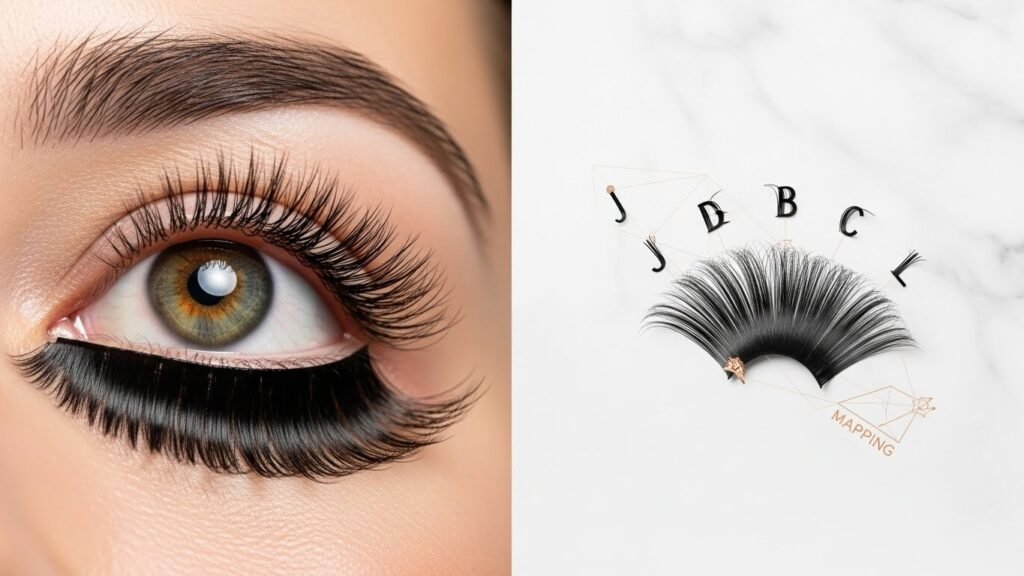
Finding the best types of lash curls is like picking the perfect outfit. It makes you feel amazing and boosts your confidence. Many people want a look that is both natural and stunning. This guide helps you navigate the world of types of lash curls with ease. You will learn how different shapes change your face. We will cover everything from the classic C curl to the dramatic D curl. This article is your go-to source for becoming a lash expert. Let’s dive into the details of these awesome beauty enhancements.
Introduction to Lash Extension Curls
Lash extension curls are the shapes of the synthetic fibers used in sets. They determine how much your lashes lift or curve upward. These curls play a huge role in your overall lash artistry. You can go for a very natural look or a super dramatic one. Choosing the right curl is not a one-size-fits-all situation. Every client has unique eyes and different styles they like. Customization is the secret to making every lash set look perfect.
The Science of Lash Curvature
Curls are made using heat to shape synthetic PBT fibers. Manufacturers label them with letters to show how tight the curve is. A tighter curve makes the lash look shorter than it actually is. You need to understand the relationship between the curl and the visual length. Professional artists often use a formula to keep lashes healthy. This is known as the Golden Ratio in the lash world.
- Golden Ratio: This is calculated as the Curl Degree multiplied by 0.15.
- Ideal Length: The result tells you the best length in millimeters for that curl.
- Thermal Memory: Synthetic fibers are built to stay curly even when they get wet or hot.
- PBT Fiber: This high-quality material ensures the curls do not lose their shape over time.
Comprehensive Breakdown of Lash Extension Curl Types
J Curl: The Subtle Naturalist
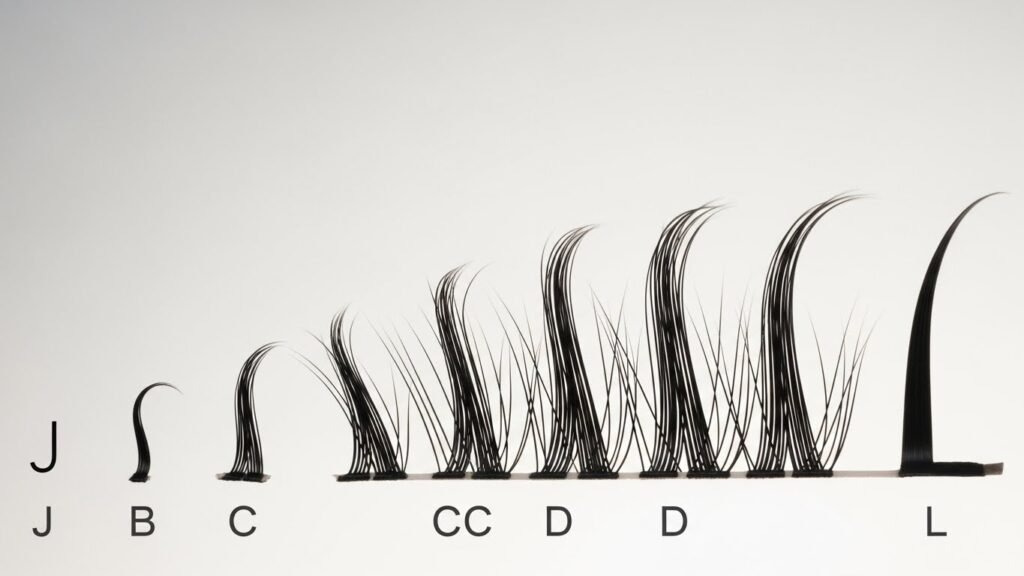
The J curl is the most natural type of lash curl you can find. It has a very slight lift only at the very tip. This shape mimics the way real human lashes grow. It is a great choice for a very conservative look. Many men also choose this curl for a “barely-there” enhancement.
- Appearance: It looks very flat with just a tiny curve at the end.
- Usage: It is often used for the inner corners of the eyes.
- Natural Fit: It works best for people with lashes that point straight or upward.
B Curl: The Soft Elevation
The B curl gives you a gentle lift that is still very soft. It has a bit more curvature than the J curl. It looks like you used a single coat of high-quality mascara. This is a popular pick for a clean, office-friendly style. It adds a feminine touch without being too bold.
- Visual Effect: It offers a subtle curve that looks very elegant.
- Target Group: It is perfect for people who want a soft and natural lift.
- Growth Pattern: It works well for lashes that have a slight natural curve.
C Curl: The Universal Standard
The C curl is easily the most popular choice for types of lash curls. It provides a moderate lift that really opens up the eyes. Most people find this curl gives them a perfect classic look. It mimics the effect of using a manual lash curler. This curl is famous for being very versatile and beautiful.
- Popularity: This is the go-to curl for almost every lash artist.
- Eye-Opening: It creates a wide-eyed look that is still very wearable.
- Daily Wear: It is the ideal choice for everyday glamour.
CC Curl: The Glamour Bridge
The CC curl is a newer favorite in the beauty industry. It sits right in the middle between the C and D curls. It gives you more drama than a C curl but is softer than a D curl. This makes it a great bridge for people wanting more pop. It adds wonderful texture to hybrid and volume sets.
- Visual Impact: It is more visible than a standard C curl.
- Versatility: It works wonders for adding dimension to your lash set.
- Mapping: It is a great tool for creating a customized, layered look.
D Curl: The Dramatic Arch
The D curl is all about high-impact results and bold flair. It features a very tight and high vertical lift. This curl is perfect for a doll-eye style or a striking statement. It makes your eyes look much larger and rounder. Many people choose this for special occasions or big events.
- Drama: This curl provides the most noticeable lift and arch.
- Doll-Eye Effect: It is the best choice for a cute, round-eyed look.
- Visibility: Even with hooded lids, this curl stays very visible.
L and L+ Curls: The Geometric Solution
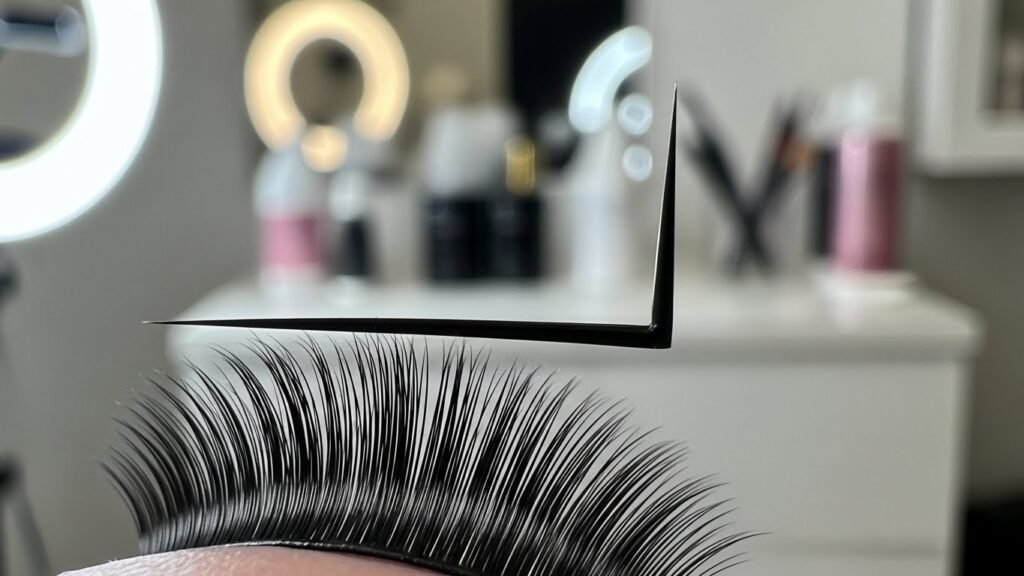
L curls are unique because they have a totally flat base. They then turn sharply upward in an L-shape. This design is meant to clear the eyelid fold easily. It provides a much better surface for the lash glue to bond. This makes them a hero for straight or downward lashes.
- Base Shape: The flat base allows for strong bonding power.
- L+ Variation: This version has a slightly softer upward curve.
- Functional: It is perfect for clients whose lashes grow straight down.
M Curl: The Modern Alternative
The M curl is a modern twist on the L-style curls. It offers a lifted look with a much smoother transition. It is becoming very popular for trendy lash maps. You get the lift of a D curl with the base of an L curl. It provides a very soft and tapered finish to the lashes.
- Smooth Curve: It does not have the sharp angle of a standard L curl.
- Lifted Finish: It provides a bright and open appearance for the eyes.
- Trendy: It is often used for the fox-eye or cat-eye styles.
U and DD Curls: Pushing the Boundaries of Lift
U and DD curls are for the ultimate drama seekers. The U curl is an extreme shape that looks like a semi-circle. It is used mostly in high-fashion or very creative lash sets. The DD curl is even tighter than the standard D curl. It offers maximum verticality for the most intense look possible.
- U Curl: This creates a very rounded and fashion-forward appearance.
- DD Curl: This provides the most intense lift for a bold statement.
- Niche Styles: These are used for specific artistic designs.
| Curl Type | Key Features | Primary Use | Best Suited For |
| J Curl | Very straight base with a tiny curve only at the tip. | Achieving a “no-makeup” look or male lash grooming. | Straight or upward-pointing natural lashes; inner corner transitions. |
| B Curl | Gentle lift; slightly more curvature than a J curl. | Soft, office-friendly enhancement; mimics one coat of mascara. | Clients with a slight natural lash curve; those wanting a conservative lift. |
| C Curl | Moderate, classic lift; mimics a manual lash curler. | The universal industry standard for everyday glamour. | Almost all eye shapes; especially effective for almond and round eyes. |
| CC Curl | A “middle ground” curl; more defined than C but softer than D. | Adding extra volume and texture to hybrid or volume sets. | Clients who want visible lift without the intensity of a D curl. |
| D Curl | High-impact, tight vertical lift; very dramatic. | Creating the “Doll Eye” effect or high-glamour special event looks. | Downturned eyes; hooded eyes; clients wanting a bold, round-eyed look. |
| DD Curl | Extra-tight, semi-circular arch; maximum verticality. | Maximum drama and high-fashion statement sets. | Clients with strong natural lashes who desire extreme lift. |
| L Curl | Flat base that transitions into a sharp 90-degree angle. | Bypassing heavy lids to ensure the lash tips are visible. | Hooded eyes; monolids; deep-set eyes; downward-pointing natural lashes. |
| L+ Curl | Flat base with a smoother, slightly more curved upward flick. | Providing a lifted effect with a more natural transition than the L curl. | Hooded or deep-set eyes that need lift plus a bit of softness. |
| M Curl | Flat base similar to L but with a smooth, rounded curve. | Achieving the trendy “Fox Eye” or “Cat Eye” snatched look. | Straight natural lashes; clients wanting a modern, lifted silhouette. |
| U Curl | Extreme, semi-circular shape; nearly a full U-turn. | Niche artistic designs and extreme high-fashion styling. | Clients with very specific aesthetic goals; not for everyday use. |
Matching Curls to Eye Shapes and Facial Features
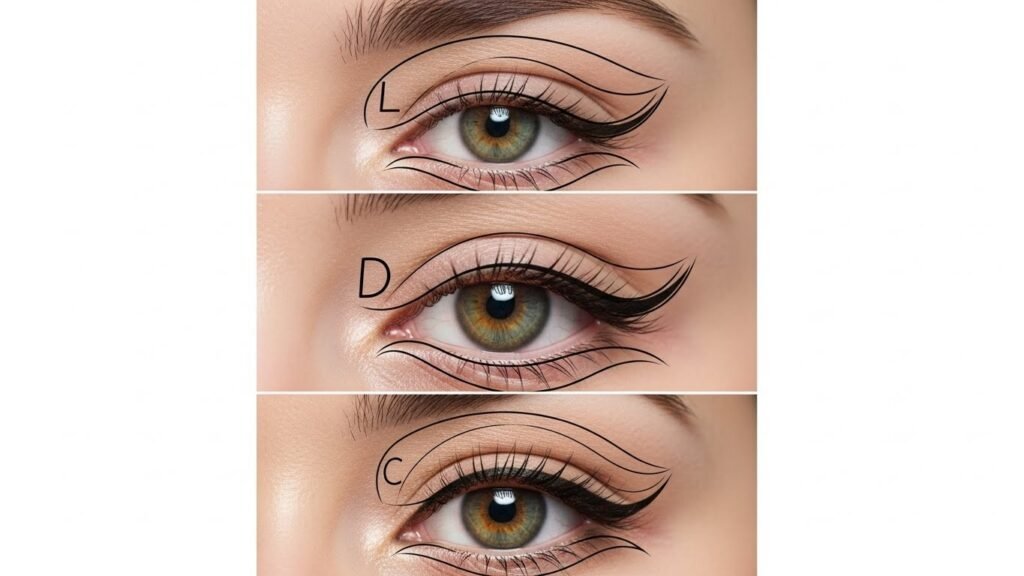
Hooded Eyes
Hooded eyes have extra skin that can hide the base of the lashes. This makes the lashes look shorter than they really are. Choosing the right types of lash curls is very important here. You want the tips of the lashes to peek out from under the skin.
- Recommended: L, L+, or M curls are the top choices.
- Goal: You want to bypass the lid to see the lash tips.
- Avoidance: Very short or flat curls like J might disappear completely.
Almond Eyes
Almond eyes are the most versatile shape for lash extensions. They can handle almost any curl type with ease. Most artists use C or CC curls to highlight this natural beauty. It helps maintain the perfect symmetry of the eye.
- Popularity: C and CC curls are usually the best starting point.
- Styling: Use a gradient with shorter inner corners and longer outer corners.
- Cat-Eye: This shape is perfect for a sleek cat-eye effect.
Deep-Set Eyes
Deep-Set eyes sit further back in the eye socket. Long or very tight curls can sometimes hit the brow bone. This can be annoying or even painful for the client. The goal is to bring the eyes forward visually.
- Recommended: C or CC curls are usually the safest bet.
- Visual Pull: These curls help make the eyes appear more prominent.
- Safety: Avoid D curls if they are too long for the brow space.
Rounded Eyes
Rounded eyes are already very open and bright. If you use a curl that is too tight, they can look startled. You want to balance the shape to make it look more almond-like. Softer curls are usually the best way to go.
- Balanced Look: B or C curls help soften the roundness.
- Mapping: Focus on adding length to the outer corners for balance.
- Natural Vibe: Keeping it simple helps the eyes look naturally beautiful.
Downturned Eyes
Downturned eyes have outer corners that slope slightly downward. This can sometimes make the face look a bit tired. You need to use curls that provide a lot of lift at the ends. This creates a more awake and cheerful appearance.
- Lifting Power: D or CC curls are great for the outer corners.
- Counteraction: The tight curl pulls the eye shape upward.
- Design: Focus the most dramatic lift where the eye slopes down.
Monolid Eyes
Monolid eyes do not have a visible crease on the eyelid. This gives the artist a flat canvas to work with. Using L or L+ curls is a great strategy here. These curls can help create a faux-crease effect. It gives the eyes a more defined and open look.
- Curls: L and L+ are the best for creating vertical space.
- Visual Depth: The sharp lift helps give the eye more dimension.
- Bonding: The flat base of L curls works great on monolid lashes.
Professional Techniques for Curl Application
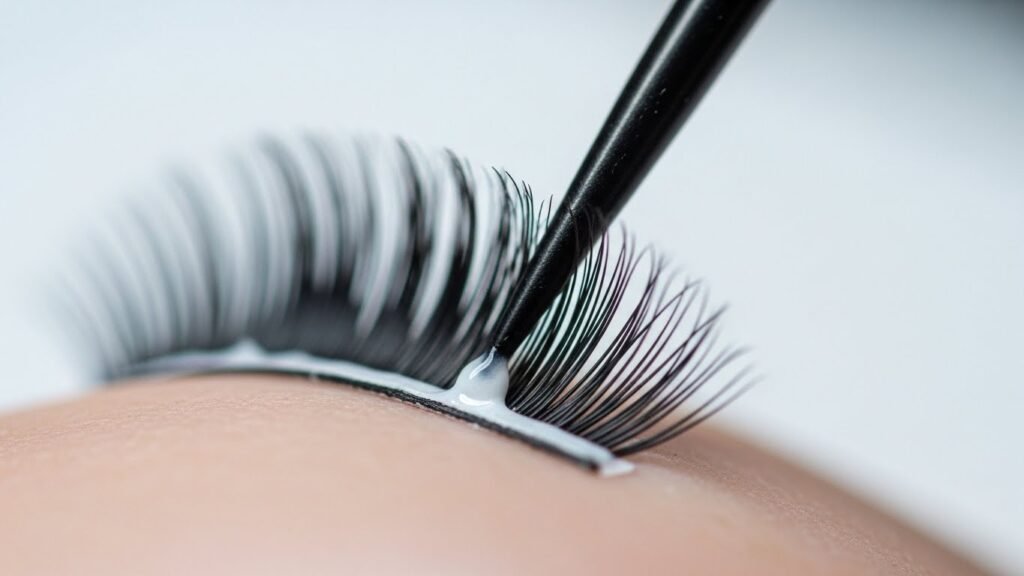
Assessing the Natural Lash Profile
A pro artist always looks at the natural lashes first. They check for strength, length, and the health of the lash. They also look at the direction the lashes grow. Some grow straight out, while others point down.
- Health Check: Never put heavy lashes on weak or damaged natural ones.
- Direction: The extension must follow the natural growth for a good bond.
- Safety Rule: Stay within 2-3mm of the natural lash length.
The Art of Mixing Curls
You do not have to stick to just one curl type. Mixing different types of lash curls adds texture and dimension. It makes the set look much more professional and tailored. You can use different curls in different layers of the lashes.
- 70/30 Rule: Use the main curl for 70% and a transition curl for 30%.
- Multidimensionality: This technique creates a beautiful, wispy finish.
- Volume: Mixing curls is a secret to making volume sets look fluffy.
Inner Corner Considerations
The inner corners are the most sensitive part of the eye. Using the wrong curl here can cause a lot of irritation. You want to use curls that will not hit the eyelid skin. Smaller and softer curls are usually the best choice.
- Best Curls: J or B curls are ideal for these tiny lashes.
- Comfort: This ensures the client can blink comfortably.
- Longevity: Correct placement in the corners helps the set last longer.
Directional Placement and “The Wrap”
Placing the extension correctly is a high-level skill. You can use curl tension to fix lashes that grow crookedly. This is called correcting the growth direction. You also want to “wrap” the extension around the natural lash. This creates a much stronger bond between the two.
- Straightening: Correct placement helps messy lashes look neat.
- Attachment: Adjusting the angle can change the entire look of the lift.
- Tension: Using the curl to pull the natural lash into a better spot.
Advanced Considerations for Longevity and Retention
Adhesive Bonding and Surface Area
The bond between the lash and the glue is vital. Different types of lash curls have different contact points. Tighter curls like D have a smaller base area. This means you have to be very precise when applying them.
- Bonding Power: Flat-base curls like L offer the most surface area.
- Precision: D curls might need a tiny bit more glue or a wrap.
- Retention: Good surface contact ensures the lashes stay on longer.
Environmental Factors and Maintenance
The room where you work matters a lot for lash sets. Temperature and humidity affect how fast the glue dries. You should refresh your glue drop every 15 to 20 minutes. This keeps the adhesive fresh and strong.
- Glue Health: Fresh glue ensures the best possible retention.
- Lifestyle: Active clients might need softer curls for durability.
- Cleaning: Tell your clients to brush and wash their lashes daily.
Troubleshooting Retention Issues
Sometimes lashes fall off too early. You need to figure out why this is happening. It could be the weight of the lash or the curl angle. If the lash is too heavy, it will droop. If the angle is wrong, it can cause tension breaks.
- Lash Drooping: This happens when the curl is too heavy for the lash.
- Shedding: Check if the client is sleeping on their face.
- Analysis: Look at the bond to see if it was placed correctly.
Mapping and Design Strategies
Open-Eye vs. Cat-Eye vs. Doll-Eye
Lash mapping is like a blueprint for the eyes. The open-eye map uses longer lashes in the center. The cat-eye map places the length on the outer corners. The doll-eye map uses a consistent lift across the middle.
- Open-Eye: This makes the eyes look much wider and brighter.
- Cat-Eye: This creates a sexy, elongated almond look.
- Doll-Eye: This is the best for a cute and youthful appearance.
Trending Styles and Curl Combinations
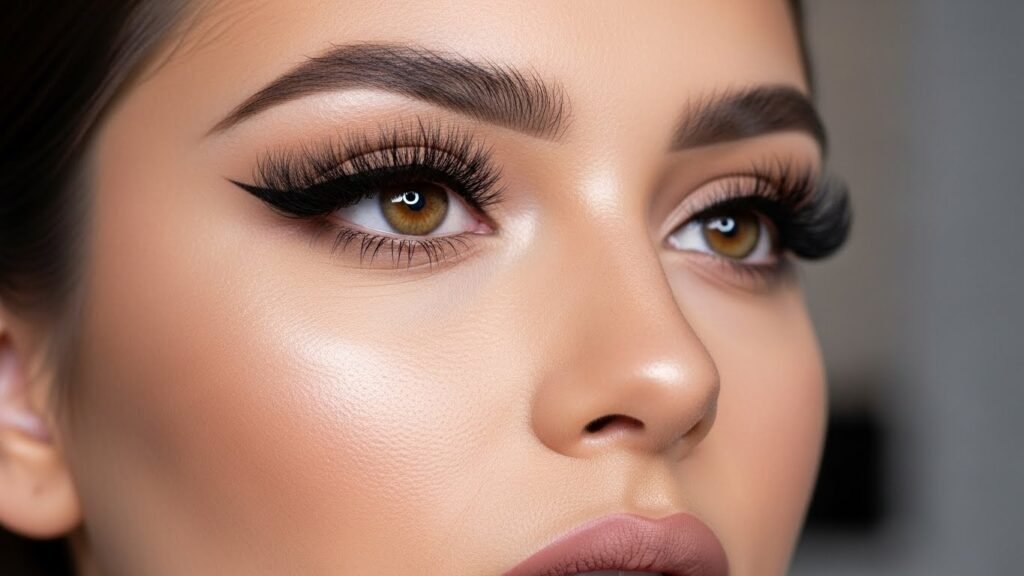
New trends are always popping up in the lash world. The Kim K look uses spikes of different lengths and curls. The Fox Eye style uses M or L curls to get a sharp look. The Eyeliner effect uses very short, tight curls along the lash line.
- Wispy Look: Mixing different curls creates a fun, fluttery style.
- Fox Eye: This is the hottest trend for a lifted, snatched look.
- Eyeliner: It makes the lash line look dark and defined.
The Business of Lash Curls: Consultation and Client Education
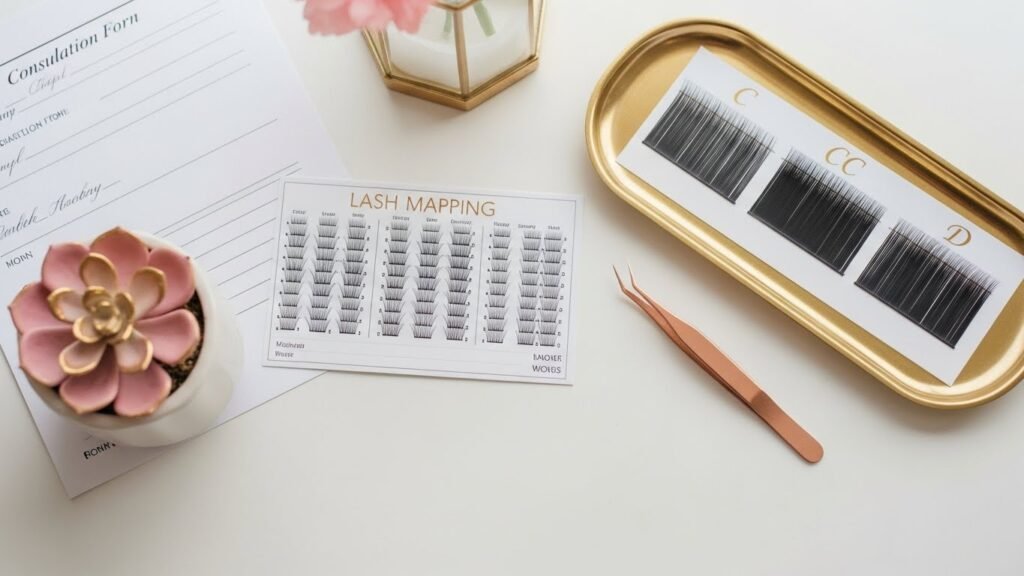
Managing Client Expectations
A good consultation is the key to a happy client. Sometimes people want a look that won’t work for them. You have to explain why certain types of lash curls are better. Use photos and lash maps to help them understand.
- Health First: Always prioritize the health of the natural lashes.
- Visual Aids: Show them examples of different curls on real eyes.
- Honesty: Tell them if a certain style will be too heavy for them.
Building Your Inventory
Every lash artist needs a good stock of supplies. You should have a mix of the most popular curls. Start with B, C, and D curls for your basic kits. As you grow, you can add specialty curls like L and M.
- Essentials: Always have C and D curls in many lengths.
- Specialty: Stock L and M curls for your advanced clients.
- Materials: Offer different finishes like silk or matte cashmere.
Summary and Professional Final Thoughts
Mastering types of lash curls is a journey of art and science. It takes practice to know which curl works for every eye. The consultation is your most important tool as an artist. Always keep the safety of the natural lashes as your top goal. Stay curious and keep learning about new trends in the industry. With the right curls, you can make anyone feel like a superstar.
Frequently Asked Questions
What is the difference between silk, mink, and cashmere lash extensions?
Silk lashes have a semi-gloss finish and are slightly more rigid, while faux mink lashes are matte, lighter, and more flexible. Cashmere lashes (often flat lashes) are the lightest of all, featuring a split tip and a shape that allows for superior bonding with less weight, making them ideal for thin natural lashes.
How does humidity affect the curl of synthetic lashes?
High-quality synthetic lashes made from PBT (Polybutylene Terephthalate) are designed to be heat and moisture resistant. Unlike human hair or real mink, they do not lose their curl in high humidity, though extreme heat (like opening a hot oven) can occasionally cause the fibers to relax or singe.
Can lash extensions be recurled after application?
No, you should never use a mechanical or heated lash curler on extensions. This can damage the synthetic fibers, break the adhesive bond, and cause the extensions to fall out prematurely. If a client wants more curl, the artist must apply a tighter curl type during the next fill.
What causes “lash drooping” even when using a curly extension?
Drooping occurs when the extension is too heavy for the natural lash to support, or if the natural lash itself is growing downward. To fix this, an artist should use a lighter diameter (thinner lash) or a curl with a flat base, like an L or M curl, to provide better mechanical lift.
Is it possible to be allergic to certain lash curls?
No, allergies are typically related to the cyanoacrylate in the adhesive or the ingredients in the lash cleanser, not the curl of the lash itself. The curl is simply a physical shape of a synthetic fiber.
Why do some brands’ C curls look like other brands’ D curls?
There is no global standardization for lash curls. Each manufacturer has its own molds and naming conventions. It is important for artists to stick with a consistent supplier or compare samples when switching brands to ensure the curls match.
Can I wear glasses with D or U curls?
Tighter curls like D and U are actually better for glasses wearers because they curve upward and away from the lenses. Longer, flatter curls like J or B are more likely to brush against the glass and cause irritation.
How do I choose a curl for a client with very curly natural lashes?
If a client has “O” shaped or very curly natural lashes, it is best to use a curl that matches their natural pattern, such as a C or CC. Using a very straight lash (J curl) on a curly natural lash will result in a poor bond and a messy appearance.
What is the “Eyeliner Effect” and which curl creates it?
The Eyeliner Effect is a styling technique where very short, dark, and tight curls (like C or D in 6mm–8mm) are applied in a dense layer along the lash line. This creates the illusion of a dark, solid line of eyeliner without needing makeup.
Are there specific curls recommended for older clients?
For mature clients with thinning skin or sagging eyelids, B or C curls are often preferred. They provide a refreshed, “awake” look without the heaviness or aggressive lift that might look unnatural on aging eyes.
How does the thickness of the extension affect the appearance of the curl?
Thicker extensions (0.18mm or 0.20mm) can make a curl look more dramatic and dark, but they are also heavier. Thinner extensions (0.05mm or 0.07mm) used in volume sets create a softer, fluffier version of the same curl.
What is a “Mega Volume” curl?
Mega Volume usually refers to the technique of applying 10 or more very thin extensions to one natural lash. While any curl can be used, CC and D curls are most common in Mega Volume to create that signature dense, black, and fluffy look.
Why do inner corner lashes always seem to pop off first?
The inner corner is prone to more moisture from tearing and oils from the skin. Additionally, if the curl is too tight or the lash is too long, it may rub against the nose or eyelid, causing the bond to break. Using a shorter, flatter curl (like B) helps improve retention here.
Can I use different curls on the top and bottom lash layers?
Yes, this is an advanced technique called “layering.” You might use a D curl on the bottom layer of lashes to provide lift and a C curl on the top layer to create a wispy, textured, and more natural top line.
How do I map a “Fox Eye” look using specific curls?
The Fox Eye look is best achieved using M or L curls on the outer corners. These curls have a flat base and a sharp flick that pulls the eye outward and upward, creating a snatched, elongated effect that traditional round curls cannot achieve.
Does the lash color change how the curl looks?
Yes, black extensions make the curl look more defined and bold. Brown or colored lashes soften the appearance of the curl, making even a D curl look more subtle and blended.
What should I do if a client has “criss-cross” natural lashes?
When lashes grow in different directions, an artist must use “directional placement.” By placing the extension at a slight angle contrary to the natural growth, the curl can be used to visually straighten the row of lashes.
Is the CC curl better for volume or classic sets?
The CC curl is exceptionally versatile and works well for both. In classic sets, it provides a “mascara plus” look. In volume sets, it helps create a wide, fans-out appearance that fills gaps between natural lashes efficiently.
Can sleep positions affect the curl of the extensions?
While sleeping on your face won’t permanently change the synthetic curl, the pressure can cause the extensions to twist or lean to one side. This makes the curl look “messy.” Using a silk pillowcase and a lash wand can help maintain the curl’s direction.
What is a “Flat Lash” curl?
A Flat Lash is not a curl type, but a shape of the extension base. It is flat rather than round, which allows it to sit more securely on the natural lash. Flat lashes are available in all standard curls like B, C, and D, but they offer a darker, more “filled-in” look at the lash line.