


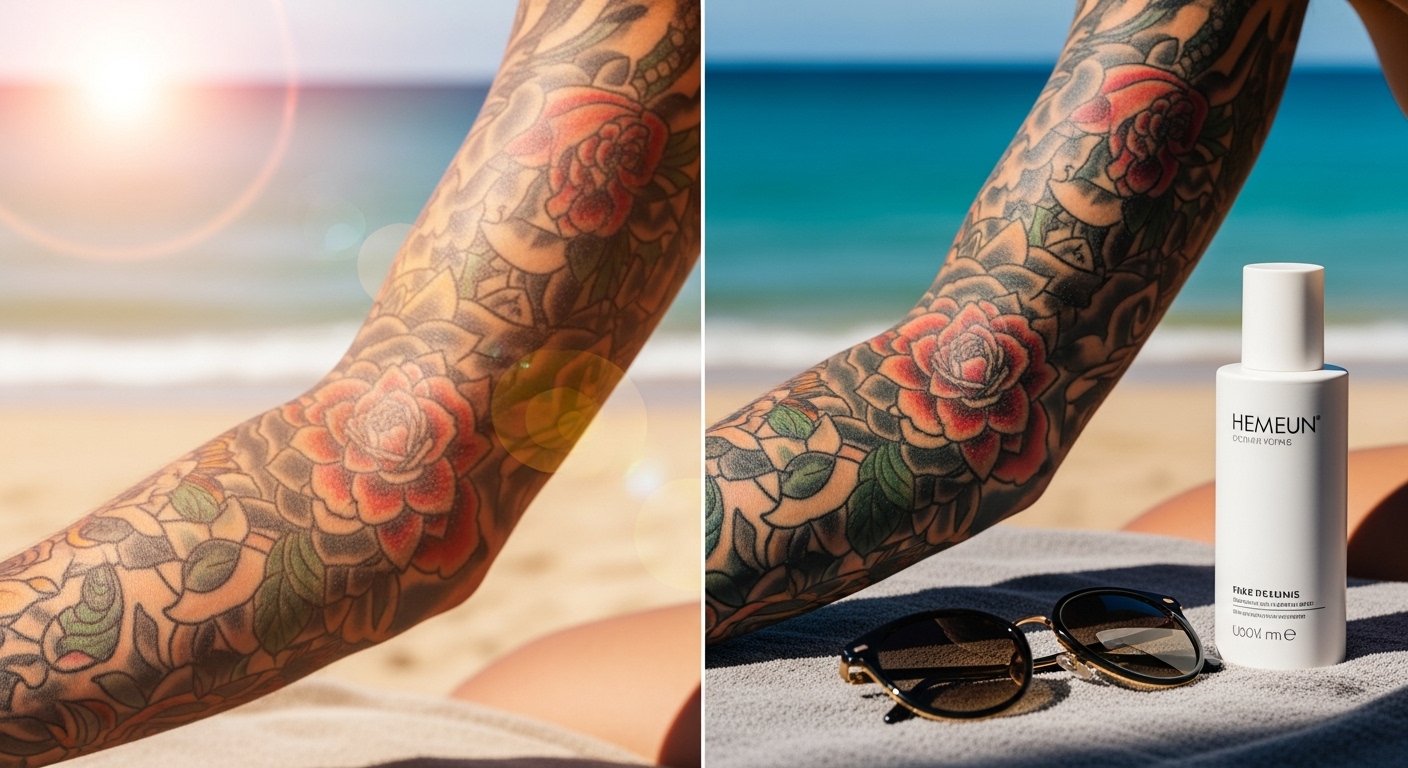
Sunburn on tattoo areas can be a total vibe killer for your new ink. You probably spent a lot of cash and time getting that perfect piece. Now you need to make sure the sun doesn’t ruin it. This guide will show you how to keep your art looking fresh for years.
Understanding the Relationship Between UV Rays and Tattoo Ink
The sun sends out ultraviolet rays that act like tiny hammers on your skin. These rays go deep into the layers where your ink lives. They start to break apart the big drops of pigment into smaller bits. Your body then tries to carry those tiny bits away. This is why a sunburn on tattoo spots makes them look old and blurry.
The Biological Impact on Skin Layers
Your skin has different layers that react to the sun in various ways. The top layer is the epidermis, and the middle layer is the dermis. Tattoo ink stays in the dermis to keep its shape. UV rays pass through the top layer and strike the dermis directly. This causes the ink to spread out and lose its sharp edges.
- Melanin Interference: When you tan, your skin makes melanin to protect itself from the sun. This dark pigment sits above your tattoo and acts like a cloudy window. It makes your bright colors look dull and your blacks look grey.
- Macrophage Activity: These are special cells in your immune system that eat foreign stuff. UV light breaks ink into bite-sized pieces for these cells. They slowly haul the ink away, which leads to permanent fading.
Phase 1: The Sun and Your New Tattoo
A fresh tattoo is basically a fancy open wound that needs a lot of love. Your skin is raw and trying to build a new protective barrier. During this time, the sun is your biggest enemy. Even a little bit of sun can cause major problems for the healing process.
The Critical Healing Window
The first few weeks after getting inked are the most important for the final look. Your skin is busy repairing the holes made by the tattoo needles. During this stage, the skin cannot protect itself from heat or light. If you let the sun hit it, you are asking for a world of hurt.
Risks of Sun Exposure During Aftercare
Getting a sunburn on tattoo areas that are fresh is a recipe for a disaster. It can turn a beautiful piece of art into a painful mess. You might end up with scars that ruin the design forever. It is much better to stay in the shade until you are fully healed.
- Severe Inflammation: The sun makes the blood flow heavy to the area, causing massive swelling. This stretches the skin and can distort the lines of your tattoo. It also makes the itching much worse than normal.
- Blistering and Tissue Damage: Freshly tattooed skin is very thin and burns super fast. Sunburn blisters can pop and take chunks of ink out with them. This leaves ugly white spots in your new tattoo.
- Infection Risks: A burn weakens your skin’s ability to fight off bad bacteria. If your tattoo starts oozing or feels hot, you might have an infection. This is a serious issue that needs a doctor right away.
- Ink Fall-Out: When a burn causes deep scabbing, the ink can’t stay in the skin. The scab pulls the pigment out as it falls off. You will be left with a patchy and faded tattoo.
Essential Protection Strategies for New Ink

Since you can’t use sunscreen yet, you have to be smart about your gear. You should plan your outfits before you even head out the door. Keeping your ink hidden is the only way to keep it safe. It won’t be forever, just until the skin is closed up.
- Physical Barriers: Wear loose clothes made of cotton or linen to block the sun. Make sure the fabric isn’t scratchy so it doesn’t irritate the wound. If you can see light through the fabric, the sun can get through too.
- The SPF Clothing Advantage: Some shirts are made specifically to block UV rays. These are great because they are light but offer heavy protection. Look for a high UPF rating on the tag for the best results.
- Sunscreen Contraindications: Never put sunscreen on a tattoo that is still peeling or scabbing. The chemicals can get inside the wound and cause a nasty reaction. Wait at least three to four weeks before using any creams.
- The No-Swim Rule: Stay out of the pool and the ocean while your tattoo is healing. Water can harbor bacteria and the sun reflects off the surface. You get a double dose of UV rays when you are near water.
Phase 2: Sun Damage and Long-Term Maintenance
Once your tattoo is healed, you still aren’t off the hook. Sun damage is a sneaky thing that happens over many years. Every time you go out without protection, your tattoo loses a bit of its soul. You have to think about your ink for the rest of your life.
The Lifelong Threat to Ink Longevity
Sun damage happens slowly, so you might not notice it day by day. But after five or ten years, the difference is huge. A tattoo that was bright and sharp will start to look like a blue smudge. This is because UV rays never stop attacking the ink particles.
- Cumulative Damage: Ten minutes of sun every day adds up to hours over a month. Even driving your car can expose your arm to harmful rays through the window. This slow burn is what makes tattoos look “muddy” over time.
- The Muddying Effect: As ink breaks down, the crisp lines start to spread out. Small details like eyes or tiny text will eventually disappear. Proper protection keeps those lines sharp and easy to read.
How Different Ink Styles React to Sunlight

Not all tattoos react to the sun in the same way. Some colors and styles are much tougher than others. Knowing how your specific tattoo behaves will help you protect it better. Your artist can also give you tips based on the style they used.
- Color Tattoos: Bright colors like red, yellow, and orange fade the fastest in the sun. These pigments have smaller particles that the sun destroys easily. If you love color, you need to be a sunscreen pro.
- Blackwork and Black-and-Grey: These hold up better but they still aren’t invincible. Black ink can turn a weird greenish or blue color after too much sun. It also absorbs more heat, which can make your skin feel like it is cooking.
- Style-Specific Vulnerabilities: Fine line tattoos are very delicate and can vanish if they get burned. Traditional tattoos with thick outlines tend to look good for longer. No matter the style, the sun will eventually win if you don’t fight back.
The Role of Tattoo Placement
Where you put your tattoo determines how much sun it will naturally see. Some spots are almost always covered, while others are always out. You need to pay extra attention to the parts of your body that face the sky.
- High-Exposure Zones: Your forearms, hands, and the back of your neck get sun every day. Tattoos on the tops of feet are also at high risk during flip-flop season. These spots need a heavy layer of sunscreen every time you leave the house.
- Low-Exposure Zones: Tattoos on your ribs, back, or thighs usually stay under your clothes. These pieces will likely stay vibrant and sharp for much longer. However, don’t forget them when you head to the beach or pool.
Phase 3: Prevention and Daily Protection Habits
Building a routine is the best way to keep your ink looking like fire. It only takes a minute to apply some protection before you head out. Think of it like an insurance policy for your body art. You wouldn’t leave your car door open, so don’t leave your ink exposed.
Choosing the Right Sunscreen
Not all sunscreens are created equal when it comes to protecting art. You want something that is strong but won’t make your skin break out. Look for bottles that say “broad spectrum” to block all types of rays.
- SPF Ratings: Go for at least SPF 30, but SPF 50 is even better for tattoos. The higher the number, the more rays are blocked from hitting your ink. Don’t settle for low numbers if you are going to be outside all day.
- Mineral vs. Chemical: Mineral sunscreens with zinc or titanium stay on top of the skin. They act like a physical shield to bounce the sun away. Chemical sunscreens soak in and can sometimes irritate sensitive tattooed skin.
- Non-Irritating Formulas: Avoid sunscreens with heavy scents or drying alcohols. These can make your skin itchy and cause you to scratch your tattoo. Simple, clean ingredients are always the best choice for your art.
Advanced Sunscreen Application Techniques

Just slapping some cream on isn’t always enough to do the job. You need to make sure you are covering every single bit of the ink. A little mistake can lead to a weirdly shaped sunburn on tattoo areas.
- The Margin Rule: Always put sunscreen about an inch past the edge of your tattoo. This ensures that as you move, no part of the ink gets exposed. It also protects the skin around the piece from getting red and angry.
- Reapplication Timelines: Sunscreen wears off, especially if you are sweating or swimming. Put a fresh layer on every two hours to stay safe. If you dry off with a towel, you probably rubbed the protection off too.
- Stick vs. Lotion: Sunscreen sticks are great for small tattoos or for being precise. Lotions are better for big back pieces or full sleeves. Keep a small stick in your bag so you are never caught without it.
Phase 4: Managing the Sunburned Tattoo
Mistakes happen, and sometimes you end up with a lobster-red arm. If you get a sunburn on tattoo skin, don’t panic, but act fast. You need to calm the skin down before the damage gets permanent. The next few days will be very important for saving your ink.
Immediate Response for Recent Sunburns
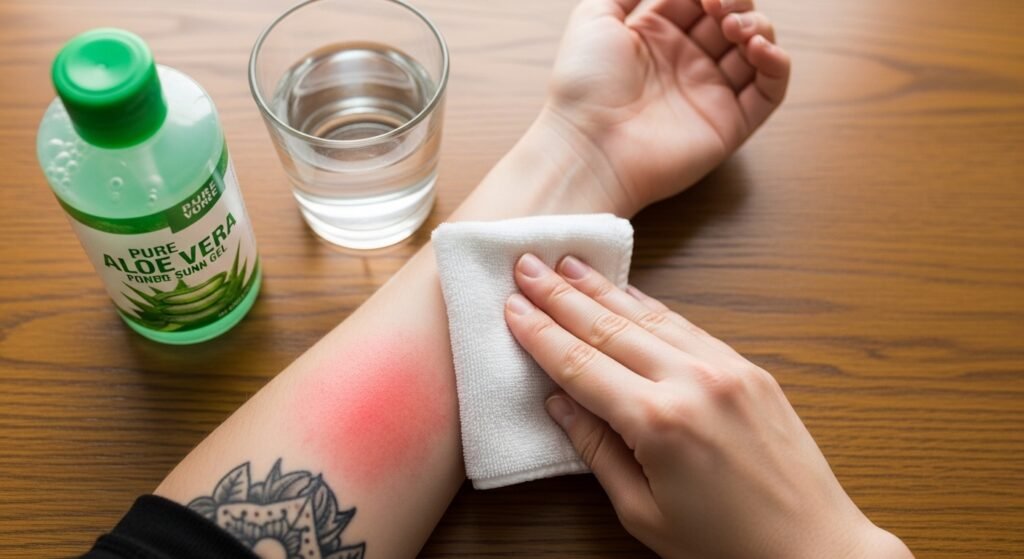
The goal is to get the heat out of your skin as soon as possible. A hot tattoo is a tattoo that is actively being damaged. Use gentle methods to bring the temperature down without hurting the area.
- Cooling the Skin: Take a cool shower or use a cold, damp cloth on the burn. Do not put ice directly on the tattoo as it can cause a cold burn. Keep the area cool for at least twenty minutes at a time.
- Internal Hydration: A sunburn sucks the moisture right out of your body. Drink a ton of water to help your skin cells stay alive and plump. If you are dehydrated, your skin will peel much worse.
- Moisturization Protocols: Use a gentle, fragrance-free lotion to keep the skin from cracking. Pure aloe vera gel is a classic choice because it cools and heals. Avoid anything with lidocaine or menthol if the skin is really raw.
Home Remedies to Avoid
Some old-school tricks can actually make a sunburn on tattoo areas worse. You want to avoid anything that traps heat or clogs your pores. Your skin needs to breathe so it can repair the sun damage.
- The Danger of Petroleum Jelly: Thick ointments like Vaseline act like a lid on a pot. They trap the heat inside your skin and cook the tattoo from the inside. Stick to light lotions that let heat escape.
- Exfoliants and Scrubs: If your skin starts to peel, let it happen naturally. Never scrub or pick at the dead skin on a tattoo. You might pull off a layer of skin that still has ink attached to it.
Phase 5: Restoring Faded and Sun-Damaged Art
If the sun has already done its worst, you aren’t stuck with a bad tattoo. Modern tattoo artists are wizards at fixing old, faded pieces. There are several ways to bring a dead tattoo back to life.
Assessment of Damage
Take a good look at your ink in natural light to see what is missing. Check for lines that have vanished or colors that look like mud. Sometimes it just needs a little boost, but other times it needs a total overhaul.
- Natural Aging vs. Sun Damage: All tattoos age, but sun damage looks different. Sun damage usually causes uneven fading and a loss of detail in one specific spot. An artist can tell you if your piece is worth saving or if you need a new plan.
Restoration and Touch-Up Options

A professional touch-up can make a ten-year-old tattoo look like it was done yesterday. This is often much cheaper and faster than getting a whole new piece. It is a great way to show some love to your older ink.
- The Refresher: This is when the artist goes over the existing colors to make them pop. They might add some white highlights to give it new depth. It’s like giving your tattoo a fresh coat of paint.
- Detail Enhancement: If your lines have spread out, the artist can add thin black outlines. This creates contrast and makes the design easy to read again. It is a great way to fix “blurry” sun-damaged ink.
- Full-Blown Cover-Ups: Sometimes the sun damage is so bad that the original piece is gone. In this case, you can work with an artist to design something new to go over it. A good cover-up will hide the old sun damage completely.
Phase 6: Modern Innovations in Tattoo Protection
We live in a great time for people who love ink and the outdoors. There are new products coming out every year to keep your skin safe. You don’t have to choose between a tan and your tattoos anymore.
Beyond Sunscreen: Protective Technology
Technology is moving past just creams and lotions for sun protection. You can now find gear that is designed specifically for people with heavy coverage. These are game-changers for long days at outdoor festivals or the beach.
- UPF 50+ Clothing: These clothes are woven so tightly that almost no UV rays get through. You can get arm sleeves that look like tattoos themselves but keep you safe. They are much easier than reapplying sunscreen all day long.
- Tattoo-Specific Sunscreens: Some brands make sunscreens that claim to brighten ink. While most are just high-quality sunscreens, they often have extra moisturizers. They are usually very gentle and won’t leave a white film on your art.
Post-Exposure Skin Nutrition
What you put in your body helps your skin fight sun damage from the inside. Healthy skin is more resilient and keeps ink looking better for longer. Good habits will make your tattoos look “pop” even as you get older.
- Antioxidants for the Skin: Vitamins C and E help your skin repair itself after being in the sun. You can eat foods rich in these vitamins or use them in skin serums. They help stop the ink particles from breaking down so quickly.
- Topical Serums: Using hyaluronic acid keeps your skin full of moisture. Plump skin reflects light better, which makes your tattoo colors look more vibrant. It is a great addition to your daily skincare routine.
Conclusion: Balancing Outdoor Fun with Tattoo Care
You don’t have to live in a dark room to keep your tattoos looking great. You just need to be smart and prepared when you go outside. A sunburn on tattoo areas is preventable if you follow these simple steps. Treat your ink with respect, and it will stay beautiful for a lifetime. Go enjoy the sun, but bring your sunscreen and a hat along for the ride.
Frequently Asked Questions About Sunburn on Tattoo Care
Can I put ice directly on a sunburned tattoo to cool it down?
You should never put ice directly on your skin, especially on a sunburned tattoo. Extreme cold can cause a frostbite-type burn on top of your sun damage. This double trauma can kill skin cells and ruin your ink. Always wrap ice in a clean towel or use a cool damp cloth instead.
Does a sunburn on tattoo areas make the ink toxic to my body?
There is no evidence that a sunburn makes the ink itself toxic. However, UV rays break down ink particles into smaller pieces. Your immune system then moves these tiny particles through your lymph nodes. While not toxic, this process is what causes your art to fade and disappear over time.
How long should I wait to get a tattoo touch-up after a bad burn?
You need to wait until the skin is completely finished with the peeling and regeneration process. This usually takes at least four to six weeks. If you try to tattoo over skin that is still healing from a burn, the ink won’t take. You also risk permanent scarring or deep tissue damage.
Will a sunburn on tattoo skin cause the lines to spread immediately?
One single burn usually won’t cause your lines to blow out instantly. However, it causes the skin to lose elasticity and firmness. Over the next few months, you might notice the edges of your tattoo looking softer. Consistent sun exposure is what eventually leads to major line spreading and blurring.
Is it safe to use a tanning bed if I cover my tattoos with stickers?
Tanning beds are extremely high in UV radiation and are very risky for ink. Even if you cover the tattoo with a sticker, the heat can still affect the skin. If the sticker moves even a little bit, you will get a nasty burn on the edges. It is much safer to use a high-quality sunless tanning lotion instead.
Can I use a numbing cream on a sunburned tattoo if it hurts?
You should avoid numbing creams on sun-damaged skin unless a doctor tells you to. Many numbing agents contain chemicals that can irritate a burn. They can also trap heat or cause an allergic reaction on raw skin. Stick to cool water and gentle aloe vera to manage the pain.
Why does my tattoo feel raised and itchy when I am out in the sun?
Tattoo ink contains trace amounts of metals that can absorb heat faster than your skin. This causes the ink to expand and irritate the surrounding tissue. This raised feeling is a warning sign that your tattoo is getting too much sun. If this happens, you need to find shade or cover up immediately.
Does the age of the tattoo change how a sunburn feels?
A sunburn on tattoo areas that are old usually feels like a normal sunburn. On a brand new tattoo, it feels much more intense and sharp. Because new ink is essentially an open wound, the nerves are exposed. This makes the burning sensation feel much deeper and more painful.
Can I apply makeup to cover a faded or sunburned tattoo?
You can use heavy-duty concealer on a healed tattoo that has faded from the sun. However, never put makeup on a tattoo that is currently sunburned or peeling. Makeup contains oils and pigments that can clog your pores and cause an infection. Wait until the skin is smooth and fully recovered before using cosmetics.
Will drinking extra water really save my tattoo from sun damage?
Hydration is a huge factor in how your skin heals and looks. When you are hydrated, your skin stays plump and holds the ink in place better. If you get a sunburn, water helps your body repair the damaged cells. It won’t stop the UV rays, but it helps your skin bounce back faster.
Is spray tanning safe for a tattoo that has been sun-damaged?
Spray tanning is safe for healed tattoos, even if they have some old sun damage. The tan sits on the very top layer of your skin and is temporary. It will actually make your tattoo look a bit darker and duller for a few days. Just make sure the skin isn’t currently peeling from a recent burn.
Can a sunburn on tattoo skin cause a permanent change in ink color?
Yes, heavy UV exposure can chemically change the color of some pigments. White ink often turns yellow or tan after too much sun. Some light blues or greens can fade into a weird greyish tint. Once the pigment color has changed chemically, a touch-up is usually the only fix.
Do certain medications make my tattooed skin burn faster?
Some antibiotics, acne meds, and even herbal supplements can make you more sensitive to light. This is called photosensitivity and it makes a sunburn on tattoo spots much more likely. Check your medication labels before spending a day at the beach. You might burn in half the time it normally takes.
Should I wear a bandage over my tattoo if I am going to be in the sun?
A standard bandage is usually too thin to block all UV rays. If you are using it for protection, make sure it is a thick, opaque material. For new tattoos, a bandage can trap moisture and heat, which is bad. It is always better to wear loose, dark-colored clothing over the area.
Can I use coconut oil on a fresh sunburned tattoo?
Coconut oil is great for healed skin, but be careful using it on a fresh burn. It is an oil, which means it can trap heat and keep the skin “cooking.” It is better to use a water-based aloe gel for the first 24 hours. Once the heat is out of the skin, coconut oil can help with the peeling.
Does sweat make a sunburn on tattoo areas more painful?
Sweat contains salts that can sting and irritate a fresh sunburn. If you are outside and sweating, try to pat the area dry with a clean cloth. Don’t rub the area, as you might pull off damaged skin. Keeping the area dry and cool will help reduce the stinging sensation.
Why do some people get rashes on their tattoos only in the summer?
This is often a condition called “photo-dermatitis.” It happens when the sun reacts with the specific metal salts in your tattoo ink. It causes an itchy, bumpy rash that only shows up when the sun hits the ink. If this happens, you must keep that tattoo covered with heavy clothing in the future.
Can I get a tattoo over a pre-existing sunburn?
No professional artist will tattoo over skin that is currently sunburned. The skin is too damaged, swollen, and full of blood to hold the ink properly. It would be extremely painful and the tattoo would likely heal very poorly. You must wait until your skin is back to its normal color and texture.
Does the color of my clothing affect how much my tattoo is protected?
Darker colors like navy blue or black actually block more UV rays than white or light colors. A white t-shirt only offers a very low level of sun protection. If you are serious about protecting your ink, choose dark or bright colors. Even better, look for clothes that have a specific UPF rating.
Is it okay to use “after-sun” sprays on a tattooed burn?
Many after-sun sprays contain alcohol or lidocaine to cool the skin. Alcohol can dry out your tattoo and cause it to peel more aggressively. Lidocaine can be irritating to some people’s skin. It is usually safer to stick to plain, high-purity aloe vera or a simple, unscented moisturizer.
