


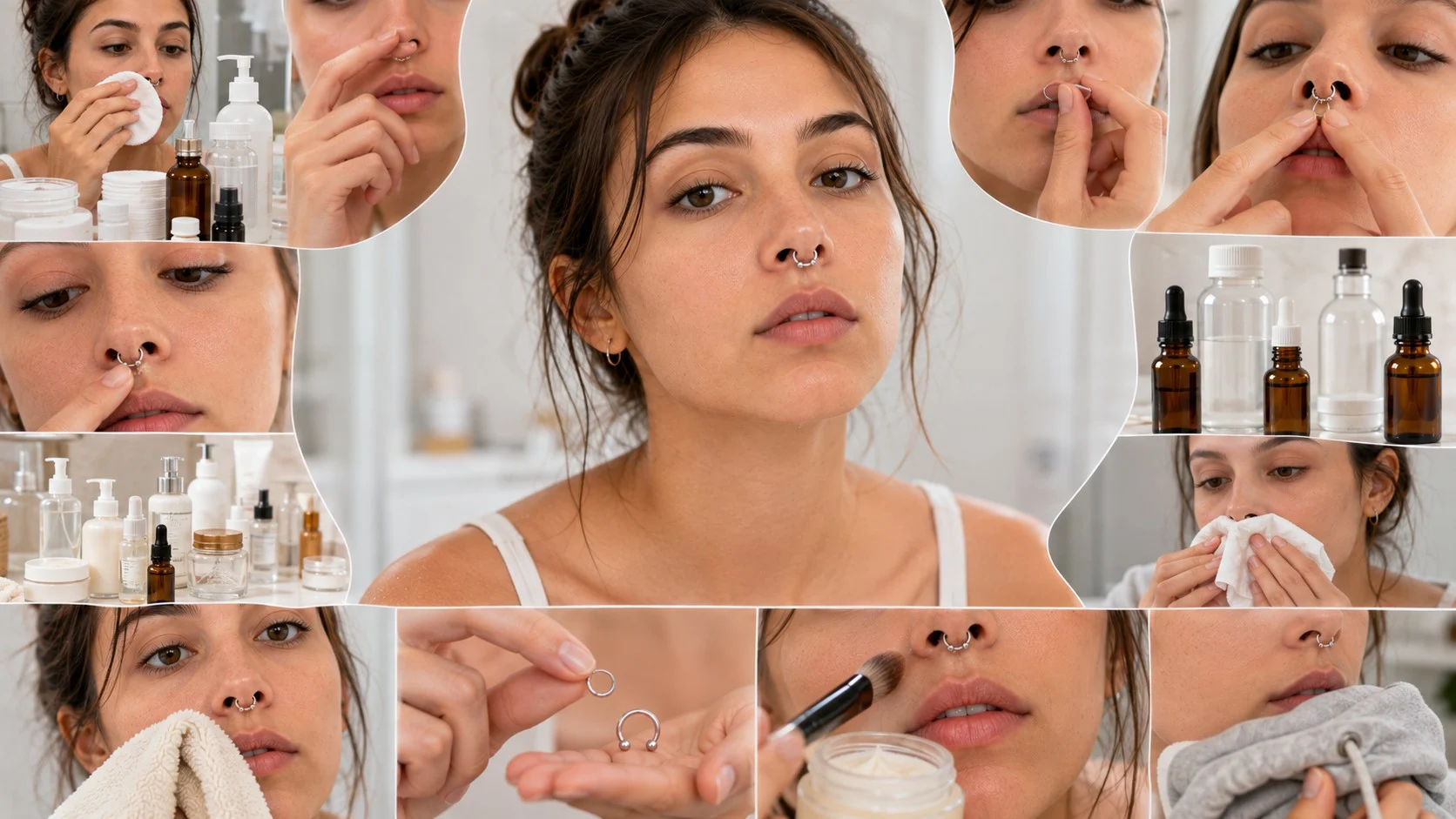
Getting a septum piercing is the easy part for me. The tricky part is leaving it alone long enough to heal.
I have found that most septum piercing aftercare mistakes come from good intentions. I may clean it too much because I am afraid of infection, move the jewelry because it looks crooked, or pick at the crust because I want the area to look clean.
The problem is that these small habits can keep irritating a fresh piercing. I prefer a simple routine: clean hands, gentle care, suitable saline, and as little touching as possible.
Here are the common mistakes I would avoid with a new septum piercing and what I would do instead.
What Are the Most Common Septum Piercing Aftercare Mistakes?
The mistakes I would watch for are:
- Cleaning the piercing too often
- Touching it with dirty hands
- Twisting or spinning the jewelry
- Flipping the jewelry up and down
- Picking off dry crust
- Using harsh cleaning products
- Using too many products
- Blowing my nose too hard
- Catching the jewelry on clothing or towels
- Changing the jewelry too early
- Swimming too soon
- Getting makeup or skincare products on it
- Putting pressure on the jewelry
- Ignoring jewelry fit or material problems
- Assuming every irritation means infection
I would focus on these because they are easy mistakes to make during normal daily life.
1. Cleaning the Septum Piercing Too Often

This is probably the first mistake I would watch for.
When I have a new piercing, it is easy to think that more cleaning means faster healing. It does not work that way.
Repeated cleaning can irritate the skin and make the area dry and sore.
If I notice a little crust, I would not immediately clean the piercing again.
I would stick to a simple cleaning routine and give the tissue time to settle.
What I would do instead
I would follow the cleaning routine given by my piercer and use a suitable sterile saline wound wash.
I would focus on gentle cleaning rather than trying to make the piercing look perfectly clean all day.
2. Touching It With Unwashed Hands

I know how tempting it can be to touch a new septum piercing.
I may want to check whether the jewelry is straight, feel whether it is still tender, or move it because it feels strange.
I would try to stop that habit.
Hands pick up dirt and bacteria throughout the day. Touching a fresh piercing without washing them first can introduce unwanted germs to the healing area.
What I would do instead
If I genuinely need to touch the piercing, I would wash my hands first.
Otherwise, I would leave the jewelry alone.
3. Twisting or Spinning the Jewelry
I would not twist, spin, or rotate a healing septum piercing just because someone told me that the jewelry needs to move.
That old habit can disturb the healing tissue inside the piercing channel.
What I would do instead
I would keep the jewelry in its natural position.
If crust has formed around it, I would soften the area instead of forcing the jewelry through dry buildup.
4. Flipping the Septum Jewelry Up and Down

One benefit of a septum piercing is that I can often hide it by flipping the jewelry inside the nose.
But I would be careful about doing this with a fresh piercing.
Repeatedly flipping the jewelry up and down means repeated movement through healing tissue.
What I would do instead
If I knew I needed to hide my piercing for work or school, I would discuss this with my piercer before getting pierced.
I would not keep moving a fresh septum ring several times a day just to hide it.
5. Picking Off Dry Crust

A little crust can be part of normal piercing healing.
My mistake would be trying to remove every piece as soon as I see it.
If I pull dry crust away from the jewelry, I can irritate the healing tissue underneath.
What I would do instead
I would let warm water or sterile saline soften the buildup.
If the crust comes away easily, I can gently remove the loose material.
If it is still stuck, I would leave it alone.
I would rather have a small piece of crust remain than pull at healing tissue.
6. Using Harsh Cleaning Products

I would stay away from products such as:
- Rubbing alcohol
- Hydrogen peroxide
- Tea tree oil
- Strong antiseptics
- Harsh antibacterial products
- Fragranced products
- Strong soaps
These products can be too harsh for healing tissue.
What I would do instead
I would keep my septum piercing cleaning routine simple.
A sterile saline wound wash made for wound care is the type of product I would choose.
7. Using Too Many Cleaning Products

I would also avoid creating a complicated routine.
It can be tempting to use saline, soap, alcohol, ointment, tea tree oil, and other products because I want the piercing to heal quickly.
I would not do that.
More products mean more chances for irritation.
What I would do instead
I would choose one suitable cleaning solution and follow a simple routine.
If something seems wrong with the piercing, I would ask my piercer or a healthcare professional instead of adding another product.
8. Blowing My Nose Too Hard

This is one mistake that is especially relevant to a septum piercing.
The jewelry sits inside my nose, so blowing my nose can pull or press against it.
A forceful nose blow can make a sore piercing feel even worse.
What I would do instead
If I need to blow my nose, I would do it gently.
I would avoid squeezing the nose hard around the jewelry.
If I have a cold and need to blow my nose often, I would be extra careful not to catch or pull the jewelry.
9. Catching the Jewelry on Towels or Clothing
A new septum piercing can get caught in unexpected ways.
A towel can snag the jewelry after a shower. A shirt can pull against my nose while I am getting dressed. Even wiping my face too quickly can cause a sudden tug.
What I would do instead
I would slow down when drying my face and getting dressed.
I would also use clean, soft materials and avoid rubbing the piercing.
If I accidentally pull the jewelry, I would leave it alone afterward rather than repeatedly checking or moving it.
10. Changing the Jewelry Too Early
I would not change my septum jewelry just because the outside looks fine.
A piercing can appear healed before the inside has fully settled.
What I would do instead
I would let a qualified piercer decide whether the jewelry needs changing during healing.
If there is a problem with the size, style, or material, I would have a professional assess it instead of changing it myself.
I would also keep my septum piercing healing time separate from this article. The exact healing timeline depends on the individual, so I would not use a fixed number here just to make the article longer.
11. Swimming Too Soon
I would be careful about swimming with a fresh septum piercing.
Pools, hot tubs, lakes, oceans, and other bodies of water can expose a healing piercing to microorganisms and other contaminants.
What I would do instead
If I had just gotten my septum pierced, I would avoid swimming until it had healed enough according to my piercer’s advice.
If swimming is unavoidable, I would ask a qualified professional how best to protect the piercing.
12. Getting Makeup or Skincare Products on the Piercing
I would be careful with anything I put around my nose.
That includes:
- Foundation
- Concealer
- Face cream
- Facial oils
- Exfoliants
- Perfume
- Facial sprays
- Other cosmetic products
I would not assume that a product is safe just because I normally use it on my face.
What I would do instead
I would keep makeup and skincare products away from the piercing openings while the area is healing.
If a product accidentally gets on the piercing, I would gently rinse it away rather than scrubbing the area.
13. Putting Too Much Pressure on the Jewelry
Pressure and friction can irritate a healing piercing.
I would be careful with sleeping, changing clothes, drying my face, and any activity where my nose could get bumped.
I would also avoid playing with the jewelry.
What I would do instead
I would give the piercing as much space as possible.
I would avoid unnecessary movement and protect it from repeated rubbing or pulling.
14. Ignoring Jewelry Fit or Material Problems
Sometimes the problem may not be my cleaning routine at all.
If the jewelry is too tight, too loose, constantly moving, or made from a material that does not suit me, the piercing may stay irritated.
I would not try to solve this by changing the jewelry myself while it is still healing.
What I would do instead
I would have a qualified piercer check the jewelry.
They can look at the size, shape, placement, and material and tell me whether something needs to change.
15. Assuming Every Irritation Means Infection
This is another mistake I would avoid.
A new piercing can have some tenderness, mild swelling, bleeding, itching, or crust during healing. Those signs alone do not automatically mean I have an infection.
At the same time, I would not ignore symptoms that are getting worse.
What I would do instead
I would watch the overall pattern.
If the pain, redness, swelling, or discharge keeps getting worse, I would seek professional medical advice rather than trying stronger cleaning products.
Severe or worsening pain, significant swelling, foul-smelling discharge, pus, or fever are reasons to get medical attention.
What Should I Do Instead of Making These Aftercare Mistakes?

When I want to keep septum piercing care simple, I follow a few basic rules.
I Wash My Hands Before Touching It
This is the first thing I would do before cleaning or handling the jewelry.
I Use a Suitable Saline
I would choose sterile saline wound wash rather than experimenting with harsh household products.
I Leave the Jewelry Alone
I would not twist, spin, or play with it.
I Let Crust Soften
I would never pull hard on a dry crust.
I Protect It From Pulling
I would be careful with towels, clothes, bedding, and anything else that could catch the jewelry.
I Keep Products Away From It
I would avoid getting makeup, lotions, fragrances, and other unnecessary products on the piercing.
I Watch for Changes
If the piercing becomes increasingly painful, swollen, hot, or develops other concerning symptoms, I would get it checked.
How Do I Know If My Septum Piercing Is Irritated?
I would look at the overall pattern rather than one small symptom.
Mild tenderness, some crust, itching, or slight irritation can happen during normal healing.
I would become more concerned if the symptoms keep getting worse instead of settling down.
For example, increasing pain, significant swelling, spreading redness, or unusual discharge would make me stop guessing and seek professional advice.
I would also think about what happened before the irritation started.
Did I:
- Twist the jewelry?
- Pull it with a towel?
- Clean it too much?
- Use a new product?
- Catch it on clothing?
- Blow my nose hard?
- Change the jewelry?
Finding the possible source of irritation can help me avoid repeating the same mistake.
What If I Have Been Making These Mistakes Already?
I would not panic.
If I have been touching the jewelry, over-cleaning, or picking at crust, I would simply stop those habits and return to a gentle routine.
I would not try to compensate by cleaning the piercing even more.
For example, if I realize I have been cleaning it five times a day, I would not add another product to fix the irritation.
I would simplify my routine and give the tissue time to settle.
If the piercing has significant or worsening symptoms, I would get it checked rather than trying to fix the problem myself.
When Should I Ask a Piercer or Doctor for Help?
I would contact a qualified piercer if I am worried about:
- Jewelry size
- Jewelry shape
- Jewelry material
- Jewelry movement
- Placement
- A possible irritation problem
I would seek medical advice if I have signs that may point to an infection or another medical problem.
I would pay particular attention to:
- Severe or increasing pain
- Major swelling
- Increasing warmth
- Spreading redness
- Thick or foul-smelling discharge
- Pus
- Fever
- Feeling generally unwell
I would not remove the jewelry on my own just because I suspect an infection. If infection is a concern, I would speak with a healthcare professional about what to do with the jewelry.
My Simple Septum Piercing Aftercare Rules
If I had to reduce all of this to a short list, these are the rules I would follow:
- Wash my hands before touching the piercing.
- Use suitable sterile saline for routine cleaning.
- Do not twist or spin the jewelry.
- Do not pick dry crust.
- Do not over-clean.
- Avoid alcohol, hydrogen peroxide, and harsh products.
- Keep makeup and skincare products away from the piercing.
- Be gentle when blowing my nose.
- Protect the jewelry from towels, clothing, and other snags.
- Do not change the jewelry too early.
- Avoid swimming while the piercing is healing.
- Get professional help if symptoms keep getting worse.
Septum Piercing Aftercare Mistakes: Final Thoughts
I think the biggest lesson with septum piercing aftercare is that I do not need to do more just because I am worried about healing.
A fresh piercing needs gentle care, not constant handling.
If I were caring for a new septum piercing, I would keep my hands clean, use a suitable saline wound wash, leave the jewelry alone, avoid harsh products, and protect the area from pulling and pressure.
I would also avoid trying to remove every tiny piece of crust or checking the piercing every few minutes.
The goal is simple: clean it gently, protect it from unnecessary irritation, and give it time to heal.
If something starts getting worse instead of better, I would stop experimenting with aftercare and get advice from a qualified piercer or healthcare professional.
Frequently Asked Questions
What are the most common septum piercing aftercare mistakes?
The mistakes I would watch for are over-cleaning, touching the piercing with dirty hands, rotating the jewelry, picking crust, using harsh products, changing jewelry too early, swimming too soon, and repeatedly catching or pulling the jewelry.
What should you not do after getting a septum piercing?
I would avoid unnecessary touching, jewelry rotation, harsh cleaning products, picking crust, swimming, heavy pressure, and changing the jewelry before it is ready.
Can over-cleaning a septum piercing cause problems?
Yes. Too much cleaning can irritate the tissue and make the piercing dry or sore. I would focus on gentle, regular care rather than cleaning it repeatedly throughout the day.
Should you rotate a septum piercing?
No. I would leave the jewelry alone during healing. Rotating it is unnecessary and may irritate the piercing.
Can you flip a new septum piercing up?
I would avoid repeatedly flipping a fresh septum piercing. If I need to hide it, I would discuss that with my piercer before moving the jewelry regularly.
Can you touch a healing septum piercing?
I would only touch it when necessary, such as during cleaning. I would always wash my hands first.
Can you pick crust off a septum piercing?
I would not pick dry crust. I would let it soften first and remove only material that comes away easily.
Can you use alcohol on a septum piercing?
I would avoid rubbing alcohol because it can be harsh on healing tissue.
Can you use hydrogen peroxide on a septum piercing?
I would not use hydrogen peroxide for routine aftercare.
Can you swim with a new septum piercing?
I would avoid swimming while the piercing is healing because pools, hot tubs, lakes, and other water can expose it to contaminants.
Can makeup irritate a septum piercing?
Yes. I would keep makeup, lotions, facial oils, and other cosmetic products away from a fresh piercing.
Why is my septum piercing still irritated?
I would first look at possible sources of repeated irritation, such as touching, twisting, over-cleaning, catching the jewelry, pressure, or unsuitable products. If the problem keeps getting worse, I would have it checked.
Why is my septum piercing not healing?
Several things can slow healing, including repeated irritation, trauma, poor aftercare, unsuitable jewelry, and individual differences in healing. I would have a qualified piercer assess the piercing if I was concerned.
How do you know if septum piercing irritation is normal?
Mild tenderness, some crust, itching, or slight irritation can occur during healing. Worsening pain, major swelling, spreading redness, pus, foul-smelling discharge, or fever would concern me more.
When should you get help for a septum piercing?
I would seek help if symptoms are severe, keep getting worse, or suggest a possible infection. For jewelry or placement concerns, I would speak with a qualified piercer.
What is the biggest septum piercing aftercare mistake?
For me, unnecessary handling is one of the biggest mistakes. Touching, twisting, picking, and repeatedly checking the jewelry can keep irritating a healing piercing.
