


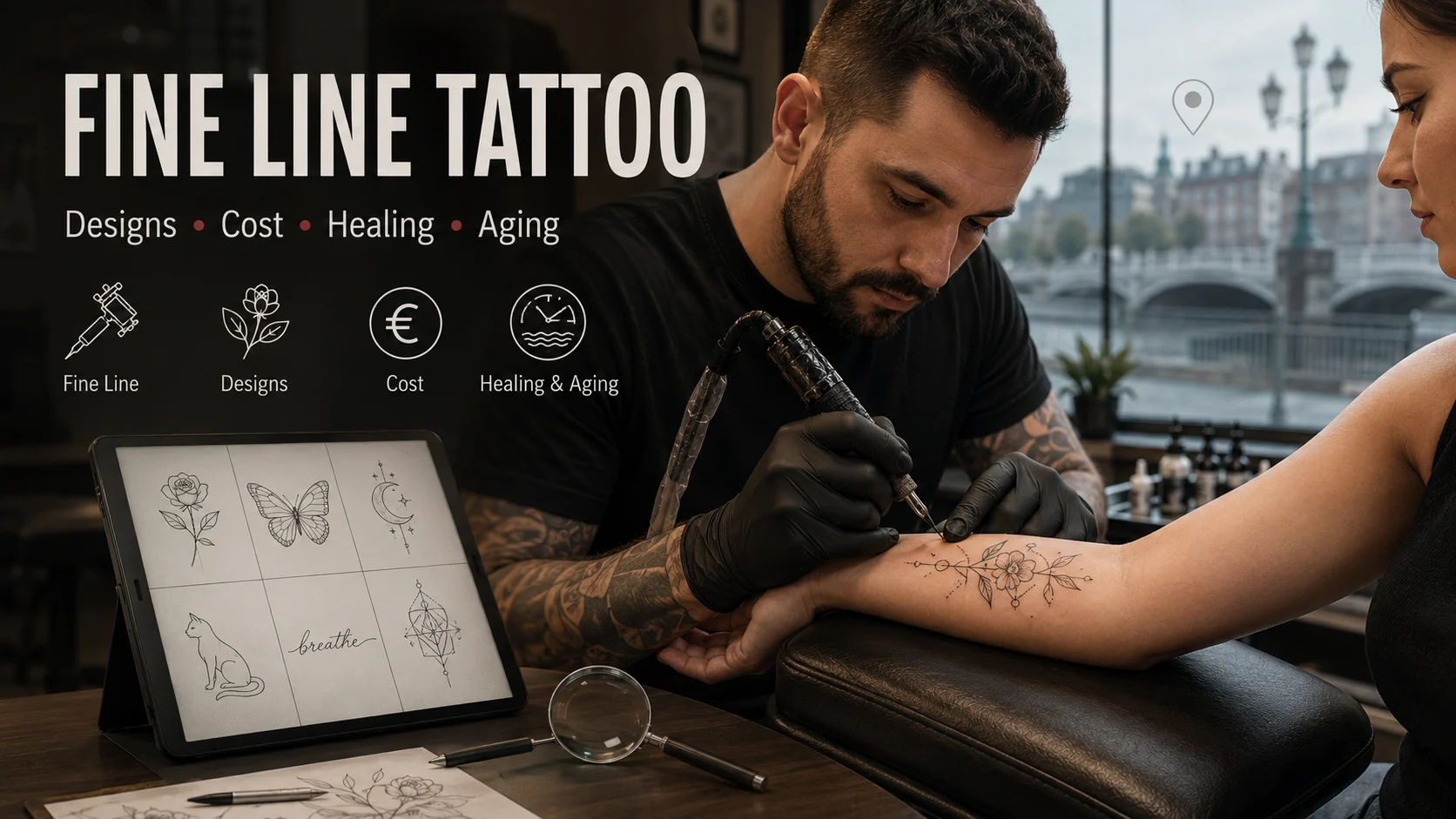
A fine line tattoo uses thin, controlled lines to create a clean and delicate look. You can use this style for tiny symbols, flowers, lettering, animals, geometric designs, and detailed artwork.
I think the appeal is easy to understand. Fine line tattoos can look subtle from a distance while still carrying plenty of detail up close.
But there is more to fine line tattooing than using a smaller needle. The artist, design size, line spacing, placement, and aftercare all affect how the tattoo looks after it heals and ages.
Quick Answer
A fine line tattoo is a tattoo made with thin, precise linework. Artists may use single needles or small round liner configurations, depending on the design. Fine line tattoos work well for minimalist, floral, lettering, geometric, and small illustrative designs. They can soften and fade over time, so good sizing, spacing, artist skill, aftercare, and sun protection matter.
What Is a Fine Line Tattoo?

A fine line tattoo is a style of tattooing that focuses on thin, delicate lines rather than heavy outlines and dense ink.
The artist uses a small needle configuration to create controlled linework. Depending on the design, this may include a single needle, 3RL, or another small round liner.
The result is usually lighter and more subtle than a traditional tattoo with thick outlines and heavy saturation.
Fine line work can also include shading, dotwork, small details, and limited colour. The main feature is the delicate quality of the linework.
Fine Line vs Single Needle

These terms often get mixed together, but they do not mean exactly the same thing.
Fine line describes the overall look and technique of the tattoo. Single needle describes a specific needle configuration used by an artist.
A fine line tattoo does not always have to be made with one needle. An artist may choose a small multi-needle grouping when it gives better control or produces the right result for the design.
I would focus less on whether an artist uses a single needle and more on the finished work. Look at the actual line quality, detail, spacing, and healed results.
What Makes a Tattoo Fine Line?
Several features can give a tattoo its fine line appearance:
- Thin line weight
- Controlled outlines
- Small details
- Open negative space
- Light shading
- Delicate lettering
- Minimal visual weight
- Careful spacing between lines
Fine line does not simply mean “make the tattoo as thin as possible.”
A good artist needs to choose a line weight that works with the design and the skin. Making every line extremely thin can actually make a tattoo harder to read as it ages.
What Do Fine Line Tattoos Look Like?

Fine line tattooing can cover a surprisingly wide range of designs.
I like this style because you can keep a tattoo very simple or use fine line techniques to build a much more detailed piece.
Fine Line Flowers
Flowers are one of the most natural matches for fine line tattooing.
Common ideas include:
- Roses
- Lavender
- Peonies
- Wildflowers
- Daisies
- Botanical stems
- Leaves
- Small floral arrangements
Fine botanical lines can create a soft appearance without filling a large area of skin with heavy ink.
Fine Line Animals
Animals can also work well, especially when the design has enough space for its important features.
Popular ideas include:
- Butterflies
- Birds
- Cats
- Dogs
- Snakes
- Fish
- Insects
- Small wildlife designs
For detailed animals, size becomes especially important. A design that looks clear on a phone screen may need to be larger once it is placed on skin.
Fine Line Lettering
Fine line lettering can include:
- Names
- Dates
- Short words
- Initials
- Short phrases
- Handwriting
- Small script
Lettering needs careful planning because letters placed too close together can become harder to read over time.
Fine Line Symbols
Simple symbols are another strong choice.
Examples include:
- Hearts
- Stars
- Moons
- Arrows
- Crosses
- Small icons
- Coordinates
- Simple geometric symbols
These designs often work well at smaller sizes because they do not depend on many tiny details.
Fine Line Geometric Tattoos
Fine line is also useful for geometric designs.
These can include:
- Circles
- Triangles
- Sacred geometry
- Abstract shapes
- Symmetrical patterns
- Fine dotwork
- Ornamental designs
The cleaner the geometry, the more noticeable uneven lines can become. This is another reason to choose an artist based on their actual portfolio.
Fine Line Celestial Tattoos
Moon, star, constellation, and sun designs are common fine line ideas.
They can work as tiny standalone tattoos or as part of a larger composition.
Fine Line Micro-Realism
Micro-realism takes fine line work into more detailed territory.
A small portrait, animal, object, or scene can contain many fine details. The challenge is making sure those details have enough space to remain readable.
This is where “small” and “detailed” can become competing goals.
Why Are Fine Line Tattoos So Popular?
The biggest attraction is the subtle appearance.
A fine line tattoo can feel personal without having the heavy visual impact of a bold traditional tattoo. That makes it appealing to people who want something understated.
I also like the range of designs possible with the style. A person can choose a tiny symbol, while someone else can use fine line work for a larger botanical or ornamental composition.
Fine line tattoos are also popular among people getting their first tattoo. Still, I would not choose the style simply because it looks small or less intimidating. The design and artist should come first.
Are Fine Line Tattoos Good for First-Timers?
They can be a good option for a first tattoo, especially if you prefer subtle artwork.
A small design may also require less time than a large, detailed tattoo. However, the size of the tattoo does not remove the need for careful planning.
Before booking, I would consider:
- Whether you like delicate linework
- Whether the design needs more size
- Where you want the tattoo
- How much detail you want
- Whether you have found an artist who regularly does fine line work
- Whether you are comfortable with the way fine lines can soften over time
A first tattoo should be chosen because you like the style and design, not simply because it seems easier.
How Small Can a Fine Line Tattoo Be?

There is no single minimum size that works for every design.
A simple heart may work at a much smaller size than a detailed portrait. The more information you put into a design, the more room those details need.
Think about it this way:
More detail + less space = greater risk of lines becoming crowded.
If several fine lines sit very close together, they may become harder to distinguish as the tattoo ages.
I would rather increase the size slightly than force too much detail into an area that cannot support it.
A good fine line artist should tell you when a design needs to be simplified or made larger.
Why Line Spacing Matters
Spacing is one of the easiest things to overlook when choosing a fine line tattoo.
Imagine drawing two lines on paper with a small gap between them. On fresh skin, the gap may look perfectly clear. Over time, natural changes in the tattoo can reduce that visual separation.
This is why experienced artists consider negative space when creating fine line designs.
A tattoo can still contain plenty of detail without putting every possible detail into a tiny area.
Where Do Fine Line Tattoos Look Best?

Fine line tattoos can work on many areas of the body, but each placement has different considerations.
| Placement | Why it can work | Main consideration |
| Forearm | Good space for small to medium designs | Sun exposure |
| Wrist | Easy location for small designs | Movement and friction |
| Ankle | Works well for delicate designs | Friction from footwear |
| Finger | Suitable for very simple designs | Wear and fading can be a concern |
| Hand | Visible and flexible for simple artwork | Frequent exposure and friction |
| Collarbone | Good for delicate horizontal designs | Skin movement and placement |
| Shoulder | Flexible for small or medium work | Design should follow body shape |
| Ribs | Can suit larger delicate designs | Pain and skin sensitivity |
| Behind the ear | Works for small simple designs | Limited space |
| Upper arm | Good area for larger compositions | Design can be adapted to the shape |
I would always ask the artist about placement before finalising a detailed design. A design that works beautifully on the forearm may need changes if you move it to a finger or behind the ear.
Do Fine Line Tattoos Hurt?
Yes, a fine line tattoo can hurt.
Pain varies from person to person and depends heavily on the placement, tattoo size, session length, and individual sensitivity.
The idea that fine line tattoos do not hurt is misleading. A small tattoo may take less time than a large one, but the skin still receives tattooing.
Areas with less padding or more sensitivity can also feel more uncomfortable.
If pain concerns you, tell your artist before the session. They can help you choose a practical size and placement.
How Long Does a Fine Line Tattoo Take to Heal?
A fine line tattoo still needs proper healing even if the design is small.
During the early stage, the skin can appear irritated or sensitive. It may then dry, peel, and gradually settle.
The exact healing time varies based on the tattoo, placement, your skin, and how you care for it.
I would follow the aftercare instructions provided by your tattoo artist rather than copying a random routine online.
Avoid picking or scratching the tattoo while it heals. Keep it clean and follow the artist’s instructions about washing, moisturising, and protecting the area.
Do Fine Line Tattoos Fade?

Yes, fine line tattoos can fade and soften over time.
That does not mean a good fine line tattoo will suddenly disappear.
All tattoos change as the skin ages. Fine line tattoos may show these changes more visibly because their visual weight is lighter.
Several factors can affect how the tattoo looks over time:
- Sun exposure
- Tattoo placement
- Friction
- Design size
- Line spacing
- Ink placement
- Artist technique
- Aftercare
A tattoo placed in an area that receives regular sunlight or friction may need more attention than one that stays covered most of the time.
Do Fine Line Tattoos Blur?
Fine line tattoos can soften or spread slightly as they age.
The goal is not to prevent every change. The goal is to create a design that still looks good as those changes happen.
This is why spacing and sizing matter so much.
A skilled artist can simplify a design, increase its size, or adjust the spacing so the important parts remain readable.
Very tiny tattoos with many tightly packed details have less room for natural changes.
How Long Do Fine Line Tattoos Last?
A fine line tattoo can remain visible for many years, but its appearance will change.
I would avoid thinking about tattoo longevity as a simple number of years. There is a big difference between:
“The tattoo is still visible.”
and:
“The tattoo looks exactly like it did on day one.”
Fresh tattoos usually look sharper and darker. Once the skin heals, the appearance settles. Over the years, lines can become softer and less defined.
Good design choices, skilled tattooing, sensible aftercare, and sun protection can all help maintain the appearance.
Do Fine Line Tattoos Need Touch-Ups?
Some fine line tattoos may benefit from a touch-up after healing.
This can depend on:
- Placement
- How the skin healed
- Ink retention
- Tattoo technique
- Friction
- Design size
- Personal healing
Areas such as fingers and other high-friction locations may behave differently from more protected areas.
I would not judge the final result immediately after the tattoo is finished. Let the skin heal first, then discuss any concerns with the artist.
How Does Sun Exposure Affect Fine Line Tattoos?
Sun exposure can affect tattoo ink over time.
Once the tattoo has fully healed, protecting exposed skin from UV exposure can help preserve its appearance.
This is especially worth considering for tattoos on:
- Hands
- Wrists
- Forearms
- Shoulders
- Ankles
A simple habit of protecting exposed tattooed skin from strong sunlight can help reduce unnecessary fading.
Fine Line Tattoo vs Traditional Tattoo
Fine line and traditional tattoo styles can look very different.
| Feature | Fine Line | Traditional/Bold |
| Line weight | Thin | Thick |
| Overall look | Delicate | Bold |
| Detail | Often detailed | Usually stronger shapes |
| Visual impact | Subtle | Strong |
| Small designs | Often suitable | Also possible |
| Negative space | Often important | Can be less dominant |
| Aging | Spacing matters greatly | Bold lines can be more forgiving |
Neither style is automatically better.
I would choose based on the design you want rather than choosing a style because one is supposed to last longer.
How Much Does a Fine Line Tattoo Cost?
There is no universal price for a fine line tattoo.
A studio may consider:
- Tattoo size
- Design detail
- Placement
- Artist
- Session length
- Studio minimum
- Custom design work
A tiny symbol may take much less time than a detailed forearm composition.
Fine line work is also not automatically cheaper because the tattoo is small. A highly detailed design can require careful planning and precise work.
For a Dublin tattoo studio, check the current pricing policy before booking because minimum charges and artist rates can differ.
Are Fine Line Tattoos More Expensive?
Not necessarily.
The style itself does not determine the full price.
A simple fine line tattoo may be quick to complete, while a detailed micro-realism design can require considerably more time.
I would compare the design, size, artist, and estimated session time rather than assuming fine line has a fixed price.
How to Choose a Fine Line Tattoo Artist

This is one of the most important decisions you can make.
Fine line work requires controlled linework and careful design planning. I would never choose an artist based only on a studio’s general tattoo gallery.
Look specifically for fine line work.
Check Their Fine Line Portfolio
Look for examples that are similar to what you want.
If you want botanical work, check their botanical tattoos.
If you want lettering, check their lettering.
If you want micro-realism, look for actual micro-realism examples.
A portfolio should give you a clear idea of what the artist can consistently produce.
Look for Consistent Linework
Zoom into the photos.
Look for:
- Smooth lines
- Consistent line weight
- Clean curves
- Clear details
- Good spacing
- Balanced compositions
You do not need every tattoo to look identical. You want to see control and consistency.
Check Healed Tattoo Photos
This is one of my strongest recommendations.
Fresh tattoos can look very sharp. Healed tattoos tell you much more about how the artist’s work settles.
If an artist regularly shows healed fine line tattoos, you can get a better idea of what to expect after the initial healing period.
Look at Different Placements
An artist may produce excellent fine line work on one body area but have less experience with another.
Look for examples on different placements if your tattoo will go somewhere unusual.
Ask About Sizing
Show the artist your design and ask what size they recommend.
If they suggest making it larger or simplifying a detail, ask why.
A good conversation at this stage can prevent problems later.
What Should You Ask Before Booking?
I would ask these questions before committing to an artist:
- Do you specialise in fine line tattooing?
- Can I see healed fine line work?
- What size would you recommend for my design?
- Will any details need to be simplified?
- Is my chosen placement suitable?
- How long do you expect the session to take?
- What is the estimated price?
- Do you offer touch-ups?
- What aftercare instructions will you provide?
You do not need to ask every question if the information is already clear. The goal is to make sure you understand the design and the process before the appointment.
How to Prepare for a Fine Line Tattoo

A little preparation can make the appointment easier.
Eat Before Your Appointment
Don’t arrive hungry if you can avoid it. Have a normal meal beforehand and bring water.
Bring Your Design Reference
If you have an image, sketch, handwriting sample, or other reference, bring it with you.
The artist can then discuss what needs to change for tattooing.
Wear Suitable Clothing
Think about where the tattoo will be placed.
Wear clothing that gives the artist easy access to the area without creating unnecessary rubbing afterward.
Get Enough Rest
A tattoo session is easier to handle when you feel rested and prepared.
Avoid Arriving Intoxicated
Do not turn up under the influence of alcohol or recreational drugs. Follow the studio’s rules and speak with the artist if you have any concerns before the appointment.
Fine Line Tattoo Aftercare
Aftercare plays a role in how the tattoo settles.
Your artist should give you specific instructions based on the tattoo and products they use.
In general, I would focus on the basics:
- Follow your artist’s instructions
- Keep the tattoo clean
- Avoid picking or scratching
- Avoid unnecessary friction
- Let the skin heal naturally
- Protect the healed tattoo from strong UV exposure
Do not keep adding products simply because someone online recommends them. Your artist’s instructions should be your starting point.
Fine Line Tattoos in Dublin
If you are looking for a fine line tattoo in Dublin, start by checking artists rather than choosing a studio based only on location.
Dublin has tattoo studios and individual artists working across many styles, including fine line, minimalist work, micro-realism, traditional tattoos, blackwork, and custom designs.
I would compare:
- Fine line portfolios
- Healed work
- Artist style
- Design quality
- Studio reputation
- Pricing
- Booking process
- Location
For a Dublin tattoo, local convenience matters, but it should not be the deciding factor if the artist’s portfolio does not match your design.
Fine Line Tattoo Ideas for Dublin and Ireland
Fine line also gives you plenty of ways to create a design connected to Dublin or Ireland without making it overly large.
Ideas could include:
- Small Celtic symbols
- Irish botanical designs
- Claddagh-inspired artwork
- Dublin architecture
- Irish landscapes
- Celtic-inspired patterns
- Small map outlines
- Coordinates
- Irish lettering
- Simple cultural symbols
The key is to avoid adding too much detail simply because fine line allows it.
A small, well-spaced design can often communicate an idea more clearly than a crowded one.
Is a Fine Line Tattoo Right for You?
A fine line tattoo may suit you if:
- You prefer subtle tattoos
- You like delicate artwork
- You want minimalist designs
- You enjoy small details
- You are comfortable with natural changes over time
- You have found an artist with strong fine line work
You may prefer another tattoo style if:
- You want very bold lines
- You want a highly saturated design
- You prefer strong contrast
- Your design needs heavy outlines
- You want an extremely detailed image at a very small size
There is no reason to force a design into the fine line style if another approach will produce a better long-term result.
Should You Get a Fine Line Tattoo?
A fine line tattoo can be a great choice if you like delicate, clean, and understated artwork.
The main thing I would remember is that fine line does not mean making every detail as tiny and thin as possible. The best result comes from balancing line weight, design size, spacing, placement, artist skill, and long-term aging.
If you are considering one in Dublin, spend time looking at the artist’s actual fine line portfolio and, when possible, healed examples. A little planning before the appointment can make a big difference to the final tattoo.
Fine Line Tattoo FAQs
Do fine line tattoos fade faster?
They can appear to soften sooner because the lines are delicate, but fading depends on many factors. Placement, sun exposure, design, artist technique, aftercare, and friction all matter.
Are fine line tattoos good for beginners?
They can be. Small, delicate designs are popular with first-time tattoo clients, but you should still choose an experienced artist and make sure the design is suitable for its planned size and placement.
Can fine line tattoos be coloured?
Yes. Fine line tattoos can include colour, although the result depends on the design, artist, skin, and chosen colours. Black and grey remain common choices for delicate linework.
Can fine line tattoos be very small?
Yes, but every design has a practical size limit. A simple symbol can be smaller than a detailed design. Your artist should recommend a size that leaves enough room for the important details.
Do fine line tattoos blur?
Fine line tattoos can soften or spread slightly as they age. Good spacing and sensible sizing can help the design remain readable.
Can you get a fine line tattoo on your finger?
You can, but fingers receive regular movement, friction, washing, and sun exposure. Very simple designs are generally easier to manage in this location.
Do fine line tattoos need touch-ups?
Some may. The need depends on healing, placement, ink retention, design, and other factors. It is better to assess the tattoo after healing rather than judge it immediately.
Can every tattoo artist do fine line?
No. Fine line requires specific control and experience. I would look at an artist’s fine line portfolio rather than assuming that someone who tattoos other styles will produce the same result.
Are fine line tattoos painful?
They can be. Pain depends more on placement, personal sensitivity, tattoo size, and session length than simply on whether the tattoo uses fine line work.
How long does a fine line tattoo take?
A small, simple design may be relatively quick, while a larger detailed composition can take much longer. The artist should give you a better estimate after seeing the design and placement.
