

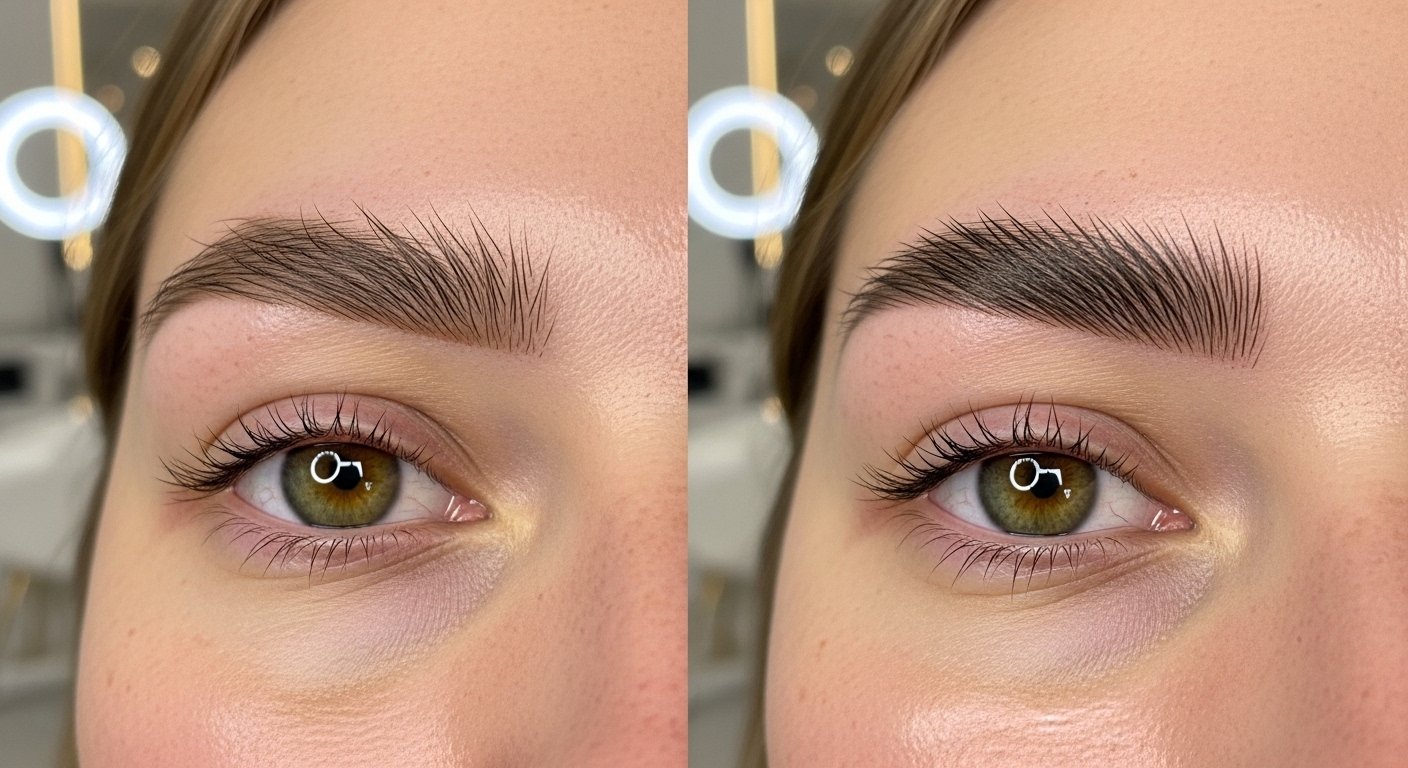
If you are tired of filling in your brows every morning, you have probably asked yourself, what is nanoblading? This beauty trend is taking over the world of permanent makeup. It promises the most natural-looking results for anyone wanting better brows. In this guide, we will break down everything you need to know about this amazing technique.
Understanding the Concept of Nanoblading
When people ask what is nanoblading, they are usually looking for a way to fix sparse hair. It is a manual technique that mimics your natural brow hairs. Artists use ultra-fine needles to place pigment into the skin. This creates thin strokes that look just like real hair.
The Definition of Nanoblading
- Manual Technique: This process is done by hand using a specialized tool.
- Semi-Permanent: The pigment is placed in the upper layers of the skin.
- Ultra-Fine Needles: These needles are much thinner than those used in older methods.
- Mimics Hair: The goal is to create lines that blend with your existing brow hair.
Evolution of the Term
The term nanoblading started as a way to show that tools were getting smaller. Traditional microblading was the first big trend in the industry. As technology improved, artists wanted even more precision. They began using “nano” sized needles to create more detailed work.
Marketing vs. Reality
Many beauty studios use the term nanoblading to sound more high-tech. In reality, it is very similar to microblading. Both methods use a manual blade to make small cuts. The main difference is usually just the size of the needle used by the artist.
The Science of Brow Aesthetics
Creating the perfect brow is not just about drawing lines. It involves a deep understanding of facial structure and chemistry. A great artist knows how to balance your features. They also understand how different pigments react with your specific skin type.
The Golden Ratio in Brow Design
- Mathematical Symmetry: Artists use a ratio of 1.618 to find your ideal brow shape.
- Start Point: This is usually aligned with the bridge of your nose.
- The Arch: The highest point should sit above the outer part of your iris.
- The Tail: The brow should end at a point diagonal from the corner of your nose.
Color Theory and Pigment Chemistry
Choosing the right color is one of the hardest parts of the job. You do not want your brows to turn blue or red later. Organic pigments are often used for their bright and vibrant colors. Inorganic pigments are known for being very stable and lasting a long time.
Skin Anatomy and Depth
The skin has several layers, and the depth of the needle matters. If the artist goes too deep, the pigment will blur. If they stay too shallow, the color will fade too fast. Finding the “sweet spot” in the upper dermis is the key to success.
Nanoblading vs. Traditional Microblading: The Core Differences
It is easy to get confused between these two popular brow services. They both aim to give you fuller, better-shaped eyebrows. However, the tools and the final look can be quite different. Knowing these details helps you pick the right service for your face.

Needle Gauge and Size
Traditional microblading needles are fine, but nano needles are even smaller. The smaller needle allows for much more detail in every stroke. Think of it like using a fine-tip pen versus a regular marker. This difference is what makes the results look so realistic.
Precision and Detail
Because the needles are so small, artists can place strokes closer together. This allows them to fill in tiny gaps that traditional tools might miss. The strokes look crisper and do not bleed into each other. This results in a much more meticulous and clean application.
Skin Impact and Trauma
Both methods involve making tiny incisions in the surface of the skin. Nanoblading is often considered more delicate because the cuts are smaller. Smaller cuts usually mean less swelling and a faster healing time. This makes it a great choice for people with sensitive skin.
Longevity and Retention
The results of these treatments usually last for several years. However, the finer strokes of nanoblading might fade slightly faster. This is because less pigment is tucked into each tiny line. Most clients come back for a refresh every one to two years.
Distinguishing Nanoblading from Nano Brows (Machine Method)
This is the part where most people get really mixed up. Nanoblading and Nano Brows sound almost exactly the same. But in the pro world, they are totally different techniques. One uses a hand tool, while the other uses a digital machine.

The Confusion in Terminology
Many clients walk in asking for one when they actually want the other. It is important to ask your artist which tool they will use. One involves a slicing motion with a manual blade. The other uses a single needle that moves up and down rapidly.
Manual vs. Digital Machine
- Nanoblading: This is a manual process that creates tiny micro-cuts.
- Nano Brows: This uses a digital machine to make tiny punctures.
- Control: Manual tools allow for a very tactile feel of the skin.
- Consistency: Machines provide a very steady and consistent depth every time.
Skin Trauma Potential
The digital machine used for Nano Brows is generally gentler. It does not slice the skin like a manual blade does. This leads to even less trauma and a very easy healing process. It is often the preferred method for modern permanent makeup artists.
Visual Results
Nanoblading gives you very sharp, defined lines that look like fresh hair. Nano Brows tend to look a bit softer and more hyper-realistic. Both look great, but the machine method is often better for complex patterns. It allows the artist to shade and stroke at the same time.
The Technical Process of Nanoblading
If you are nervous about your appointment, don’t worry. The process is very straightforward and handled by experts. It is a multi-step journey to get your dream brows. Your artist will walk you through every single part of the day.
The Consultation Phase
Your first step is talking to your artist about what you want. They will look at your natural brow growth and face shape. You can show them pictures of brow styles that you love. They will tell you if those styles will work with your skin.
Mapping and Symmetry
- Brow Mapping: The artist draws a frame on your face with a pencil.
- Measuring: They use special tools to make sure both sides are even.
- Approval: You get to look in the mirror and approve the shape first.
- Adjustments: The artist will tweak the drawing until you are totally happy.
Pigment Selection
The artist will mix a custom color just for your eyebrows. They match it to your natural hair and your skin’s undertone. They might even use two different shades for more depth. This ensures that the strokes don’t look flat or fake.
The Procedure Steps
First, the artist will apply a numbing cream to keep you comfy. Then, they use the tool to create the hair strokes. They often go over the area twice to ensure the color stays. Finally, they let a layer of pigment sit on the brows to soak in.
Benefits of Choosing Nanoblading
There are so many reasons why people love this brow treatment. It is more than just a beauty trend for most clients. It is a way to feel more confident and save precious time. Once you see the results, you will understand why it’s so popular.
Ultra-Natural Appearance
- Invisible Strokes: The lines are so thin they look like real hair.
- No “Blocky” Look: Unlike old tattoos, these brows look light and airy.
- Seamless Blend: The strokes are tucked in between your natural hairs.
- Perfect for Gaps: It is the best way to fill in small bald spots.
Customization
Every set of brows is designed specifically for the person wearing them. You are not getting a one-size-fits-all shape or color. The artist can adjust the thickness and the arch to your liking. This makes your results totally unique to your own face.
Waterproof and Sweat-proof
You can finally stop worrying about your brows rubbing off. Whether you are swimming or at the gym, they stay put. No more checking the mirror after a long, rainy walk. Your brows will look just as good at night as they did in the morning.
Time-Saving
Think about how much time you spend on your brows every day. With nanoblading, you can just wake up and walk out the door. You won’t need pencils, gels, or expensive brow powders anymore. It makes your morning routine much faster and more relaxed.
Candidate Selection: Who Is Nanoblading For?
While this treatment is amazing, it isn’t the best fit for everyone. Your skin type plays a huge role in how the pigment heals. It is important to be honest with your artist about your skin. This helps them decide if you should try a different method.
Best Skin Types for Nanoblading
People with normal to dry skin usually get the best results. Dry skin holds onto the pigment very well without blurring. The strokes stay crisp and clear for a much longer time. If your skin is not too oily, you are a great candidate.
Nanoblading and Oily Skin
If you have very oily skin, the manual strokes might blur. The oil in your skin can push the pigment around during healing. For these clients, artists often suggest the machine method instead. Machine-made dots or strokes tend to hold better in oily skin.
Fair Skin Considerations
- Soft Pigments: Light-skinned clients need lighter, cooler pigment colors.
- Avoid Harsh Lines: The strokes should be very delicate to look natural.
- Sun Sensitivity: Fair skin needs extra protection from the sun after.
- Natural Texture: The artist must match the fine hair of fair brows.
Nanoblading for Mature Skin
This treatment is great for adding definition to thinning brows. As we age, our brows can get sparse or lose their shape. Nanoblading can lift the face and make you look more refreshed. The artist just needs to be gentle with thinner, mature skin.
Contraindications
- Pregnancy: Most artists will not perform the service on pregnant women.
- Skin Infections: You must have clear skin in the brow area.
- Medical Conditions: Diabetes or heart issues might affect your healing.
- Blood Thinners: These can cause too much bleeding during the process.
Comparison of Brow Techniques: A Side-by-Side Analysis
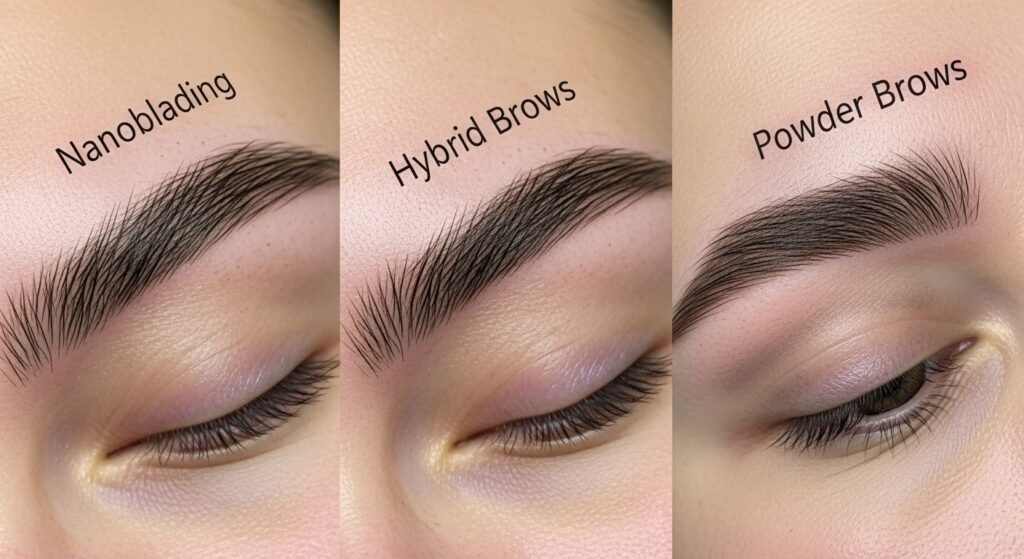
Choosing between all these options can feel like a total headache. Every technique has its own pros and cons for different people. Let’s look at how they all stack up against each other. This will make your decision a whole lot easier.
| Feature | Microblading | Nanoblading | Nano Brows (Machine) |
| Tool | Manual Blade | Ultra-Fine Manual Blade | Digital Machine |
| Skin Type | Dry/Normal | Dry/Normal | All Skin Types |
| Trauma | Moderate | Low to Moderate | Lowest |
| Look | Natural Strokes | Very Fine Strokes | Hyper-Realistic |
| Longevity | 1-3 Years | 1-2 Years | 1-3 Years |
Microshading / Powder Brows
If you like the look of brow makeup, this is for you. It creates a soft, misty effect instead of individual hair strokes. It is perfect for people who want a more “filled-in” look. This method is also very friendly for people with oily skin.
Hybrid / Combo Brows
Can’t decide between strokes and shading? You can actually have both at the same time! Hybrid brows use strokes at the front and shading at the tail. This gives you the natural look of hair and the depth of makeup.
The Healing Journey and Aftercare
The work doesn’t stop once you leave the studio chair. How you treat your brows at home is super important. You are essentially healing a very small, shallow wound. Following the rules will ensure your color stays where it belongs.
Immediate Post-Procedure Expectations
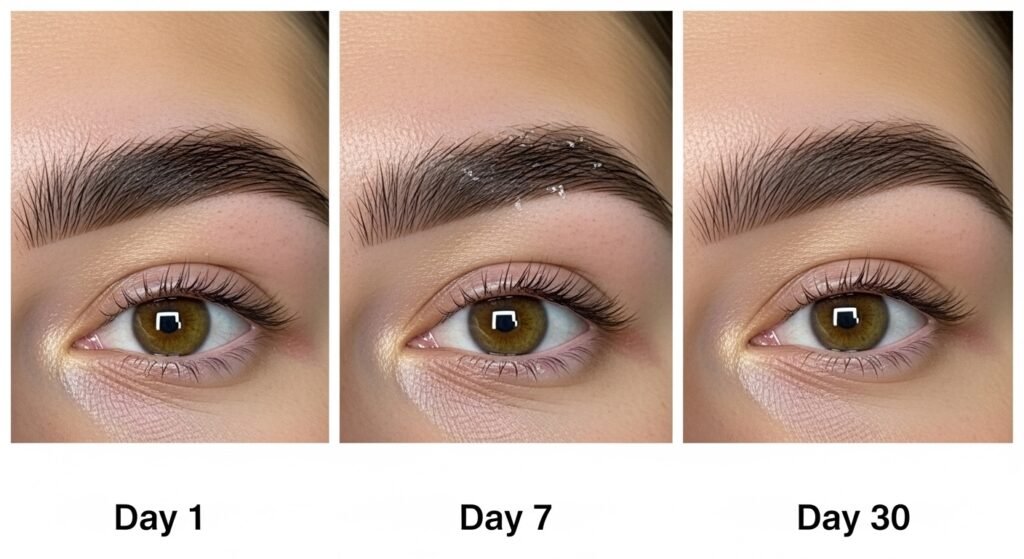
Your brows will look very dark and bold for the first few days. Don’t panic, this is totally normal and will fade soon. You might also see some slight redness or minor swelling. This usually goes away within twenty-four to forty-eight hours.
The Peeling and Scabbing Process
- Do Not Pick: Picking at scabs will pull the pigment out.
- Light Flaking: You might see some small flakes of skin falling off.
- Itching: The area might feel itchy as it heals, but don’t scratch.
- Patience: Let the skin fall off naturally on its own time.
The “Ghosting” Phase
Around week two, your brows might look like they disappeared. This is called ghosting, and it happens to almost everyone. New skin is growing over the pigment, making it look light. The color will slowly return to the surface by week four.
Essential Aftercare Tips
- Keep Dry: Avoid getting your brows wet for the first week.
- No Workouts: Sweat can push the pigment out of your skin.
- Clean Hands: Never touch your healing brows with dirty fingers.
- Sleep Smart: Try to sleep on your back so you don’t rub them.
Seasonal Aftercare
In the summer, you need to be very careful with sun exposure. In the winter, keep your skin hydrated so it doesn’t get too dry. High humidity can also affect how your brows heal in the first week. Always check with your artist for seasonal advice.
Health and Safety Standards in Permanent Makeup
You should always put your health first when getting a tattoo. A professional studio will have very strict safety rules in place. Don’t be afraid to ask about their cleaning habits. A good artist will be happy to show you their space.
Sanitization Protocols
Everything used during your service should be sterile and clean. Artists should use single-use needles that come in sealed packs. They should also wear gloves and masks to protect you. The workspace should be wiped down with medical-grade cleaners.
Allergy Testing
Some people are sensitive to the pigments or numbing creams. A patch test is a quick way to make sure you won’t react. The artist puts a tiny bit of product on your skin first. If there is no redness after 24 hours, you are good to go.
Managing Complications
While rare, infections can happen if aftercare is not followed. If you see yellow discharge or extreme pain, call your doctor. Your artist can also give you advice on minor issues. Always follow the instructions provided by your professional studio.
Maintenance and Longevity
Nanoblading is a low-maintenance solution, but it isn’t “no-maintenance.” You will need to take care of them to keep them looking fresh. Over time, the sun and your skincare will fade the pigment. Regular check-ins with your artist will keep your brows perfect.

The Initial Touch-Up
Your first appointment is only the first half of the journey. You must come back after six to eight weeks for a touch-up. This is when the artist fills in any spots that didn’t take. It is the key to making your brows last for a long time.
Long-Term Maintenance
Most people get a “color boost” every twelve to eighteen months. This keeps the strokes looking crisp and the color vibrant. Without touch-ups, the pigment will eventually fade away almost completely. Your lifestyle and skin type will determine how often you need this.
The Dangers of Over-Processing
Don’t get touch-ups too often, or you might regret it. Getting them every few months can cause scar tissue to build up. It can also make the pigment look muddy and unnatural. Trust your artist when they say your brows don’t need work yet.
Can You Get Nanoblading Over Old Microblading?
If your old brows are faded enough, you can usually switch styles. The artist will check the color and shape of your old tattoo. If it is too dark or thick, you might need laser removal first. This gives the artist a clean canvas to create new, fine strokes.
The Lifestyle Impact of Nanoblading
Having new brows changes more than just your face. It changes how you plan your day and your vacations. It is a total lifestyle upgrade for most of our clients. Just a little bit of planning makes the transition super easy.
Travel and Vacation Planning
Don’t book your brow appointment the day before a beach trip. You need at least two weeks of healing before you hit the sun. Planning ahead ensures your brows are healed for your photos. You don’t want to be worrying about scabs while on vacation.
Exercise and Fitness
- No Heavy Sweating: Stay away from the gym for the first ten days.
- Salt in Sweat: Sweat can actually pull the pigment out of the skin.
- Light Movement: Walking is okay, but avoid anything that makes you drip.
- Clean Brows: If you do sweat, gently pat them dry with a clean tissue.
Skincare Integration
Some skincare products can make your brows fade very fast. Keep Retinols and AHAs away from your forehead area. These products speed up skin cell turnover, which sheds pigment. Always wear sunscreen over your brows to protect the color from UV.
Ultimate Nanoblading Aftercare Checklist
Proper aftercare is the most important part of your brow journey. If you want those crisp lines to stay, you have to baby your skin. Think of your new brows as a fresh investment that needs protection. Following these steps ensures your pigment heals perfectly and lasts for years.
The Golden Rules of the First 10 Days
- Hands Off: Never touch your brows with dirty fingers to avoid infection.
- Keep Them Dry: Avoid getting water on your brows during showers or face washing.
- No Sweat: Stay away from the gym or heavy cardio that causes dripping sweat.
- Avoid the Sun: Keep out of direct sunlight and avoid tanning beds entirely.
- Sleep on Your Back: Use a clean silk pillowcase and try not to roll onto your face.
Daily Cleaning and Ointment Routine
- Gently Blot: Use a clean, dry tissue to pat away any lymph fluid in the first few hours.
- Cleanse Carefully: After 24 hours, use a damp cotton pad with cool water to dab the area.
- Apply Ointment: Use a tiny, rice-sized amount of the balm provided by your artist.
- Thin Layer Only: Never suffocate the skin with too much product; it needs to breathe.
- Frequency: Repeat the cleaning and ointment application two to three times a day.
What to Avoid During the Healing Phase
- Picking and Scratching: If the skin flakes or scabs, let it fall off on its own.
- Makeup on Brows: Do not apply any brow pencils or powders until the skin is fully closed.
- Facials and Peels: Avoid chemical treatments or Botox for at least two to three weeks.
- Swimming: Keep out of chlorine pools, salt water, and hot tubs to prevent fading.
- Long Hot Showers: Excessive steam can open your pores and push the pigment out.
Long-Term Maintenance for Lasting Color
- Daily Sunscreen: Once healed, always apply SPF over your brows to stop UV fading.
- Skincare Awareness: Keep Retinol, Glycolic Acid, and Vitamin C away from the brow area.
- Schedule Your Touch-Up: Book your follow-up session for 6–8 weeks after your first visit.
- Color Boosts: Visit your artist every 12–18 months to keep your “what is nanoblading” results fresh.
Choosing the Right Artist and Studio
The person holding the tool is the most important factor. Do not just go to the place with the cheapest price. This is your face, and you want someone who knows what they are doing. Take your time to research and find the best fit for you.
Importance of Portfolios
- Healed Work: Don’t just look at photos taken right after the service.
- Consistency: Make sure all their work looks high-quality and clean.
- Variety: See if they can work on different skin tones and ages.
- Style: Every artist has a “vibe,” so find one that matches yours.
Cleanliness and Safety Standards
A good studio should be as clean as a doctor’s office. Look for a current health inspection certificate on the wall. The artist should open all new needles right in front of you. If anything feels dirty or unprofessional, it is okay to leave.
The Value of a Bespoke Approach
Stay away from artists who use the same stencil on everyone. Your brows should be designed for your specific bone structure. A bespoke approach takes more time but gives much better results. It ensures your brows look like they belong on your face.
Questions to Ask Your Artist
- Experience: How long have you been doing nanoblading?
- Training: Where did you get your certification from?
- Materials: What brand of pigments and needles do you use?
- Process: Can you explain the healing steps for my skin type?
Conclusion: The Future of Eyebrow Enhancement
Nanoblading is a game-changer for anyone wanting the perfect brow. It combines art and science to give you incredible, lasting results. As technology keeps improving, these services will only get better. You deserve to feel confident and beautiful every single day.
Innovations in Tools
New needles and machines are being invented all the time. This means even less pain and even more realistic results. The industry is moving toward even gentler ways to apply pigment. It is an exciting time to be part of the beauty world.
Personal Empowerment
Waking up with your brows already done is a huge confidence boost. It is one less thing to worry about in our busy lives. For many, it is a way to reclaim their look after hair loss. The emotional benefit is often just as big as the physical one.
Final Summary
So, what is nanoblading? It is the path to natural, beautiful, and effortless eyebrows. Whether you want a small change or a total brow makeover, it works. Research your artist, follow the aftercare, and enjoy your new look!
Frequently Asked Questions About Nanoblading
Does getting nanoblading hurt?
Most people feel a little bit of pressure or a scratching sensation. Your artist uses a strong numbing cream before they even start. Many clients actually find the process very relaxing once the area is numb. It is much less painful than a traditional body tattoo.
Can I wear eye makeup to my appointment?
It is usually best to arrive with a clean, fresh face. You can wear makeup to show the artist how you usually style your brows. However, they will wash it all off before they begin the mapping process. Avoiding heavy eye makeup makes the cleanup much easier for everyone.
How long does the actual appointment take?
A full session usually lasts between two and three hours. This includes the time for consultation, mapping, and the numbing process. The actual “blading” part only takes about forty-five minutes to an hour. Your artist will never rush because precision is the most important part.
Can I get this done if I am nursing?
Most professional artists suggest waiting until you are finished nursing. There is a small risk of infection that could affect your milk supply. Also, your hormones can change how your skin takes the pigment. It is always better to wait and stay safe.
Will my natural brow hair stop growing?
No, the treatment does not damage your natural hair follicles. The pigment is placed very shallowly in the skin above the follicle. Your real hair will keep growing just like it did before. You will still need to pluck or wax stray hairs outside the shape.
Can men get nanoblading done?
Yes, this is a very popular service for men who have thin brows. The ultra-fine strokes look very masculine and natural when done correctly. It can help fill in gaps caused by scars or aging. The artist just uses a more random pattern to match male brow growth.
What happens if I don’t like my results?
The good news is that the results are not permanent. They will naturally fade over time if you do not get touch-ups. If you need a faster fix, there are lightning or removal treatments available. Most artists can also tweak the shape during your follow-up appointment.
Should I get my brows waxed before the session?
You should stop waxing or threading at least one week before. It is actually better for the artist to see your natural hair growth. They will clean up any stray hairs during the procedure. This helps them create the most realistic shape for your face.
Is there a risk of scarring?
If you go to a trained professional, the risk of scarring is very low. Nanoblading uses very shallow cuts that heal quickly. Problems only happen if an artist goes too deep or you pick at scabs. Following your aftercare instructions is the best way to prevent any skin damage.
Can I drink coffee before my appointment?
It is best to avoid caffeine on the day of your procedure. Caffeine can thin your blood and make you bleed more during the process. Extra bleeding can push the pigment out and cause poor results. Stick to water or herbal tea until after your session.
How do I choose the best brow shape?
Your artist will guide you based on your unique bone structure. They use special tools to measure your nose, eyes, and forehead. You should go for a shape that looks good even when you have no makeup on. Trends change, but a classic shape for your face will always look good.
What is the difference between organic and inorganic pigments?
Organic pigments are usually made from carbon and have very bright colors. Inorganic pigments are made from iron oxides and look more earthy and natural. Most modern artists use a blend of both to get the best results. This ensures the color stays true as it fades.
Can I hide the redness with concealer right away?
You must stay away from makeup near the brow area for at least ten days. Putting concealer on fresh cuts can cause a serious infection. It can also trap bacteria and ruin the healing of the pigment. Once the skin is totally smooth and healed, you can use makeup again.
How soon can I wash my hair?
You can wash your hair, but you have to keep your brows dry. Many people find it easiest to wash their hair in the sink or use dry shampoo. If you use the shower, keep your face away from the spray. You can also apply a thick layer of balm to protect them from splashes.
Can I go out in the sun after I heal?
Yes, but you must use a high SPF sunscreen on your brows. The sun is the number one cause of pigment fading and color change. If you spend a lot of time outdoors, wear a hat for extra protection. This will keep your brows looking dark and crisp for much longer.
What if I have a scar in my eyebrow?
Nanoblading is a great way to hide scars from old injuries. The artist can draw hair strokes right through the scar tissue. Keep in mind that scar tissue is tougher than regular skin. Sometimes the pigment might need an extra touch-up in those specific spots.
Does skin color affect the final look?
Yes, the pigment will look different on every skin tone. Your artist knows how to adjust the color to make it look right for you. Cool-toned skin might need warmer pigments to prevent them from looking grey. They will test the color on your forehead before they start.
Can I get nanoblading if I am on Accutane?
No, you must be off Accutane for at least one full year. The medicine makes your skin very thin and fragile. It prevents the skin from healing correctly after the procedure. Getting it done too soon can lead to permanent scarring or very poor results.
Is it okay to get this done before a wedding?
You should book your appointment at least two or three months before. This gives you time to heal and have your second touch-up session. You don’t want to be dealing with flaking skin on your big day. Planning ahead ensures your brows look perfect for your photos.
Can I use a brow growth serum after?
You should wait at least four weeks before starting a growth serum again. Some serums contain chemicals that can cause the pigment to fade. Once you are fully healed, check with your artist to see if your brand is safe. Most natural serums are fine once the skin is closed.
